

Most dogs do well with professional grooming about once a month. The American Kennel Club recommends monthly grooming for most breeds alongside at-home care, but how often a dog should be professionally groomed depends on its coat, how quickly it grows, and how easily it tangles.
It’s natural to wonder whether your dog needs regular appointments or only occasional help. Short coats, thick undercoats, and curly or silky hair all need different care, and home brushing also affects timing. The right routine keeps your dog comfortable without relying on a one-size-fits-all schedule.
Here, you’ll find practical grooming intervals by coat type, signs your dog may need an appointment sooner, and ways to maintain their coat between visits. You’ll also learn how professional grooming can fit into a calm, personalized care routine.
Key Takeaways
- Use coat type, breed, and lifestyle to shape a grooming rhythm, rather than relying on one schedule for every dog.
- Regular brushing between appointments helps manage tangles, loose hair, and shedding, with frequency depending on the coat.
- Curly, silky, and long coats often need closer attention and more frequent professional care than short coats.
- Watch for practical signs of grooming needs, including tangles, a coat that is difficult to maintain, or nails clicking on pavement.
- A professional appointment can help keep your dog’s coat tidy and comfortable, while a Full Groom or Bath & Tidy can suit different care needs.
How often should a dog be professionally groomed?
A useful starting point is a professional appointment about once a month, though coat type and lifestyle can change the timing. Frequent bathing can dry or irritate the skin. Dogs with sensitive skin or certain medical conditions may need less frequent baths.
See how coat texture and breed influence grooming needs:
Coat Type and Grooming Frequency
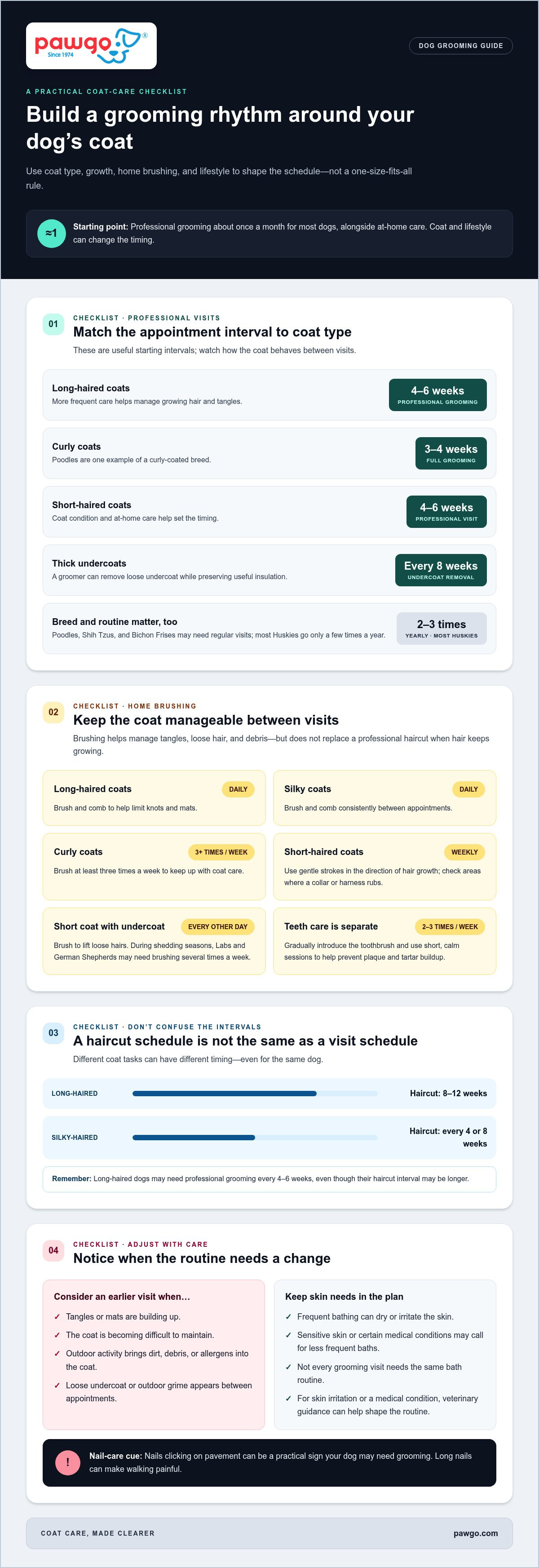
Coat type describes the texture, length, and growth pattern that shape a dog’s grooming needs. Long-haired dogs may need professional grooming every 4 to 6 weeks, while short-haired dogs can often go up to six weeks between appointments. The American Kennel Club recommends grooming most breeds once a month, alongside at-home care.
Brushing schedules vary, too. Long-haired dogs benefit from daily brushing and combing to limit knots and mats. Curly-coated dogs, including Poodles, need brushing at least three times a week, while silky coats need daily brushing and combing. Regular brushing helps manage the coat between visits, but it doesn’t replace a professional haircut when the hair keeps growing.
Haircut timing differs from bath timing. Long-haired dogs may need a haircut every 8 to 12 weeks, while silky-haired dogs may need one every 4 or 8 weeks. Curly-coated dogs often need a full grooming appointment every 3 to 4 weeks. These intervals reflect different coat needs, so use the coat’s texture and growth as your guide.
Breed and Lifestyle Effects
Breed helps indicate the coat a dog is likely to have, while lifestyle affects how quickly it gets dirty or tangled. Poodles, Shih Tzus, and Bichon Frises may need professional grooming every 4 to 6 weeks. Their coats often need more frequent attention than a short, smooth coat.
Outdoor activity can bring dirt, debris, and allergens into a dog’s coat, making more frequent grooming useful. A dog that spends much of its time outside may need an appointment sooner than a similar dog with a less active routine. Thick undercoats also need attention: dogs with them may visit a groomer every 8 weeks for undercoat removal.
Breed alone doesn’t set the schedule. For example, most Huskies go to the groomer two or three times a year, while long-haired breeds may need visits every 4 to 6 weeks. Notice how the coat behaves between appointments. Tangles, loose undercoat, and outdoor grime can all signal that the current interval needs adjusting.
Frequent Grooming and Skin or Coat Health
Frequent grooming is not automatically harmful, but frequent bathing can dry a dog’s skin and cause irritation. Dogs with sensitive skin or certain medical conditions may need less frequent baths. Bathing frequency matters as much as the haircut interval, so don’t assume every grooming visit needs the same bath routine.
Brush gently and consistently between appointments. Daily brushing suits long or silky coats, while curly coats need brushing at least three times a week. If your dog has skin irritation or a medical condition, veterinary guidance can help shape a suitable grooming routine. A thoughtful schedule balances coat maintenance with your dog’s skin needs.
Do short-haired dogs need grooming?
Short-haired dogs should visit a professional groomer every 4 to 6 weeks. They can usually go up to six weeks between appointments, with coat condition and at-home care helping shape the timing.
A short-haired dog typically has a straight coat less than one inch long. A Boxer or Beagle may not need a haircut, but still needs coat care. Short hair can collect debris, and regular brushing helps distribute natural oils. Home brushing supports the coat between appointments, rather than replacing professional grooming.
Brush a short-haired dog every week to remove loose hair and debris. Use gentle strokes in the direction of hair growth, paying attention to areas where a collar or harness can rub. If your dog has an undercoat, brush every other day to lift loose hairs. During shedding seasons, Labrador Retrievers and German Shepherds may need brushing several times a week.
Short coats generally don’t need haircuts unless a veterinarian recommends one for medical reasons. Cutting a short-haired dog’s coat very close to the skin can cause injury. If the coat looks uneven, focus on brushing and routine grooming rather than trimming it yourself. Beagles, Dachshunds, and Boxers can have occasional baths and brushing as part of their care.
Teeth need their own routine. Brushing a dog’s teeth 2 to 3 times a week is recommended to help prevent plaque and tartar buildup. Introduce the brushing gradually: let your dog get used to the toothbrush, then gently brush the teeth in short, calm sessions. This at-home pet care task is separate from brushing the coat, so it helps to keep both habits on a weekly schedule.
Use the space between professional appointments to notice changes. If brushing reveals loose hair, dirt, or a coat that feels less smooth, adjust your home routine and keep the next visit within the usual 4 to 6 week range. A short-haired dog with an undercoat may need more frequent brushing, while one without an undercoat may do well with weekly brushing. Regular care makes it easier to spot what your dog’s coat needs without assuming every short-haired dog follows the same routine.
Benefits of professional grooming
Regular grooming supports coat care and nail comfort, and gives you a closer look at changes in your dog’s skin. A professional groomer has training and supplies for different grooming needs, from managing a thick undercoat to trimming a coat that keeps growing.
For dogs with thick undercoats, removing loose hair can help the skin breathe while preserving useful insulation. This is different from shaving the coat. Regular grooming can also make your dog’s coat easier to manage between visits, especially when you brush at home.
Nail care is another practical benefit. Long nails can make walking painful, so trimming them matters for everyday comfort. If your dog’s nails click on pavement, they may need clipping. A groomer can trim them during a professional visit, while you can monitor nail length between appointments.
Attention to skin, ears, and coat
A grooming appointment gives a professional a chance to check the coat and visible skin. Groomers may notice lumps, skin infections, or ear infections while working, prompting you to follow up with a veterinarian. Groomers don’t replace veterinary care, but their observations can help you spot changes that need attention.
For example, brushing and cleaning may make a new lump beneath the coat or irritated skin easier to see. A groomer may also notice signs of ear irritation during routine handling. Share changes you’ve noticed at home, such as a patch your dog keeps scratching, so the groomer can handle it gently.
Consistent care between appointments
A predictable schedule makes it easier to maintain a coat before tangles become harder to manage. For a dog whose coat suits a six-week interval, regular visits can provide a steady rhythm for bathing, trimming, and coat care. The right timing still depends on coat type, lifestyle, and how well brushing works between appointments.
Professional grooming also breaks care into manageable tasks. Maintain brushing at home, then use appointments for areas that are difficult to handle safely or evenly. A Full Groom suits dogs needing a more complete grooming visit, while a groomer’s attention to coat, nails, and visible skin can help you keep track of changes.
Think of grooming as a useful part of routine pet care, not a substitute for a veterinarian. If a professional notices a possible skin or ear concern, or a change such as a lump, arrange veterinary attention. This keeps coat maintenance and health questions in the right hands.
Professional grooming schedules for high-maintenance breeds
High-maintenance coats need appointments shaped around hair growth, texture, and undercoat. Poodles, Shih Tzus, and Bichon Frises may need professional grooming every 4 to 6 weeks, while coat-specific needs can call for a shorter interval.
Curly coats can mat when loose hair becomes trapped, so brushing between visits matters. Most curly-haired dogs need a full grooming appointment, including a bath and haircut, every 3 to 4 weeks. Poodles and Bichon Frises often fall into this category. Brush curly coats at least three times a week to catch knots before they tighten.
Silky coats need a different rhythm. Silky-haired dogs may need a bath at the groomer every 3 to 4 weeks, with haircuts every 4 or 8 weeks. Daily combing and brushing helps prevent tangles between appointments. For a Yorkshire Terrier or another silky-coated dog, separate bath timing from haircut timing when planning regular care.
Long-haired dogs may need bathing every 4 to 6 weeks, while haircuts can fall every 8 to 12 weeks. Daily brushing helps prevent knots and mats, and can extend the time between professional visits. A coat that tangles quickly may need closer attention than one that stays smooth with daily care.
Wire-haired dogs may need haircuts every 4 to 8 weeks. A light trim around the face and paws every 4 to 6 weeks can keep those areas neat as the hair grows. This focused tidy is different from a full haircut, so match the appointment to the areas that need shaping.
Thick undercoats also need planned care. Dogs with thick undercoats should visit a groomer every 8 weeks for thorough undercoat removal and a tidy trim. Regular brushing helps lift loose hair between visits. Don’t shave a double-coated dog: its coat helps regulate temperature and protect the skin.
Use these coat patterns as a starting point, then note how your dog looks between appointments. A practical schedule should include both professional care and home brushing:
- Curly coat: Full grooming every 3 to 4 weeks, with brushing at least three times weekly.
- Silky coat: Groomer baths every 3 to 4 weeks, haircuts every 4 or 8 weeks, and daily brushing.
- Long coat: Baths every 4 to 6 weeks, haircuts every 8 to 12 weeks, and daily brushing.
- Thick undercoat: Professional undercoat care every 8 weeks, with brushing between visits.
These intervals distinguish coat-care tasks rather than setting one appointment type for every dog. If tangles appear before the next haircut or loose undercoat builds up, adjust the routine to suit your dog’s coat.
Signs a dog needs more frequent grooming
Your dog’s coat, nails, and ears can show when the grooming schedule needs adjusting. Look for changes between appointments instead of relying only on the calendar. Tangles that return quickly, visible dirt after outdoor walks, and nails clicking on pavement are practical signs to watch for.
Check the coat during regular brushing. Knots that are difficult to comb out, especially behind the ears or around the legs, can mean the coat needs more frequent attention. Long-haired dogs benefit from daily brushing to help prevent tangles and mats. If knots keep forming despite consistent brushing, a professional visit can help restore a manageable coat.
Outdoor routines affect coat condition, too. Dogs that spend a lot of time outside can collect debris, dirt, and allergens, so they may need grooming more often. Check your dog after muddy walks or time in brush. If dirt repeatedly builds up before the next appointment, adjust the bathing and grooming routine accordingly.
Nails provide another clear cue. If they make a clicking sound while your dog walks on pavement, they may need clipping. Dogs’ nails generally need trimming every 2 to 4 weeks, depending on how fast they grow. Keep an eye on their length during routine handling, and don’t wait for a scheduled coat appointment if nails are already affecting comfortable movement.
Check your dog’s ears gently as part of home care. Dirty or red ears can indicate infection and require veterinary attention. Grooming can help you notice visible changes, but it isn’t a substitute for veterinary care. Treat a red or dirty ear as a health concern, not simply a reason to book an earlier grooming appointment.
Use these observations to decide whether the current schedule still fits. A coat that stays smooth with regular brushing may be manageable between visits, while recurring knots or outdoor debris can call for more frequent attention. Nails grow on their own schedule, so nail trimming may be needed separately from a full coat appointment.
- Knots return quickly: Increase coat checks and brushing, especially on long-haired dogs.
- Dirt builds up often: Account for outdoor activity when planning bathing and grooming.
- Nails click on pavement: Arrange nail trimming based on growth, generally every 2 to 4 weeks.
- Ears look red or dirty: Seek veterinary attention because these changes can indicate infections.
If tangles, dirt, or coat growth are making home care difficult, book a Full Groom appointment to refresh your dog’s coat and routine.
Pawgo: Full Groom
Pawgo offers Full Groom for dogs needing professional coat care, shaping, and a fresh start between routine appointments. Its mobile grooming service comes to your doorstep in a fully equipped van, providing a cage-free grooming environment. Scissor finish adds shape and a tailored finish, while Service Call is a non-grooming option for needs such as flea and tick treatment.
Choose a Full Groom when your dog’s coat needs more than at-home brushing or when its usual grooming interval is due. The right timing still depends on coat type, growth, and condition. Pawgo helps make professional care convenient at home. Contact Pawgo to discuss a grooming visit that suits your dog.
Make your dog’s next grooming visit part of a comfortable routine
A manageable grooming plan can make care feel less like a last-minute task and more like a familiar part of your dog’s routine. If you’re still deciding how often a dog should be professionally groomed, use your dog’s coat condition and comfort between visits to guide the next step. Refine the schedule as you learn what works at home.
Pawgo offers Full Groom for a complete grooming visit, Bath & Tidy for a lighter refresh, and Service Call for non-grooming needs. Choosing the service that fits your dog’s current care needs helps you move forward without making every appointment the same.
Contact Pawgo to discuss grooming and choose a comfortable next step for your dog. A steady, thoughtful routine can make coat care easier for both of you.
Frequently Asked Questions
What happens if I don’t groom my dog regularly?
Loose hair, dirt, and tangles can build up, while long nails can make walking painful. Mats may become harder to brush out as they tighten, especially in long or curly coats. Grooming also gives you a chance to notice changes such as a new lump or irritated skin. If you spot red or dirty ears, seek veterinary attention because these changes can indicate infection.
How often should dogs be professionally groomed by coat type?
The answer to how often a dog should be professionally groomed depends on coat texture and maintenance needs. Long-haired dogs may need visits every 4 to 6 weeks, while short-haired dogs can usually go up to six weeks. Curly coats may need full grooming every 3 to 4 weeks. Thick undercoats may need professional removal every 8 weeks, alongside brushing at home.
How often do long-haired dogs need professional grooming?
Long-haired dogs may need professional grooming every 4 to 6 weeks, with bathing often falling into the same interval. Haircuts may be spaced every 8 to 12 weeks, depending on growth and the desired length. Daily brushing and combing helps prevent knots and mats between visits. If tangles return quickly despite home care, the coat may need attention sooner.
How often do poodles and other curly-coated dogs need grooming?
Most curly-coated dogs need a full grooming appointment every 3 to 4 weeks, including a bath and haircut. Poodles, Shih Tzus, and Bichon Frises may need professional grooming every 4 to 6 weeks. Brush curly coats at least three times a week between appointments. A coat that mats quickly may need closer attention than one that stays manageable with consistent brushing.
What factors affect how often a dog needs professional grooming?
Coat length, texture, growth, home brushing, and daily activity all shape the schedule. A dog that spends a lot of time outdoors can collect dirt, debris, and allergens, which may call for more frequent grooming. Sensitive skin or certain medical conditions can affect bathing needs. In Phoenix, Seattle, or Los Angeles, consider your own dog’s routine and coat condition rather than relying on location alone.
What signs indicate a dog needs professional grooming sooner?
Recurring tangles, a coat that is difficult to brush, or dirt that builds up quickly can signal that the current interval isn’t working. Nails clicking on pavement may mean they need clipping. Red or dirty ears are different: they can indicate infection and require veterinary attention, not simply an earlier grooming appointment. Check your dog’s coat and nails during regular home care.
How often should dogs get professional nail trims, baths, and haircuts?
Nail trimming is generally needed every 2 to 4 weeks, depending on growth. Most dogs should be bathed every 4 to 6 weeks, though sensitive skin or certain medical conditions may call for less frequent bathing. Haircuts depend on coat type: long-haired dogs may need one every 8 to 12 weeks, while silky coats may need haircuts every 4 or 8 weeks.
How can dog owners maintain their dog’s coat between grooming appointments?
Match brushing to the coat: brush long-haired dogs daily, curly coats at least three times a week, and short coats weekly. Check behind the ears, around the legs, and beneath collars, where tangles can be easy to miss. Keep a simple grooming calendar in Phoenix, Seattle, or Los Angeles, noting when knots or shedding appear. This helps you adjust home care as your dog’s coat changes.


