

Gentle grooming for cats starts with a cat-savvy groomer, not simply a quiet room. Look for someone trained in cat grooming or affiliated with a professional association such as the National Cat Groomers Institute. Grooming should be paced around your cat’s comfort and coat needs.
It’s understandable to worry if your cat hides, squirms, or tenses during brushing. A patient, individualized approach can make care feel more manageable, while regular coat checks help catch tangles before they tighten.
This guide explains what to look for in a groomer who understands cats, how mobile grooming may help reduce stress, and what to expect from a professional visit. You’ll also learn how to brush between appointments, prevent mats, and manage shedding at home. We’ll cover how coat type and comfort shape a grooming routine, plus signs that a tangle or skin concern needs more than home brushing. The goal is practical care that supports your cat’s comfort, not a one-size-fits-all schedule.
Key Takeaways
- Choose a groomer trained in cat grooming or affiliated with a professional association, and look for an approach that respects your cat’s comfort.
- Keep brushing calm and gradual between appointments, focusing on areas where tangles tend to form.
- Check the coat regularly for mats. They can pull on the skin and hide skin or parasite concerns.
- Use your cat’s coat type and ability to groom themselves to shape a professional care routine.
- Professional grooming can support coat care and nail maintenance, while mobile grooming may offer a more convenient setting for a nervous cat.
Stress reduction through mobile grooming
Mobile grooming can remove the car ride and unfamiliar waiting room from your cat’s routine. A calm session also depends on gentle handling, a suitable environment, and attention to your cat’s signals.
For a practical demonstration of low-stress handling, watch iCatCare’s video:
Gentle Handling During Grooming
Gentle handling means supporting your cat without squeezing, chasing, or forcing them through each step. Look for a groomer trained in feline care or affiliated with a professional association such as the National Cat Groomers Institute. For nail trims, handle one paw at a time, press the toe gently to extend the claw, and trim only the clear tip. Stop if your cat struggles.
Low-Stress Cat Bathing
A quiet, prepared bathing area helps prevent cleaning from turning into a prolonged struggle. Gather cat shampoo, towels, and a stable, non-slip surface before bringing your cat near the water. Use lukewarm water, keep the flow gentle, and avoid the face. Rinse thoroughly until no shampoo residue remains, since residue can irritate skin and attract dirt. Towel-dry gently rather than rubbing vigorously.
Signs of Grooming Stress or Pain
Watch your cat’s body and behavior throughout the session. Hissing, scratching, pulling away, or repeatedly trying to escape are clear reasons to pause, not hold the cat more firmly. Persistent scratching or licking, scabs, redness, hair loss, and flaky skin can also signal a skin problem. Share these observations with a veterinarian rather than treating them as grooming resistance.
Mobile grooming may reduce travel and waiting-room stress, but the setup still matters. A familiar caregiver can tell the groomer which tools, sounds, or touch areas unsettle the cat. Choose a groomer who can adapt the pace, use calm techniques, and keep the work area quiet and secure. Very anxious or aggressive cats may be better suited to a faster express service split across two visits. Individual pacing can make brushing, bathing, and nail care more manageable without turning the session into a contest.
At-home brushing between appointments
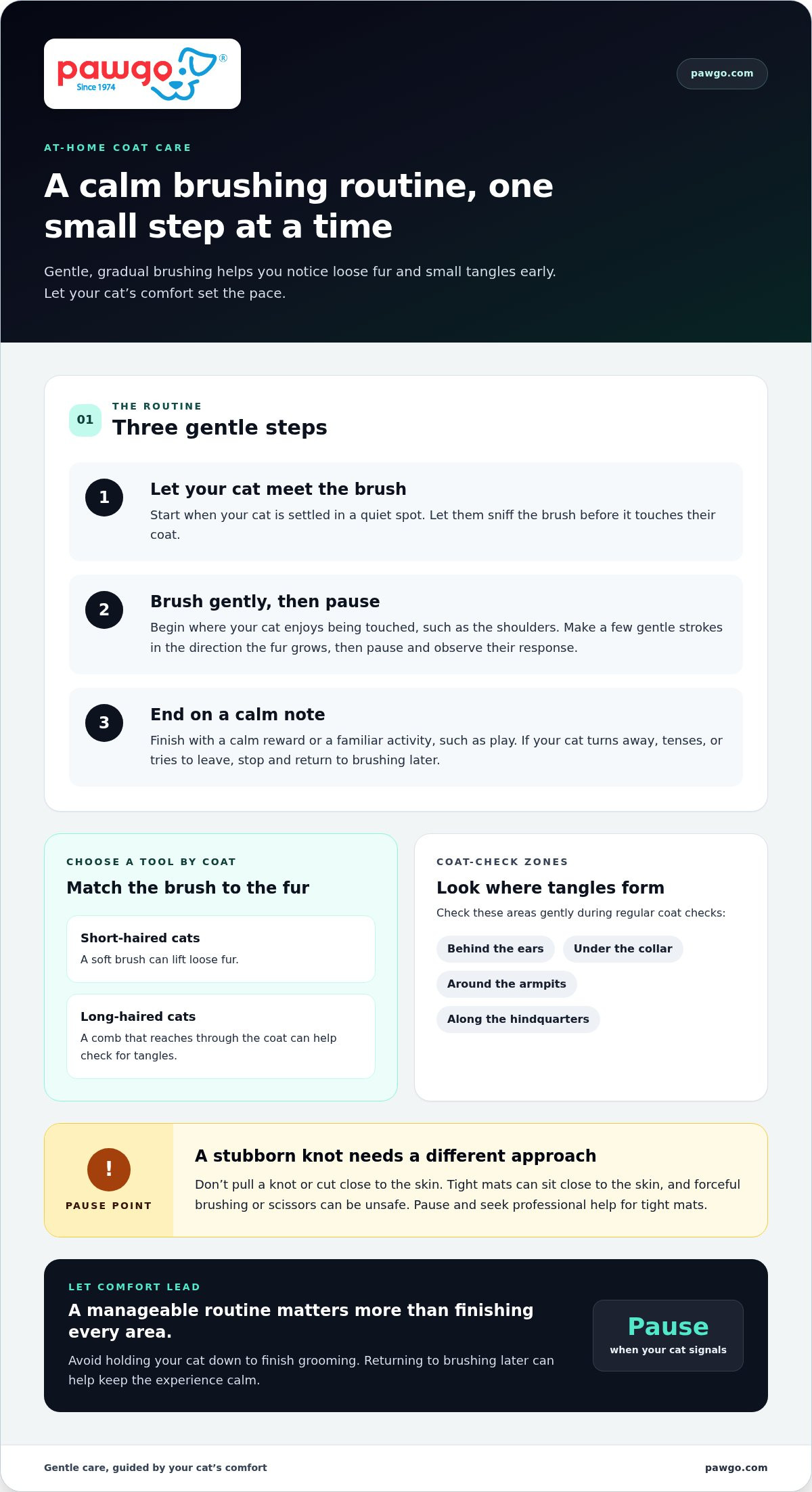
Between professional appointments, regular coat checks help you catch loose fur and small tangles early. Start when your cat is settled, choose a quiet spot, and let them sniff the brush before you begin. A soft brush can lift loose fur from short-haired cats; long-haired cats often need a comb that reaches through the coat. Work in the direction the fur grows, keeping each pass gentle.
Brush in small, comfortable steps
Begin in an area your cat enjoys, such as the shoulders, then move slowly toward the sides and back. Keep the brush away from sensitive areas until your cat accepts the routine. Check behind the ears, under the collar, around the armpits, and along the hindquarters, where tangles can form. If a knot resists the comb, don’t pull or cut close to the skin. Pause and seek professional help for tight mats.
- Let your cat investigate the brush before touching the coat.
- Make a few gentle strokes, then pause and observe their response.
- Finish with a calm reward or a familiar activity, such as play.
For nervous cats, stop when they turn away, tense their body, or try to leave. Returning to brushing later can keep the routine manageable. Avoid holding a cat down to finish grooming. A professional can address difficult tangles without turning home brushing into a struggle.
Include teeth and nail care gently
Teeth brushing also works best as a gradual routine. Let your cat smell the brush first, then gently lift the lip and touch a tooth with the brush. Use toothpaste made for cats, and keep the first attempts brief. Focus on calm cooperation rather than cleaning every tooth at once. If your cat pulls away, pause and try again another time.
For nail trimming at home, handle one paw at a time and press the toe gently to extend the claw. Trim only the sharp tip, avoiding the pink area inside the nail. If your cat resists, stop rather than forcing the paw. Professional nail trimming and teeth brushing can help when these steps remain difficult at home.
Book a grooming appointment at least one week ahead, and allow two or three weeks during busy periods. Keep a simple note of the areas brushed, any knots found, and how your cat responded. This gives the groomer useful details at the next appointment. For help with professional nail trimming and teeth brushing, consider a grooming visit suited to your cat’s care needs.
Avoid feeding a cat for 2-3 hours before a grooming appointment. Almost every professional cat groomer requires an appointment, so arrange a visit ahead of time to practice gentle grooming for cats.
Watch for mouth warning signs in cats: gum redness or swelling, ulcers, loose teeth, pus, difficulty chewing, excessive drooling, or pawing at the mouth.
Mat prevention and shedding
Regular coat checks help you spot loose fur, early tangles, and skin changes before they become harder to manage. Long-haired cats often need closer attention around friction points, such as behind the ears and beneath the legs.
Preventing Mats
Comb small sections gently, moving from the coat’s outer layer toward the skin without tugging. Check behind the ears, under the collar, around the armpits, and along the hindquarters, where friction can knot loose fur. If a tangle resists the comb, don’t pull or cut close to the skin. Mats can pull on skin, restrict movement, and conceal infections or parasites.
For a matted patch, avoid scissors and forceful brushing. Skin can sit close beneath a tight knot, making it difficult to tell where fur ends and skin begins. A groomer can assess the mat and remove it with suitable tools. Note its location and whether your cat reacts when you touch it. That detail helps distinguish routine coat care from a tender area that needs further attention.
Managing Shedding
Shedding is part of coat renewal, but a change in its pattern can have several possible causes, including allergies, fleas, ringworm, bacterial infection, hormonal imbalance, poor diet, stress, certain medications, pregnancy or lactation, and sunburn. Brush loose fur with a tool suited to the coat, then check the skin rather than treating every increase as ordinary seasonal shedding.
De-shedding treatments can help remove loose undercoat, but technique and coat condition matter. Ask for a gentle approach that avoids repeated scraping or pulling, especially if your cat shows anxiety or has sensitive skin. A short-haired cat may need a different brush and pressure than a long-haired cat. Don’t use shampoo to try to loosen mats; bathing can tighten tangles and make them harder to remove.
Track changes with simple observations: note where fur is thinning, whether your cat scratches or licks repeatedly, and when the change began. Persistent scratching, scabs, redness, flaky patches, or hair loss can signal a skin problem. If you see these signs, prioritize a veterinary assessment rather than relying on a de-shedding session. For ordinary loose fur, calm brushing and regular coat checks help manage shedding without making grooming a source of anxiety.
Benefits of professional cat grooming
Choose a professional groomer for coat care, nail maintenance, or a haircut that’s difficult to manage at home. Choose a veterinarian if grooming reveals pain, skin changes, or another health concern. Sedation for grooming requires a veterinarian.
A groomer trained in feline care can match tools and handling to coat condition and temperament. Look for cat-grooming training or affiliation with the National Cat Groomers Institute. For example, a cat with a dense undercoat may need a different brush-out approach than a short-haired cat. A gentle session also gives the groomer a chance to notice tangles or sensitive areas that need careful attention.
Coat care is more than appearance. The ASPCA advises that regular grooming supports coat health, especially for long-haired cats and senior cats that struggle to groom themselves. Cats aged 10+ years may need more frequent grooming. A professional can work through areas a cat may miss, including the back, hindquarters, and fur beneath the legs, while keeping the cat’s comfort in view.
Nail care is another practical benefit. Overgrown nails can curl into paw pads and cause pain, infection, and mobility issues. A groomer can trim the tips while keeping the quick, the sensitive inner part of the nail, intact. If your cat pulls a paw away or reacts sharply, a careful groomer can pause rather than force the trim. This can be especially helpful when handling paws at home has become difficult.
Professional bathing can help remove dirt and loose fur, while a haircut may make a coat easier to maintain when matting has become difficult. Ear cleaning can also be part of routine grooming. Persistent ear scratching, head shaking, odor, discharge, or dark wax can signal an ear problem, not simply a need for cleaning. Share these observations with a veterinarian rather than asking a groomer to treat them.
Arrange professional grooming when routine brushing no longer meets your cat’s coat needs, nails are overgrown, or a mat resists gentle combing. Seek veterinary care for painful skin, bleeding, swelling, or signs of infection. A groomer supports routine coat care; a veterinarian addresses medical concerns. This distinction helps you choose the right kind of help for your cat.
How often should you groom short-haired and long-haired cats
Professional grooming intervals depend on coat length, condition, and your cat’s ability to groom themselves. Use these ranges as planning guidance, then adjust based on tangles, shedding, and comfort between visits.
For short-haired cats, professional grooming is commonly spaced 6-8 weeks apart. Some guidance recommends 8-12 weeks for short coats that stay clean and tangle-free. These ranges reflect different coat needs, not a single schedule for every cat. If loose fur builds up or the coat feels greasy, arrange care sooner. If the coat stays smooth, home brushing may help maintain it between visits.
Medium-haired cats may benefit from professional grooming every 6-8 weeks. Long-haired cats often need closer attention, with professional grooming every 4-6 weeks. Their longer coats can tangle where friction occurs, including beneath the legs, behind the ears, and around the hindquarters. Check these areas during home brushing. Tight knots or mats are a reason to arrange professional care rather than waiting for the next routine appointment.
General guidance also places many cats’ professional grooming at 4-6 weeks, but coat type changes the timing. A short-haired cat with a low-maintenance coat may follow a longer interval. A long-haired cat with recurring tangles may need shorter intervals. Regular grooming supports coat health, especially for long-haired cats and senior cats that struggle to groom themselves, according to the ASPCA.
Age and mobility can change the routine. Cats aged 10+ years are considered senior in this guidance and may need more frequent grooming. Stiffness, weight changes, or reduced flexibility can make it harder for a cat to reach the back and hindquarters. Note where fur becomes tangled and whether your cat avoids grooming certain areas. Those observations help shape a schedule around actual coat condition.
- Check the coat during regular brushing for knots, loose fur, and changes in texture.
- Book earlier if mats return before the next planned visit.
- Keep home brushing gentle between professional sessions, especially around sensitive areas.
- Revisit the schedule if age, mobility, or coat condition changes.
Professional grooming can also include coat care, bathing, and nail maintenance, depending on your cat’s needs. A Full Groom can be a practical next step when coat care needs more than home brushing. Schedule a Full Groom to support your cat’s grooming routine.
Before booking grooming, make sure your cat is in good health and has all its vaccinations, since both are prerequisites for receiving grooming services. If your cat’s coat stays smooth between appointments, use its condition and comfort to decide whether to keep the planned interval or arrange care sooner if tangles or loose fur appear. Choose a service that fits the coat’s current needs rather than treating a routine interval as fixed.
When arranging an appointment, describe the coat length, areas where knots recur, and any changes in your cat’s age or mobility. These details can help you discuss whether the next visit should follow the usual schedule or come sooner. Continue checking the coat between visits, and adjust the routine if its condition changes.
Pawgo: Full Groom
Pawgo brings mobile grooming to your doorstep in a cage-free setting for cats and dogs. A Full Groom may suit a cat that needs more complete coat care, while a scissor finish can shape the coat. Share your cat’s coat condition and grooming sensitivities so the service can be tailored with care.
If your cat needs a limited service rather than a full grooming session, a Service Call may be a better fit. It is a non-grooming service, such as flea and tick treatment. Choose the option that suits your cat’s immediate grooming needs and comfort.
For a calm next step, contact Pawgo to discuss your cat’s grooming needs.
Make the next grooming step feel manageable
A calm routine can grow from small, familiar moments. Notice which touch your cat accepts, what makes them pull away, and how their coat feels between visits. These observations can help you choose gentle grooming for cats that fits your cat’s comfort rather than forcing a fixed routine.
When home care isn’t enough, Pawgo offers Full Groom and Bath & Tidy for coat care, plus Service Call for a non-grooming need. Choose the option that best matches the care your cat needs now, and share any sensitivities that could shape the experience.
Contact Pawgo about gentle cat grooming and take the next step toward a calmer care routine. Small, thoughtful adjustments can make grooming feel more familiar for both of you.
Frequently Asked Questions
How do I find a groomer who actually knows cats?
Choose a groomer with cat-specific training or an affiliation with the National Cat Groomers Institute. For gentle grooming for cats, ask how they adapt handling to a cat’s behavior and coat, and what they do if the cat needs a pause. A useful sign is a clear explanation of the steps involved, such as brushing, bathing, or nail care. Share any past grooming reactions before the appointment.
Where can you get your cat groomed?
You can arrange grooming at a salon or through a mobile groomer that comes to your home. Pawgo provides mobile pet grooming in Phoenix, Seattle, and Los Angeles, bringing grooming to the customer’s doorstep. This can suit households where transporting a cat is difficult. Choose the setting that fits your cat’s response to travel, unfamiliar rooms, and handling, and select a grooming option that matches the care needed.
Best brushes and combs for different cat coat types
For short-haired cats, use a soft brush to lift loose fur. Long-haired cats often need a comb that reaches through the coat; match the tool and pressure to the coat’s condition.


