

The right at-home routine can make professional grooming appointments easier to maintain. Maintaining your dog's coat between professional grooms means brushing according to coat type, bathing with a gentle dog-specific shampoo when needed, rinsing thoroughly, and drying carefully. As a general guideline, bathe your dog every 4-6 weeks, based on breed, coat type, and lifestyle.
It’s natural to want your dog’s coat soft and tidy without causing discomfort or worsening tangles. Suitable tools and dog-safe products make routine care gentler. Brushing removes loose hair and catches small tangles before they become harder to manage. If you find a mat, address it before bathing, since water can tighten it.
This guide explains how to bathe and dry your dog, choose tools and products for their coat, and follow your groomer’s advice between visits. You’ll also find practical brushing guidance for different coat types, so you can build a calm routine around your dog’s needs.
Key Takeaways
- Set a brushing rhythm that suits your dog’s coat length and texture to help keep tangles manageable.
- Match brushes and combs to the area you’re grooming, and choose products made for dogs.
- Use your groomer’s guidance to shape a comfortable home routine and know when a grooming task is better left to a professional.
- Short, long, curly, and double coats have different care needs, so tailor your approach rather than using one routine for every dog.
- When your dog needs a complete professional refresh, Pawgo’s Full Groom is a convenient next step.
1. Bathing and drying
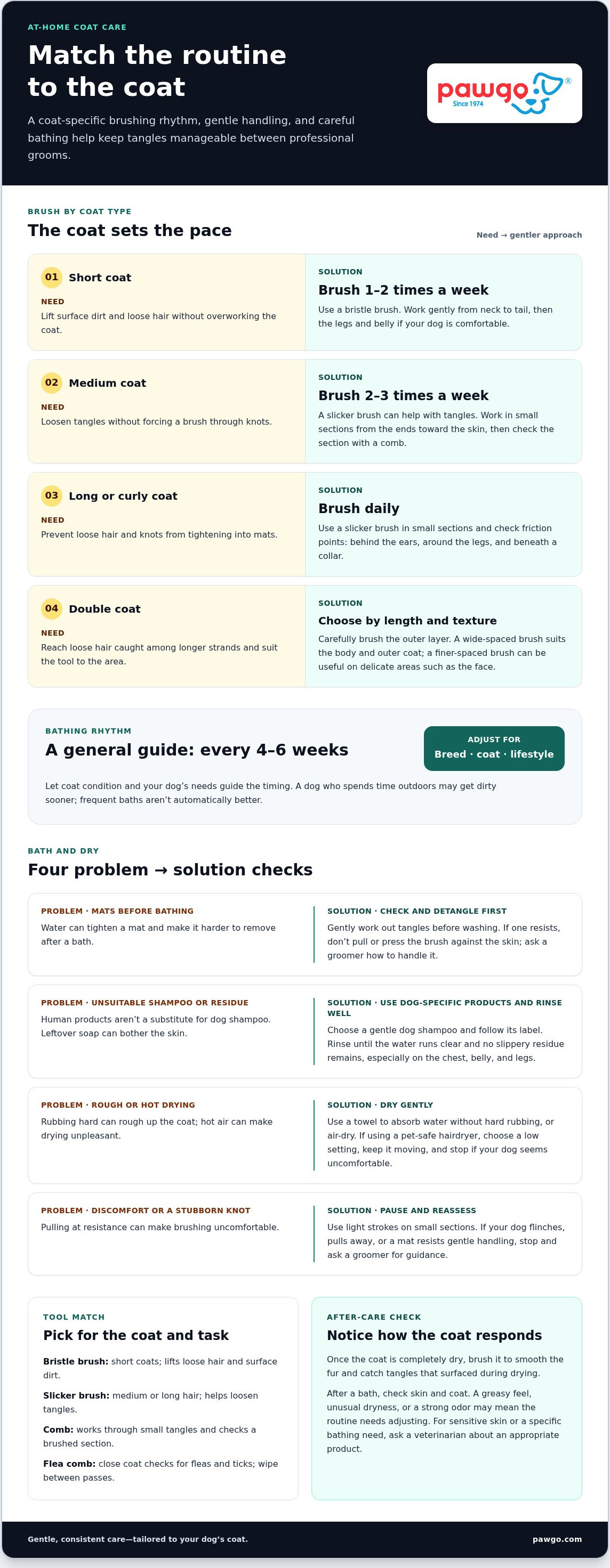
A careful bath can clear dirt and loose residue without leaving your dog’s coat uncomfortable. As a general guideline, bathe your dog every 4-6 weeks, adjusting the routine for breed, coat type, and lifestyle. A dog who spends time outdoors may get dirty sooner than one who mostly stays inside, but frequent baths aren’t automatically better. Let the coat’s condition and your dog’s needs guide the timing.
Before bathing, feel through the coat and gently work out tangles or mats. Water can tighten mats, making them harder to remove after a bath. If a tangle resists gentle brushing, don’t pull at it or press the brush against your dog’s skin. Set the bath aside and ask a groomer how to handle a difficult mat. A calm check beforehand can make washing and drying more comfortable.
Choose a gentle shampoo made specifically for dogs. Human products aren’t a substitute for dog shampoo, and any product that irritates your dog’s skin isn’t suitable. If your dog has sensitive skin or a specific bathing need, ask your veterinarian about an appropriate product. Keep shampoo away from your dog’s eyes and follow the label directions rather than using more than needed.
First, thoroughly wet the coat with lukewarm water. Gently work in the shampoo, following the product directions and taking care around the face and ears. Rinse until the water runs clear and no slippery residue remains. Leftover soap can bother the skin, so pay close attention to dense areas such as the chest, belly, and legs. Thorough rinsing is an essential part of bathing.
After rinsing, use a towel to absorb water without rubbing hard or roughing up the coat. Let your dog air-dry or use a pet-safe hairdryer on a low setting. Keep the dryer moving and stop if your dog seems uncomfortable. Avoid hot air, which can make drying unpleasant. Once the coat is completely dry, brush it to smooth the fur and catch any tangles that surfaced during drying.
After each bath, check your dog’s skin and coat. A greasy feel, unusual dryness, or a strong odor may mean their care routine needs adjusting. Note how your dog responds to the shampoo and drying method. These observations can help you adapt future baths to your dog’s coat and everyday routine.
2. Brushing frequency by coat length
Brushing removes loose hair and dirt, helps distribute natural oils, and can make tangles easier to manage. Set a rhythm that matches your dog’s coat rather than using one schedule for every breed. Short coats generally need brushing 1-2 times a week, while medium coats benefit from brushing 2-3 times a week. Long-haired and curly-coated dogs need daily brushing to help prevent knots from tightening into mats.
Shaving or trimming at home can remove more coat than intended and leave an uneven finish. Ask your groomer for guidance before trimming at home, or have the task done professionally.
For short-haired dogs, use a bristle brush to lift dirt and loose hair. Brush gently from the neck toward the tail, then work on the legs and belly if your dog is comfortable. Short coats may need less frequent attention, but regular sessions help you notice changes such as new tangles or patches of loose hair. Keep your dog settled with brief, gentle strokes.
For medium- to long-haired dogs, a slicker brush can help loosen tangles and mats. Work on small sections, starting near the ends and gradually moving toward the skin. Don’t pull hard when you meet resistance. Pause, gently separate the hair with your fingers, and work through the knot without scraping the skin. After brushing, use a comb to check that the section is clear.
Long coats need daily attention because loose hair and knots can collect close to the skin. Curly coats also benefit from daily brushing to stay smooth and detangled. For both coat types, focus on friction points such as behind the ears, around the legs, and beneath a collar. These areas can tangle as your dog moves, so check them during each brushing session instead of waiting for a larger knot to form.
For a double-coated dog, choose a brush suited to the coat’s length and texture. Carefully brush through the outer layer and check for loose hair trapped among longer strands. A wide-spaced brush suits the body and outer coat, while a finer-spaced brush can be useful on delicate areas such as the face. A professional groomer can help you choose the right tool.
Keep brushing sessions calm and consistent. If a mat resists gentle detangling or your dog becomes uncomfortable, stop rather than pulling at the coat. A groomer can recommend the safest next step for that tangle.
3. Choosing pet-safe grooming tools and products
Choose tools for your dog’s coat and the task, not just their appearance. A comb helps work through small tangles and check the coat after brushing. A wide-spaced brush suits the body and outer coat, while a finer-spaced brush can be gentler around the face. For short-haired dogs, a bristle brush can lift loose hair and surface dirt.
For medium- or long-haired dogs, a slicker brush can help loosen tangles. Use light strokes on small sections rather than forcing the brush through a knot. A comb can reveal whether hair near the skin is still caught. If your dog flinches, pulls away, or the mat resists gentle handling, stop and ask a groomer for guidance instead of tugging.
A flea comb lets you inspect the coat closely for fleas and ticks. Move it carefully through the fur, especially around the neck and any areas where you notice debris. Wipe the comb between passes to see what it collects. Regular coat checks are particularly useful during warmer months, when flea and tick activity can be more noticeable.
For bathing, choose a gentle shampoo made for dogs and follow the label. Keep it away from your dog’s eyes, and rinse until no residue remains. If your dog has a specific skin or coat concern, ask a veterinarian for guidance on choosing a product. Don’t use human shampoo as a substitute simply because it is described as mild.
For at-home nail care, use a good-quality dog nail clipper only if you’re confident doing the task. Trim small amounts at a time rather than making a large cut. Keep your dog still and work slowly, checking each nail as you go. If you’re unsure, pause and ask a groomer for advice rather than risk a painful cut.
How much do basic dog grooming tools cost in the United States? The total depends on the tools you choose, their materials, and whether you buy one brush or several items. A basic kit might include a coat-appropriate brush, a comb, and dog shampoo; a flea comb or nail clipper is an additional tool. Compare each item’s intended use with your dog’s coat and routine.
Introduce any new brush or product gradually. Let your dog sniff the brush, then try a few gentle strokes in an easy-to-reach area. Watch for discomfort, skin redness, or changes in how the coat feels. Replace tools with damaged bristles or rough edges, which can snag hair or scrape skin during routine grooming.
4. Following the groomer’s advice
Your groomer can explain which home-care steps suit your dog’s coat and current trim. At an appointment, ask for specific advice on brushing, coat maintenance, and areas that tangle easily. For example, ask which brush to use behind the ears or how to handle knots around the legs. Clear instructions make it easier to follow a consistent routine at home.
Approach hair and nail trimming carefully. Ask your groomer whether either task is suitable to do at home, or have it done professionally. If you’re unsure how to trim hair around your dog’s face, paws, or sanitary areas, don’t guess with scissors. Ask your groomer to explain a safe approach for your dog’s coat and handling needs.
At your next appointment, review what has changed since the previous visit. Mention new tangles, areas your dog resists being brushed, or changes in how the coat feels. These details help your groomer tailor their advice. You can also describe the brush and shampoo you use, so the conversation focuses on your actual routine rather than general suggestions.
Keep simple notes between visits. Record where knots develop, which brushing methods your dog tolerates, and whether any product seems to bother their skin. Bring your observations to the appointment. If your dog’s coat becomes difficult to manage, contact a groomer or veterinarian rather than attempting a task you’re apprehensive about. This is especially important if a mat sits close to the skin or brushing causes discomfort.
Follow your groomer’s instructions in small, repeatable steps. If they show you how to brush a particular area, use that method gently at home and stop if your dog becomes uncomfortable. If they recommend a specific tool, use it for the intended area rather than substituting another brush. At your next appointment, share what worked and what didn’t. That feedback helps make future advice more practical for your dog.
Professional grooming can take over tasks that are difficult to do safely at home. A Full Groom suits dogs that need a complete grooming appointment rather than routine upkeep alone. At home, stick to tasks you can handle calmly and confidently, and use your groomer’s guidance to decide when a trim or other grooming task should be done professionally.
Before trimming your dog’s nails or hair at home, ask your groomer for guidance or book professional grooming. If you’re uncertain about either task, don’t risk an uncomfortable or uneven trim.
5. What coat-care routine is recommended for short-haired, long-haired, curly, and double-coated dogs?
Your dog’s coat type helps determine how often to brush and which tools to use. A routine for maintaining your dog’s coat between professional grooms should reflect its length and texture. Short, long, curly, and double coats all have different needs. Regular brushing helps remove loose hair, detangle fur, and distribute natural oils.
Brush short-haired dogs 1-2 times a week. A bristle brush can lift loose hair and dirt from the coat. Use gentle strokes over the body, then check the legs and belly. Short coats may need less frequent attention, but regular checks can help you notice tangles or changes early.
Brush long-haired dogs daily. A slicker brush can help loosen tangles, while a comb helps check that the hair is clear. Work in small sections and don’t pull at knots. Pay attention to friction points, such as behind the ears and around the legs.
Curly-coated dogs also benefit from daily brushing to keep the coat smooth and detangled. Work through the curls patiently, checking beyond the surface. Gently ease apart small knots instead of forcing a brush through them. Consistent care makes it easier to catch tangles before they become difficult to manage.
For double-coated dogs, choose a brush suited to the coat’s length and texture. Use a wide-spaced brush for the body and outer layers, and check the coat section by section. For delicate areas such as the face, use a finer-spaced brush with light strokes. This tailored approach helps maintain your dog’s coat between professional grooms without rough brushing.
Choose the right brush, work gently, and check the whole coat. If a mat resists detangling or your dog becomes uncomfortable, stop rather than pulling. A groomer can advise on the best next step. For professional help with coat care, book a grooming appointment.
Upper Hound recommends brushing long-haired dogs every other week. Consider that when setting a schedule, but let the coat’s condition guide your care: work in small sections, use a slicker brush to loosen tangles, and check with a comb. Focus on friction points, including behind the ears and around the legs. If knots resist or brushing makes your dog uncomfortable, stop and ask a groomer what to do next. Gentle handling helps prevent pulling at knots.
Pawgo: Full Groom
Pawgo’s Full Groom is a natural next step when home brushing no longer keeps your dog’s coat manageable. It provides professional grooming for dogs that need more than routine upkeep, with a scissor finish when appropriate. Between appointments, continue gentle brushing and follow the care guidance suited to your dog’s coat.
If your dog needs a specific grooming task rather than a full appointment, Pawgo also offers a Service Call. Choose professional help when a trim is difficult to manage at home or your dog is uncomfortable with the task. Book online with Pawgo for support with your dog’s grooming needs.
Make coat care part of your routine
A steady care routine helps you notice what your dog needs as their coat changes. Pay attention to their response and adjust your approach if brushing or bathing becomes difficult. Maintaining your dog's coat between professional grooms is an ongoing practice, not a perfect result to achieve in one session. If a grooming task feels uncomfortable for you or your dog, professional support can help you find a manageable next step.
Pawgo offers Full Groom and Bath & Tidy for professional coat care, along with Service Call for specific grooming needs. Choose the option that best fits the support your dog needs, then keep their home routine gentle and consistent. Contact Pawgo for grooming help and take the next step toward a comfortable care routine for your dog.
Frequently Asked Questions
Why is it important to keep on top of your dog’s grooming between appointments?
Regular care helps you catch small tangles before they become harder to handle and notice changes in your dog’s coat. Check friction points such as behind the ears, under the collar, and around the legs. For dog owners in Phoenix, Seattle, and Los Angeles, the same principle applies: tailor home care to your dog’s coat and daily activities, rather than relying only on the calendar.
How often should you brush a dog between professional grooming appointments?
Match brushing frequency to coat type: short-haired dogs generally need brushing 1-2 times a week, medium-haired dogs 2-3 times a week, and long-haired or curly-coated dogs daily. During each session, check areas that are easy to miss, including beneath the collar and behind the ears. If your dog’s coat changes or brushing becomes uncomfortable, adjust your approach and discuss the issue at the next grooming appointment.
What brushes and combs are best for different dog coat types?
Choose a brush that suits both the coat and the area you’re working on. A bristle brush suits short coats, while a slicker brush can help loosen tangles in medium- to long-haired coats. Use a wide-spaced brush for the body and outer layers, and a finer-spaced brush for delicate areas such as the face. Finish with a comb to check that the section is clear.
How do you prevent and safely remove mats and tangles in a dog's coat?
Check the coat regularly, especially where hair rubs together, and gently detangle small knots before they tighten. Work through tangles gradually without pulling hard or scraping the skin. Remove mats before bathing because water can make them tighter. If a mat resists gentle handling, sits close to the skin, or makes your dog uncomfortable, stop and ask a groomer for guidance instead of cutting or pulling it out.
How often should you bathe a dog between professional grooms?
A general bathing guideline is every 4-6 weeks, with timing influenced by breed, coat type, and lifestyle. A dog that gets dirty during outdoor activities may need a different routine from one that stays mostly indoors. Use a gentle shampoo made for dogs, wet the coat thoroughly with lukewarm water, and rinse until no residue remains. Dry the coat fully and brush it afterward to check for tangles.


