

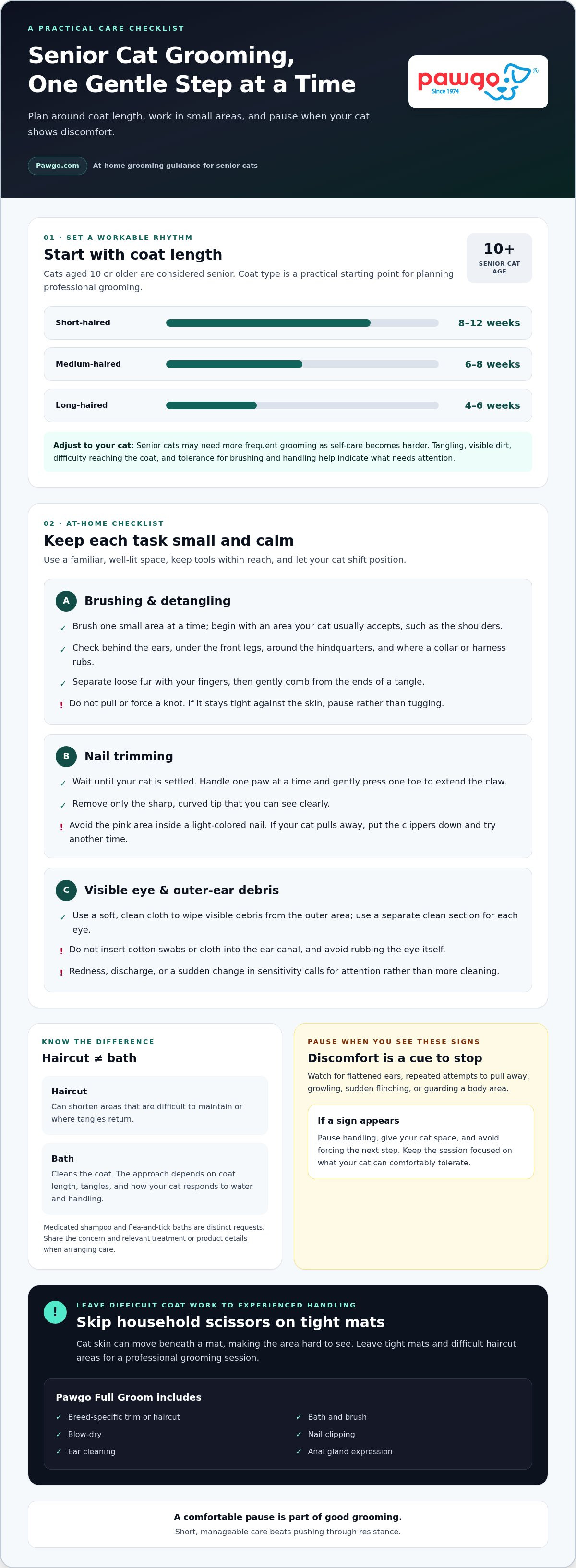
Senior cats often need grooming more often, but coat length helps set the schedule. Cats aged 10 or older are considered senior, and recommended professional grooming intervals are every 8-12 weeks for short-haired cats, every 6-8 weeks for medium-haired cats, and every 4-6 weeks for long-haired cats. For at-home cat grooming for senior cats in Los Angeles, the right routine also depends on how comfortably your cat manages brushing and handling.
It makes sense to look for care that feels gentle and manageable, especially when travel or unfamiliar surroundings add stress. This guide explains how grooming frequency can change with age and coat type, what services may be available, and which factors shape a grooming quote. Pricing depends on the cat’s needs and selected services, and is provided after a quote request.
You’ll also learn how mobile grooming brings care to your doorstep and what to consider when choosing a calm, patient approach. The goal is a clearer plan for keeping your senior cat comfortable and their coat cared for.
Key Takeaways
- Shape a senior cat’s grooming routine around coat length, self-grooming ability, and comfort with handling.
- Compare service quotes based on the care requested, such as bathing, nail trimming, or coat maintenance.
- Choose a gentle, patient grooming approach and keep sessions focused on what your cat can comfortably tolerate.
- Mobile grooming brings care to your doorstep, which may make the experience easier for cats unsettled by travel or unfamiliar places.
- Explore grooming options that match your cat’s needs, from a bath and tidy to a full groom.
How much does it cost to hire cat groomers and cat nail trimming near me in Los Angeles, CA?
In Los Angeles, the cost of senior-cat grooming depends on the care requested and your cat’s needs. The price depends on coat condition, matting, temperament, selected services, and time required, and is given after a quote request. A nail-trimming appointment may involve different work from bathing or a full coat-care session. Share your cat’s age, coat type, and main grooming concern to help define the request.
Bathing can help clean a coat that has become difficult for a cat to maintain. The right approach depends on coat length, tangles, and how your cat responds to water and handling. A senior cat with a soiled coat may need a focused bath, while another may benefit more from brushing and a tidy. Medicated shampoo is a distinct bathing option. It should match the grooming plan and the cat’s needs.
Flea and tick baths are another specific request, separate from routine bathing. Describe the concern when arranging an appointment, and share any relevant treatment history or product details. That context helps clarify what the requested bath involves and which factors affect the quote. Bathing can involve close handling, so keep the session focused and watch your cat’s responses from start to finish.
Watch for flattened ears, repeated attempts to pull away, growling, sudden flinching, or guarding a body area during grooming. Pause handling when these signs appear, give your cat space, and avoid forcing the next step.
Coat length offers a practical starting point for planning professional grooming. Recommended intervals are every 8-12 weeks for short-haired cats, every 6-8 weeks for medium-haired cats, and every 4-6 weeks for long-haired cats. Cats aged 10 or older are considered senior, and may need more frequent grooming as self-care becomes harder. Tangling, visible dirt, and difficulty reaching the coat can help indicate which areas need attention.
A haircut and a bath address different coat-care needs. A haircut can shorten areas that are difficult to maintain, while bathing cleans the coat. For a long-haired cat with tangles, describe where they occur and how your cat handles brushing. For a senior cat who dislikes water, discuss a plan focused on manageable steps. Pawgo’s Full Groom includes a breed-specific trim or haircut, bath and brush, blow-dry, nail clipping, ear cleaning, and anal gland expression.
- Describe your cat’s coat, handling comfort, and grooming concern when requesting a quote.
- Separate routine bathing from medicated or flea-and-tick bath requests.
- Use coat length and grooming tolerance to plan the next appointment.
Cat haircuts, nail trimming, ear cleaning, and detangling
At home, you can gently brush loose fur, check for tangles, and clean visible debris around the eyes or outer ears. Trim nails only when your cat is settled and you can clearly see where each nail ends. Keep each task brief, and stop if your cat resists or seems uncomfortable.
For a haircut, identify the practical need: a coat that catches debris, tangles that return, or areas your cat can’t keep clean. A professional groomer can assess the coat and provide a scissor finish. Avoid cutting close mats with household scissors. Cat skin can move beneath a mat, making the area hard to see.
Detangling works best as a slow, small-area task. Use your fingers to separate loose fur, then try a comb gently from the ends of the tangle. Don’t pull or force a knot. If it stays tight against the skin, pause rather than tugging. Repeated pulling can make brushing uncomfortable and harder to continue.
Nail trimming starts with a calm paw. Press gently on one toe to extend the claw, then remove only the sharp, curved tip you can see clearly. Avoid cutting into the pink area inside a light-colored nail. If your cat pulls away, put the clippers down and try another time. One relaxed paw is more useful than forcing every claw in one sitting.
For ear and eye cleaning, use a soft, clean cloth to wipe visible debris from the outer area. Don’t insert cotton swabs or cloth into the ear canal. Use a separate clean section of cloth for each eye, and avoid rubbing the eye itself. Redness, discharge, or a sudden change in sensitivity deserves attention rather than more cleaning.
- Brush one small area at a time, especially where a collar or harness rubs.
- Check behind the ears, under the front legs, and around the hindquarters for tangles.
- Handle one paw at a time and stop if your cat stiffens, flinches, or struggles.
- Leave tight mats and difficult haircut areas for a professional grooming session.
These steps can maintain a coat between appointments, but a full haircut, stubborn mat, or difficult nail trim may call for experienced handling. Choose a gentle approach that suits your cat’s response, and keep cleaning focused on visible areas. A short, comfortable grooming moment is a better place to pause than pushing through resistance.
Low-handling grooming for cats
Low-handling grooming keeps each task focused and lets a cat remain in a comfortable position. For example, brush the back while your cat rests on a familiar blanket, rather than lifting them onto a table. Use calm movements, keep supplies nearby, and allow your cat to shift position. A quieter setup makes it easier to notice changes in posture or mood.
Prepare the space before beginning. Choose a familiar, well-lit area and place a soft towel on a stable surface. Set out a brush, comb, and any other needed tools within reach. Let your cat approach before you begin. Start with an area they usually accept, such as the shoulders, then pause before moving to the belly, legs, or tail.
Break grooming into small tasks instead of trying to finish the entire coat at once. For example, brush one side, then let your cat step away. Another session can focus on a paw check or a quick look behind the ears. Short, familiar steps can help you work with your cat’s comfort rather than holding them still through a longer routine.
- Brush loose fur from an accessible area before approaching sensitive spots.
- Check one paw at a time, and stop if your cat pulls away.
- Use a comb gently at the ends of a loose tangle, without tugging.
- Pause between tasks so your cat can reposition or leave the grooming spot.
Watch body language throughout each step. A relaxed posture and willingness to stay nearby can help you continue gently. Flattened ears, a tense body, repeated attempts to escape, growling, or sudden flinching are signs to pause. If your cat guards a particular area, avoid pressing or brushing there. Note what prompted the reaction, such as touching a hind leg, and share that detail with the groomer.
Low-handling care also means choosing the right stopping point. A loose knot may respond to careful brushing, but a tight mat close to the skin can be difficult to address without pulling. Don’t hold your cat down to reach it. Set aside scissors, avoid cutting where skin is hidden, and leave difficult areas for professional grooming. Comfort matters more than completing every task in one sitting.
For a grooming visit, explain what your cat accepts and what they avoid. Mention whether they prefer standing, sitting, or resting on a towel, and identify any areas they resist. Those practical details help a groomer plan a gentler sequence and focus on coat-care tasks your cat can tolerate comfortably.
Mobile grooming and stress reduction
For at-home cat grooming for senior cats in Los Angeles, choose a mobile groomer who is patient, gentle, experienced, and familiar with different cats. If your cat is medically fragile or has an active health concern, discuss whether grooming is appropriate with your veterinarian before arranging a session.
Mobile grooming brings the appointment to your home, removing the car trip and time in an unfamiliar waiting area. Pawgo’s fully equipped vans are self-powered, so they don’t need to plug into a home outlet. The groomer and van may still be unfamiliar, and handling or grooming tools may cause stress. Consider how your cat responds to new people and sounds.
Prepare a quiet route from your cat’s resting place to the grooming area. Close doors to reduce sudden escapes, and keep other pets away during the visit. Leave a familiar blanket nearby if your cat finds it comforting. Don’t force your cat into a carrier unless safe transport requires it.
Before the groomer arrives, share which areas your cat tolerates being touched and what sounds frighten them. Mention mats, tender areas, and recent behavior changes. For example, a cat that accepts back brushing but avoids hind-leg handling may need a different grooming sequence. These details help the groomer understand your cat’s preferences.
- Set aside familiar grooming items your cat accepts.
- Choose a calm space with a clear path and little household activity.
- Keep children and other pets away from the grooming area.
- Describe the behaviors that show your cat needs a pause.
Agree on a pause signal before the session begins. If your cat crouches, flattens their ears, growls, or repeatedly tries to leave, stop and give them space. The groomer can reassess the next step rather than continuing through visible distress. Keep your own voice and movements steady while your cat settles.
Plan the appointment around your cat’s usual routine. Avoid introducing an unfamiliar grooming tool or strong scent on the same day. If your cat is hiding, unusually withdrawn, or reacting sharply to touch, share that change before handling begins.
After grooming, let your cat return to a familiar, quiet spot and settle at their own pace. Observe their behavior and note which parts of the visit seemed comfortable. For future at-home cat grooming for senior cats in Los Angeles, these observations can help you explain what your cat tolerates and what may need a gentler approach.
Senior Cat At-Home Grooming Services in Los Angeles
At-home cat grooming in Los Angeles can include bathing and drying, nail trimming, tooth brushing, mat removal, and ear and eye cleaning. The right combination depends on your senior cat’s coat, comfort with handling, and the areas that need attention. For example, a cat with a clean coat but overgrown claws may need nail care rather than a full grooming session.
Bathing and drying help clean a coat that’s difficult for a cat to maintain. A groomer can also brush loose fur and address tangles as part of coat care. Explain whether your cat resists water, dislikes being lifted, or settles more easily when resting. These details help the groomer set a suitable pace and focus on manageable tasks.
Nail trimming is a focused option when claws need attention but the rest of the coat is in good condition. Teeth brushing is also included in Pawgo’s Bath & Tidy service. Share how your cat responds to mouth handling, since comfort with that step can shape the session. A specific request helps clarify which tasks matter most.
Mat removal and haircutting address different coat concerns. Loose tangles may be worked through gently, while a tight mat may require a more careful approach. Ear and eye cleaning usually focuses on visible areas. Describe what you’ve noticed, such as debris near an eye or tangles behind the ears, rather than assuming every task belongs in one appointment.
- For coat maintenance: Ask about bathing, drying, brushing, or a haircut.
- For a specific concern: Describe mats, debris, or claws that need trimming.
- For a smaller session: Identify one priority, such as nail trimming or cleaning visible areas.
Before booking, write down your cat’s age, coat type, grooming history, and handling preferences. Note the areas they avoid and the tasks they tolerate. That brief helps clarify the requested care and the factors that shape a quote, including coat condition, selected services, and time required. A calm, patient groomer who understands different cats can adjust the approach to your senior cat.
For a grooming visit, keep your cat’s familiar resting spot accessible and explain any handling sensitivities before work begins. If the request is limited to a specific non-grooming concern, Pawgo’s Service Call may suit that need better than a full coat-care appointment. Match the service to the task rather than adding steps your cat doesn’t need.
Arrange an at-home grooming visit for a senior cat who needs focused, doorstep care.
Pawgo: Full Groom
Pawgo offers a Full Groom for senior cats who need professional coat care at home. Mobile grooming brings the appointment to your doorstep, which can remove the car trip and unfamiliar waiting areas from the routine. Share your cat’s coat concerns and handling preferences when booking so the requested care can be understood clearly.
A scissor finish may suit a cat whose coat needs a considered finish. For a separate, non-grooming need, Pawgo’s Service Call is a 15-minute service, such as flea and tick treatment. Choose the service that matches your cat’s immediate needs and comfort.
For at-home cat grooming for senior cats in Los Angeles, book a Pawgo appointment at pawgo.com.
Make the Next Grooming Step Feel Manageable
A useful next step is to choose one grooming priority for your cat’s next appointment. It might be maintaining the coat, refreshing a tidy, or addressing a separate concern. Keeping the request focused gives you a clear starting point and makes it easier to describe your cat’s handling preferences.
For senior cats, at-home cat grooming in Los Angeles can fit more comfortably into a familiar home routine. Pawgo offers Full Groom, Bath & Tidy, and Service Call options for different care needs. Share what your cat tolerates, which areas need attention, and what you hope to address. This helps Pawgo understand your request and arrange a suitable service.
A calm plan can start with one practical choice, then adjust as your cat’s needs change. Contact Pawgo about cat grooming to discuss a gentle next step for your senior cat.
Frequently Asked Questions
How Often Should You Groom Your Cat?
Professional grooming intervals depend on coat length: short-haired cats every 8-12 weeks, medium-haired cats every 6-8 weeks, and long-haired cats every 4-6 weeks. For a senior cat, adjust the routine to coat condition and ability to self-groom. Check commonly missed spots, such as behind the ears and under the front legs, and arrange care sooner if tangles build up between sessions.
Is this safe for anxious or senior pets?
Grooming can suit an anxious or senior cat when handling is gentle and the plan follows their comfort. Keep the session focused, and pause if your cat growls, flinches, or repeatedly tries to leave. For example, a cat that accepts brushing but resists nail care may do better with those tasks handled separately. Share known sensitivities before grooming begins.
How much does in-home cat grooming cost in Los Angeles, including senior-cat surcharges?
The quote depends on the requested services, coat condition, matting, temperament, and time required; it’s provided after a quote request. There’s no general surcharge amount to apply to every senior cat. A cat needing a simple coat tidy may require different work from one with dense tangles or several requested services. Describe your cat and priorities clearly so the quote reflects the actual grooming needs.
What health conditions make grooming risky for senior cats, and when is veterinary clearance needed?
A health concern that affects comfort, movement, breathing, or tolerance for handling can make grooming more challenging. Ask your veterinarian before booking if your cat has an active health issue, shows pain when touched, or has recently changed how they move or behave. Share any guidance with the groomer. Grooming isn’t a substitute for veterinary assessment when a new symptom or health concern needs attention.
How do mobile grooming, a groomer visiting the home, and DIY grooming compare for senior cats?
Mobile grooming brings a grooming van to your doorstep, avoiding a trip to a salon. A groomer working inside your home would use a familiar indoor space, while DIY care lets you handle small tasks at your cat’s pace. Each option has different surroundings and handling demands. Consider how your cat reacts to travel, unfamiliar people, and grooming tools before choosing an approach.
How often should senior cats be brushed, bathed, and have their nails trimmed?
Brush according to how quickly your cat’s coat tangles, and check areas they may struggle to reach. Bathe when there’s a specific coat-cleaning need rather than following a fixed schedule. Trim nails when they become sharp or catch on fabric, stopping if your cat resists. For professional grooming, let your cat’s comfort and coat condition guide when to book.
What questions should Los Angeles cat owners ask before booking an at-home groomer?
Ask what the requested service includes, how the groomer adapts handling for senior cats, and how they respond if a cat becomes distressed. Describe coat condition, areas your cat avoids, and any health guidance you’ve received. Ask how the quote accounts for the requested care and your cat’s coat needs. These details help you understand the planned session and prepare your cat’s familiar space.


