

Plan ahead: Seattle mobile groomers commonly book appointments 3-4 weeks in advance. For a mobile dog de-shedding service in Seattle, that booking window gives you a practical starting point for scheduling coat care before loose fur becomes a daily frustration.
It’s reasonable to want more than a clean coat: you also need to know what the visit involves and how to fit it into your routine. This guide explains what de-shedding grooming can include, how appointment timing works, what affects the cost, and what customer reviews can tell you about the experience.
You’ll also find a practical overview of the factors that shape a grooming plan, without assuming one dog’s needs are the same as another’s. The aim is to help you understand the process, plan comfortably, and know what to expect from mobile grooming in Seattle.
Key Takeaways
- Coat condition, dog size, and the support needed during grooming can shape the overall cost. Learn which details matter when considering a quote.
- Seattle mobile grooming appointments are commonly booked 3-4 weeks in advance, so planning ahead can make scheduling easier.
- Customer feedback can help you understand what to expect from appointment communication and the grooming experience.
- Compare de-shedding needs with the grooming options available to find an approach that suits your dog’s coat and routine.
- See how a Full Groom or Bath & Tidy can fit into your dog’s coat-care plans.
How much does mobile dog grooming cost in Seattle?
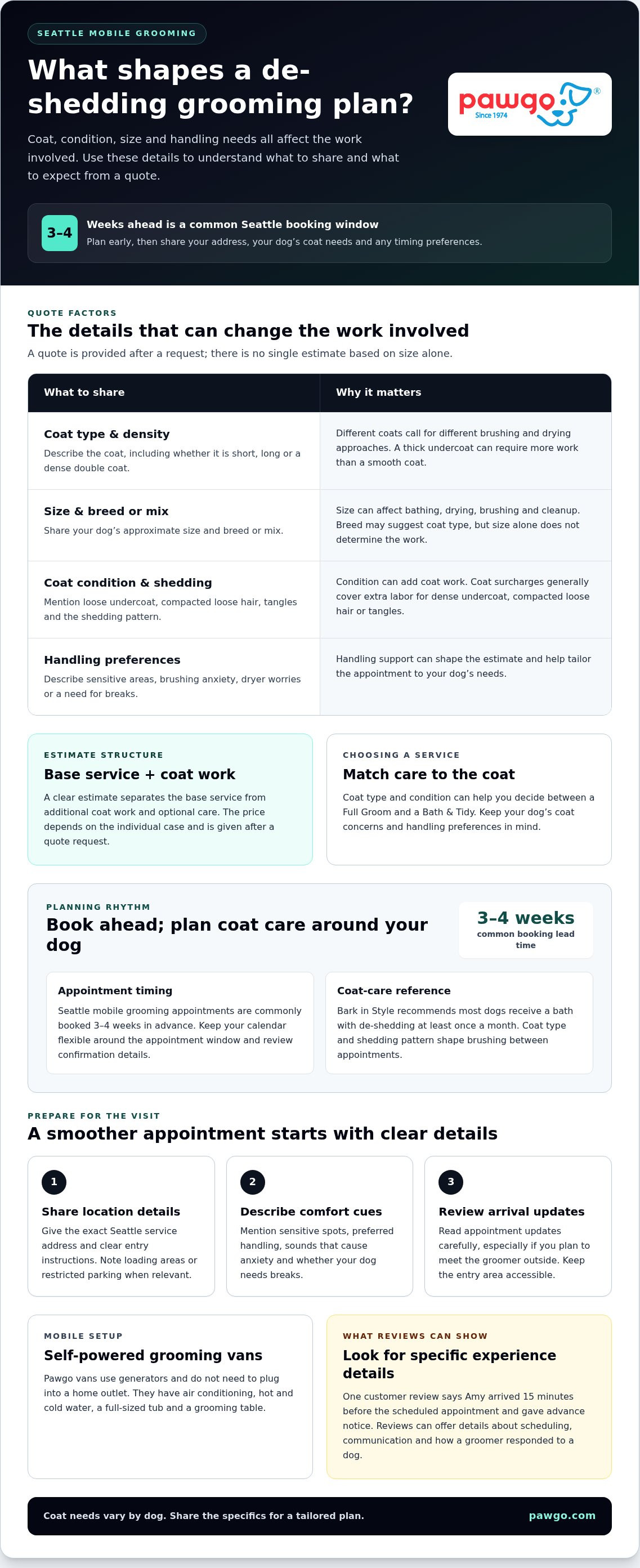
A mobile dog de-shedding service in Seattle can bring grooming to your home or office. The right appointment depends on the work your dog needs, including size, coat density, loose undercoat, tangles, and handling preferences. Two similarly sized dogs may need different approaches: a short coat requires different brushing and drying from a dense double coat.
Size affects bathing, drying, brushing, and cleanup. A small, short-haired dog may need less coat work than a large, thick-coated dog. Breed can suggest coat type, but condition matters too. A shedding Labrador and a long-coated dog, for example, need different brushing approaches. Size alone won’t determine the work involved. If brushing causes anxiety, describe what unsettles your dog so the groomer can take that into account.
Price depends on the case and is given after a quote request. Coat type, size, condition, and handling support shape the estimate. Share the dog’s breed or mix, approximate size, shedding pattern, and sensitive areas. These details help tailor a plan to the coat, rather than use a generic estimate.
Coat surcharges generally reflect extra work, including dense undercoat, compacted loose hair, or tangles. That charge differs from the base service because it covers added labor. A clear estimate separates coat work from optional care. Brushing a thick undercoat takes a different approach than rinsing and drying a smooth coat.
Before booking, review the appointment details and choose the grooming service that matches the care you want. Coat type and condition can help you decide between a full grooming appointment and a bath and tidy. Keep your dog’s coat concerns and handling preferences in mind when selecting.
Seattle licensing questions are separate from grooming prices. Requirements can depend on business activity and jurisdiction. Don’t assume one grooming credential covers every local business obligation. Treat licensing as a compliance question, not a coat-care consideration.
Pawgo offers mobile grooming in Seattle, as well as Phoenix and Los Angeles. The groomer comes to your home or office, so share the exact service address when booking. That helps establish the appointment location and makes it easier to plan the visit.
Coat care also affects when owners plan grooming. Bark in Style recommends most dogs receive a bath with de-shedding at least once a month. That recommendation offers a planning reference, while coat type and shedding pattern shape brushing between appointments. A dense undercoat can leave loose hair after surface brushing.
How do appointment times work?
Seattle mobile groomers commonly book appointments 3-4 weeks in advance. Start planning early, then share your address, dog’s coat needs, and timing preferences.
Booking an Appointment
Use the booking process to share the details that shape the visit. Include your Seattle address, your dog’s size, coat type, and any handling concerns. For example, mention if your dog is uneasy around dryers or needs breaks during brushing. These details help tailor the appointment to your dog’s needs.
Appointments are commonly booked 3-4 weeks ahead in Seattle. Choose a date that gives you room to prepare, then review the confirmation for the service, location, and arrival information. If you have a fixed commitment, consider whether the appointment window leaves enough flexibility around it.
Arrival Windows
Pawgo’s mobile vans are self-powered by generators, so they don’t need to plug into a home outlet. The vans have air conditioning, hot and cold water, a full-sized tub, and a grooming table. Share clear address and entry instructions when booking so the groomer can find you.
If your building has a loading area or restricted parking, include that detail during booking. Clear instructions make it easier to plan the arrival at your home or office. Read appointment updates carefully, especially if you plan to meet the groomer outside.
Meet-and-Greet Appointments
A meet-and-greet gives you and your dog a chance to become familiar with the grooming setup before a full appointment. Use that time to describe your dog’s comfort cues, sensitive areas, and experience with brushing. A calm introduction can help the groomer understand what support may make the visit easier.
If your dog is cautious with new people or unfamiliar equipment, share that when booking. Bring a short list of relevant details, such as preferred handling or sounds that cause anxiety. The goal is practical: make the first grooming visit more predictable for both you and your dog.
Before the appointment, prepare your dog’s coat as usual and keep the entry area accessible. Avoid adding a new brushing routine just before the visit if it causes discomfort. Instead, share what you’ve noticed, such as loose undercoat or a spot your dog resists having touched.
Convenient scheduling also means planning around the grooming itself. Keep your calendar open for the appointment window, and arrange household errands so you can respond to arrival updates. If you need a brief, non-grooming visit, a mobile grooming service call is a separate appointment type.
Customer experiences
A grooming experience is shaped by more than the finished coat. Communication, arrival, handling, and the dog’s comfort all matter. One customer review says Amy arrived 15 minutes before the scheduled appointment and gave advance notice. That example highlights two practical details: timely updates and a clear arrival plan.
Use reviews to assess specific parts of a grooming visit, rather than relying on a star rating alone. Look for details about scheduling, communication, and how the groomer responded to the dog. A review describing advance notice, for example, tells you more about arrival communication than a general statement of satisfaction.
Comfort is personal. A dog that settles easily around new people may respond differently from one that startles at unfamiliar sounds. Before grooming, share examples of your dog’s reactions, such as pulling away during brushing or becoming tense near a dryer. Those details give the groomer useful context for handling the visit thoughtfully.
Customer accounts can reveal which practical steps helped an appointment run smoothly. Look for mentions of clear instructions, a prepared meeting point, or updates during the visit. A review that describes a call before arrival can help you assess communication style, but it doesn’t establish what every appointment will include.
Separate an individual experience from a pattern. A single review about Amy’s early arrival is a specific account, not proof that every groomer arrives early. Read several recent comments and compare repeated details, such as updates, patience, or explanations of coat care. Specific examples make reviews more useful than broad praise.
Pay attention to how reviews describe the dog’s response, not only the owner’s convenience. A dog settling after a calm introduction gives more context than “great service.” A description of how brushing was handled can also clarify whether the experience felt considerate. Keep your own dog’s temperament in mind.
After reading reviews, prepare a short handoff note for the appointment. Include your dog’s name, preferred handling, sensitive spots, and any recent coat changes. For example, mention loose undercoat or brushing that causes discomfort. This turns general feedback into useful information for your dog’s grooming visit.
Reviews are most helpful when they answer a decision you actually have. If arrival communication matters, look for comments about updates, such as Amy’s review. If your dog is nervous, seek detailed descriptions of introductions and handling. Then explain your dog’s needs clearly before grooming begins.
Customer reviews and communication
Reviews help you assess how a grooming appointment is communicated, not just the final haircut. Look for specific details about scheduling, updates, and how the groomer responds to a dog’s needs. A comment describing a clear arrival message is more useful than praise that says only “great experience.” For a mobile visit, those details can clarify what the owner found helpful.
Read individual accounts as examples, not promises about every appointment. A reviewer may describe a gentle introduction or patient brushing, but each dog responds differently. Compare several comments for repeated, concrete themes. Note whether customers explain what happened, such as how the groomer handled a nervous dog or discussed a coat concern.
Communication starts with the details you share. Before booking, write down your dog’s name, coat concerns, and handling preferences. For example, mention if your dog pulls away when someone touches its paws. A short, factual note gives the groomer useful context and keeps the conversation focused on your dog.
During the appointment, describe comfort cues in plain language. “She relaxes when I speak softly” is more useful than “she can be difficult.” Share what causes worry, such as a dryer sound or brushing near the tail. This helps the groomer approach your dog thoughtfully.
When reading reviews, separate communication quality from grooming results. A comment about receiving an update addresses coordination. A comment about a smooth coat describes the outcome. Both can matter, but they answer different questions. Check whether a review gives enough detail to understand which part of the experience it describes.
- Look for specifics: note comments that describe an actual exchange or grooming step.
- Consider your dog: a review about a calm, social dog may not match a sensitive dog’s needs.
- Prepare a handoff: share coat changes, sensitive areas, and comfort cues before grooming begins.
Use a review as a starting point for a clear conversation about your dog. If someone describes a patient approach to brushing, explain whether your dog needs similar support. If a review mentions an unclear update, decide which appointment details you want communicated. The aim is a gentle, practical exchange based on your dog’s needs, not another owner’s experience alone.
After grooming, note what worked for your dog. For example, record whether a quieter introduction or a break during brushing helped. Those observations can guide your next appointment and make future communication more precise. Useful reviews describe the details that mattered, while your own notes keep the focus on your dog.
Mobile dog de-shedding services
A mobile dog de-shedding service in Seattle brings coat care to your doorstep. Pawgo offers dog de-shedding treatment, along with Full Groom and Bath & Tidy appointments. The right option depends on whether you want coat care as part of a broader grooming visit. Describe your dog’s coat type and condition when booking.
For a double-coated dog, loose hair can sit beneath the visible topcoat. Brushing and drying can help release dead undercoat. A smooth-coated dog may need less intensive brushing. Coat density, shedding pattern, and tangles help determine the approach, so describe what you see at home. For example, note whether loose hair gathers on furniture or mats near the collar.
Pawgo’s Full Groom includes a bath and brush, breed-specific trim or haircut, blow-dry, nail clipping, ear cleaning, and anal gland expression. Bath & Tidy includes a bath and brush, nail clipping, teeth brushing, ear cleaning, and anal gland expression. Share your dog’s coat and handling needs when choosing between these appointments.
Before the appointment, point out sensitive areas and handling preferences. A dog that flinches when its tail is brushed may need a slower approach there. Mention any past discomfort around water, dryers, or unfamiliar people. These examples give the groomer practical context and help set expectations for a calm, attentive session.
Mobile grooming changes the setting, not the need for a clear coat-care plan. The service happens near home, which can simplify the handoff and reduce travel for you. Tell the groomer where your dog usually waits and whether outdoor sounds cause distraction. Nearby construction, for example, may affect how settled your dog feels.
Notice your dog’s coat after grooming. Check areas that commonly hold loose hair, such as the chest, hindquarters, and behind the ears. Share any remaining tangles or spots your dog resisted during brushing. That feedback can guide the next appointment. A clean coat may smell fresher, but scent alone doesn’t show how much undercoat was removed.
Seattle owners can make the service more tailored by sharing a simple coat history: breed or mix, recent shedding changes, and brushing habits. Bring up a puppy coat change or a new patch of loose hair as useful context. Bark in Style recommends extensive daily brushing during a puppy’s coat change, so home care may matter alongside professional grooming.
If you’re ready to plan coat care at home, explore mobile grooming options and choose an appointment that suits your dog’s needs.
Pawgo: Full Groom
Pawgo offers Full Groom for Seattle dog owners looking for mobile coat care at home or the office. It’s a practical option when your dog needs a broader grooming appointment rather than a brief Service Call. Share your dog’s coat condition, shedding concerns, and handling preferences when booking so the visit can reflect your dog’s needs.
Pawgo also offers a scissor finish for dogs who need tailored finishing work. A Service Call is a separate, 15-minute non-grooming visit, such as flea and tick treatment. These options serve different needs, so choose based on whether your dog needs grooming or a brief service visit.
For a Full Groom or help choosing the appropriate appointment, visit Pawgo’s website.
Make coat care easier to plan
Start with one useful observation: where loose hair gathers and which areas your dog dislikes being brushed. Keep that in mind as you choose grooming support that fits your household. A mobile dog de-shedding service in Seattle brings coat care closer to home, while your notes help shape an informed conversation about your dog’s needs.
Pawgo offers Full Groom and Bath & Tidy for grooming needs, along with Service Call for a separate service visit. Consider which option best matches the care you’re looking for, then share your dog’s coat concerns and handling preferences when you get in touch.
Contact Pawgo to discuss your dog and take the next step toward a grooming plan that feels manageable for both of you. A little preparation can make it easier to describe what your dog needs and approach the appointment with confidence.
Frequently Asked Questions
How far in advance should I book mobile grooming?
Plan to book 3-4 weeks ahead for Seattle mobile grooming. Choose your preferred date first, then leave flexibility if your schedule allows. Before booking, note your dog’s coat condition and the type of grooming you want. For example, a thick coat needing extra brushing may call for a different appointment plan than routine bathing and trimming.
How long does it take and what is the cost?
A Pawgo Full Groom takes approximately 1-2 hours, while Bath & Tidy takes approximately 45-90 minutes. A Service Call lasts 15 minutes and is non-grooming. Price depends on your dog’s case and is provided after a quote request. Size, coat condition, and the service selected help shape the estimate, so describe your dog’s needs when requesting one.
What if my dog doesn’t like car rides?
With mobile grooming, the van comes to your home or office, so your dog doesn’t need a car ride to a grooming location. Pawgo’s grooming is cage-free and one-on-one. The vans are self-powered, with no need to plug into a home outlet. Share your dog’s sensitivities when arranging the visit, such as fear of unfamiliar sounds or difficulty meeting new people.
Which mobile dog de-shedding services operate in Seattle, Washington?
Pawgo offers mobile pet grooming in Seattle, including dog grooming services. Its listed local markets also include Phoenix and Los Angeles. If you’re looking for a mobile dog de-shedding service in Seattle, describe your dog’s coat and shedding concerns when choosing a grooming appointment. That helps identify the option that fits your dog’s needs.
How much does mobile dog de-shedding cost in Seattle?
The price depends on your dog’s case and is provided after a quote request. Coat density, size, condition, and the grooming option selected can affect the estimate. When requesting one, describe whether your dog has a dense undercoat, tangles, or sensitive areas. That practical detail helps connect the estimate to the work your dog’s coat needs.
What is included in a mobile dog de-shedding treatment?
Pawgo offers dog de-shedding treatment as an available grooming service. Its Full Groom includes a bath and brush, breed-specific trim or haircut, blow-dry, nail clipping, ear cleaning, and anal gland expression. These are Full Groom inclusions, not a promise that every de-shedding appointment includes every step. Explain whether you want coat care alone or a broader grooming visit.
How can I book a mobile dog de-shedding appointment in Seattle?
Book online through Pawgo. Before starting, have your Seattle service address and your dog’s basic coat details ready. Note the breed or mix, size, shedding concerns, and any handling preferences. Then choose the grooming option that best matches the visit you want. If loose undercoat is your main concern, describe where it collects and what brushing your dog tolerates.
How long does a dog de-shedding appointment take, and how often should it be scheduled?
Timing depends on the selected service and your dog’s coat. Pawgo lists Full Groom at approximately 1-2 hours and Bath & Tidy at approximately 45-90 minutes. The right grooming interval depends on coat density, shedding pattern, and how quickly loose hair builds up. Track changes in shedding and brushing needs, then use those observations to plan future coat care.


