

A calmer grooming visit starts with fewer changes, not more pressure. Mobile grooming for dogs with separation anxiety may feel easier when care happens near familiar sights and smells, with consistent handling and fewer encounters with unfamiliar animals. Hand-drying may also suit dogs unsettled by louder drying equipment.
It’s understandable to worry when grooming means time apart, unfamiliar surroundings, or a routine your dog finds hard to handle. A quieter setup can reduce some stressors, while a patient pace and familiar person can make the experience more predictable.
This guide explains how familiar surroundings, consistent handling, fewer dog encounters, and hand-drying can support a more comfortable appointment. It also explains what these changes can and can’t do, and how to recognize when your dog may need a gentler grooming plan.
Key Takeaways
- Choose a grooming setup that limits unfamiliar dog encounters if those interactions add to your dog’s stress.
- Look for a consistent groomer and a predictable routine to make each visit feel more familiar.
- Familiar surroundings can offer reassuring sights and smells during grooming.
- Ask about hand-drying as a gentler option if drying equipment unsettles your dog.
- Consider mobile grooming when a quieter, one-on-one setting may suit your dog better than a traditional salon.
Avoiding contact with other dogs
For a dog unsettled by unfamiliar animals, fewer close encounters can make grooming easier to manage. A salon may have shared entrances, waiting areas, or nearby dogs. A mobile appointment brings the grooming setup to your dog’s home and can reduce time in shared spaces. It can’t prevent every sight or sound of another dog, but it may reduce close encounters.
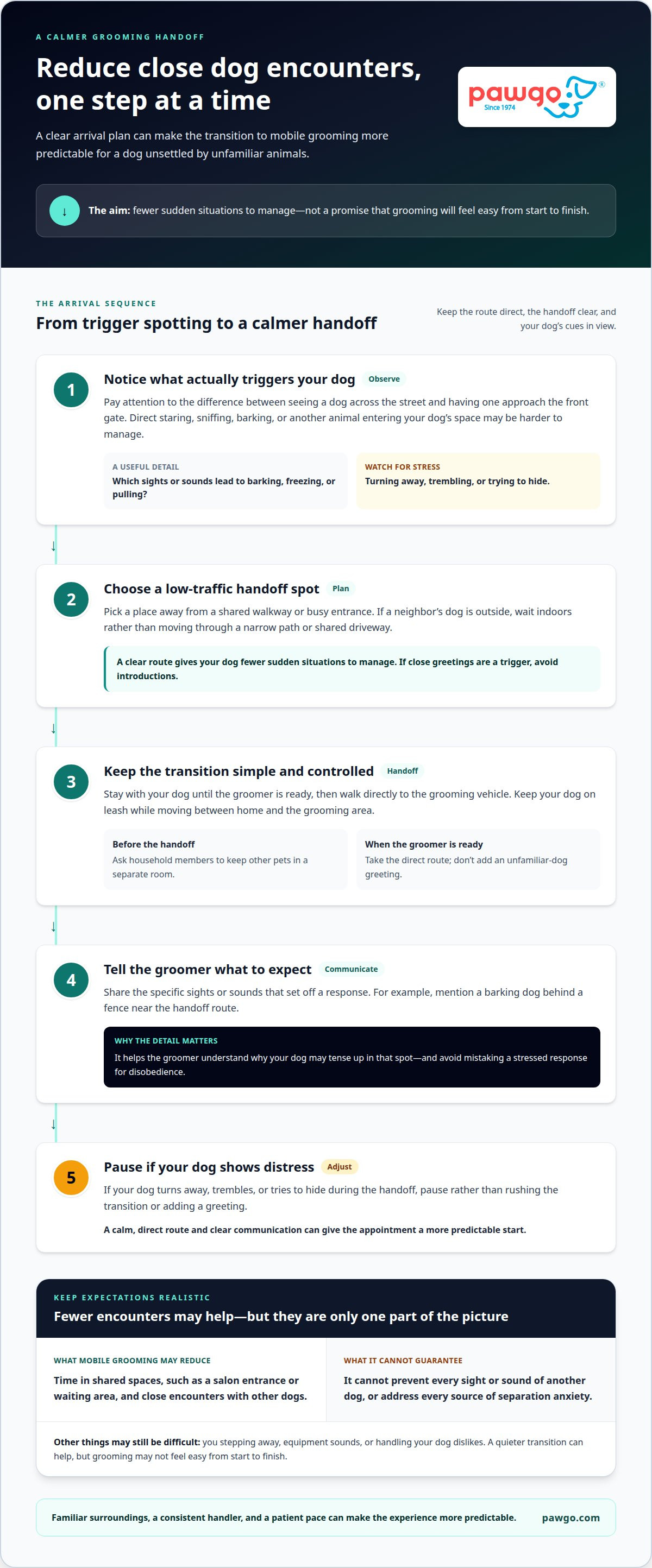
Notice which encounters trouble your dog most. Your dog may stay calm when another dog is across the street but bark or pull when one approaches the front gate. That distinction can help you plan the handoff. If close greetings are a trigger, avoid introductions. Keep your dog with you until the groomer is ready, then walk directly to the grooming vehicle.
Distance can matter more than a quick greeting. A dog may react to direct staring, sniffing, barking, or another animal entering its personal space. Avoid letting unfamiliar dogs approach while your dog waits. If a neighbor’s dog is outside, wait indoors rather than taking your dog into a narrow path or shared driveway. A clear route gives your dog fewer sudden situations to manage.
Use a simple arrival plan that limits uncertainty:
- Choose a handoff spot away from a shared walkway or busy entrance.
- Keep your dog on leash while moving between the home and grooming area.
- Ask household members to keep other pets in a separate room during the handoff.
- Tell the groomer which sights or sounds trigger barking, freezing, or pulling.
If your dog reacts to a barking dog behind a fence, for example, mention it before the appointment begins. The groomer will understand why your dog may tense up near that part of the property. Clear information also helps avoid mistaking a stressed response for disobedience.
Fewer dog encounters can reduce one source of stimulation, but they don’t address every cause of separation anxiety. Your dog may still worry when you step away, hear equipment, or experience handling it dislikes. Keep expectations realistic: a quieter transition can help, but it doesn’t mean grooming will feel easy from start to finish. Watch for signs such as turning away, trembling, or trying to hide. If you see them during the handoff, pause rather than adding a greeting or rushing the transition. A calm, direct route and clear communication can give the appointment a more predictable start.
Challenges of traditional salons for anxious dogs
Grooming can intensify distress if an anxious dog struggles with handling or tries to escape. Pause if your dog is shaking, repeatedly pulling away, or unable to settle, and discuss a gentler plan before continuing.
To find mobile grooming for anxious pets nearby, search using your city or ZIP code along with that phrase. Look for service descriptions that explain the appointment setting, handoff, handling, and drying approach.
A salon appointment involves more than bathing and trimming. Your dog may ride in a car, enter an unfamiliar building, wait near reception, and hear dryers or clippers. Each transition adds something new to process. A dog comfortable with brushing at home, for example, may tense up in a noisy lobby.
Waiting can make the sequence less predictable, too. A salon may handle several appointments, so drop-off and pickup can involve activity around your dog. A dog who watches a caregiver leave may become unsettled before grooming begins. Even a short separation can feel harder after an unfamiliar car ride and check-in.
Sound and handling can add pressure. A dryer starting suddenly may surprise a dog already alert to unfamiliar smells. Standing on a grooming surface can also feel different from standing on a familiar floor. If a dog stiffens during nail trimming, rushing to finish can make the moment more difficult. A calm pause gives the groomer time to notice the response and adjust.
Before an appointment, identify which parts of the salon routine cause the most strain. A short note can help explain your dog’s experience:
- At drop-off, does your dog freeze, pull toward the exit, or vocalize?
- During bathing, does running water or a slippery surface cause concern?
- During drying, does your dog turn away from the airflow or try to hide?
- At pickup, does your dog seem unsettled after waiting apart from you?
These details help distinguish a difficult transition from a specific grooming trigger. A dog may tolerate bathing but struggle with dryer noise, for example. Knowing the difference can guide a more thoughtful plan instead of treating every part of the visit as equally stressful.
Salons differ in their routines and surroundings, so the experience won’t be identical everywhere. Still, travel, check-in, waiting, handling, and pickup can be demanding for some dogs. Consider which steps your dog already finds difficult, then look for an appointment arrangement that reduces unnecessary transitions and allows time to respond to your dog’s cues.
Consistent groomers and predictable routines
A familiar groomer and repeatable appointment sequence can make grooming less unpredictable. The goal is to share useful details and keep each transition clear.
Choosing an Anxiety-Experienced Groomer
A groomer experienced with anxious dogs can notice stress signals and adjust handling. That matters when a dog freezes, turns away, or struggles as its caregiver steps back.
Before booking, ask how the groomer handles dogs that resist drying, nail care, or separation. Ask who will groom your dog, whether the same person can return, and how pauses or changes are communicated. A clear answer should describe specific handling choices, not promise that every dog will stay calm.
Share your dog’s triggers, past grooming experiences, and the order of care that has worked at home. Explain, for instance, whether brushing is easier before bathing or whether your dog settles when you remain visible during the handoff. These details give the groomer a practical starting point.
Preparing for the First Visit
Prepare for the first appointment by making the arrival and handoff familiar. A simple routine can help your dog recognize what happens next.
Before the visit, gather your dog’s grooming history and note the sounds, tools, or touch they avoid. Keep the arrival route clear, and have the leash ready before the groomer arrives. Use a calm phrase you already say at home instead of introducing a new cue during the handoff.
Keep the sequence straightforward: meet the groomer, share your notes, then follow the agreed handoff plan. If your dog usually relaxes with a familiar mat or resting spot, mention that. Avoid a long goodbye ritual; repeated departures and returns may make the transition less clear.
Ask a veterinarian whether medication or other strategies could support grooming if anxiety significantly disrupts care. A veterinarian can consider your dog’s health and behavior before discussing suitable options.
After the first visit, record what your dog tolerated and what caused difficulty. Note whether the handoff went smoothly, which grooming steps prompted avoidance, and what helped your dog settle. Share your observations before the next appointment. A consistent groomer can use them to preserve familiar parts of the routine and adjust the parts that proved difficult.
Predictability doesn’t mean every visit must follow an inflexible script. If your dog reacts to a particular sound or handling step, tell the groomer before it happens again. A steady arrival routine can go hand in hand with thoughtful adjustments to the grooming sequence. This balance gives the groomer a clearer picture of your dog’s needs and helps you make each appointment more informed.
Familiar surroundings
A mobile appointment brings the grooming space to your home, reducing the need for a separate trip. Your dog still encounters a new setting, so familiar cues and a clear handoff can help.
Grooming in a Known Environment
Familiar surroundings mean keeping the arrival and transition close to recognizable home cues. Your dog can approach the grooming routine without first navigating an unfamiliar salon.
Your dog may recognize the driveway, front door, and your voice, even when grooming takes place in a mobile unit. A dog who relaxes on the porch, for example, can start there with you before moving to the grooming vehicle. Familiar cues don’t make every step familiar, but they can make the transition easier to understand.
Keep the approach simple. Clear the path from the door, have the leash ready, and avoid adding errands before the appointment. If a vehicle’s sound or nearby activity unsettles your dog, mention it during the handoff. These practical details help the groomer understand what your dog is responding to rather than having to guess.
Staying With the Owner
Your dog can stay with you until the handoff, while grooming takes place in the mobile unit. Being at home may make the arrival more familiar, but it doesn’t mean you’ll be beside your dog throughout the grooming.
Use a consistent goodbye rather than repeatedly leaving and returning. Give the groomer your notes, hand over the leash, and use the same calm phrase you use before a short departure. If your dog becomes more distressed when you move away, explain that before the handoff so the transition can be handled thoughtfully.
Home routines provide useful context. Tell the groomer where your dog rests, which sounds prompt barking, and whether your dog settles better when you speak or stay visible. A dog who relaxes beside a familiar mat may still find the grooming unit’s surfaces, smells, and equipment unfamiliar. Specific details help distinguish comfort with home from comfort with grooming.
Keep other household activity predictable during the appointment. If a doorbell usually sends your dog running, ask household members to avoid unnecessary arrivals. If another pet follows your dog to the entrance, arrange a quiet space for that pet during the handoff. These small changes can prevent familiar surroundings from becoming busy or distracting.
After the visit, note one thing that helped and one that was difficult. Record, for example, whether your dog approached the unit calmly but resisted leaving your side. That information can shape the next transition. Familiar surroundings are most useful when they support a clear routine, not when you expect them to remove every unfamiliar part of grooming.
What should I look for in a mobile groomer experienced with anxious dogs?
Look for a groomer who can explain how they adapt handling, pace, and communication for an anxious dog. Specific answers help you understand how the appointment may work for your dog.
Ask how the groomer approaches common stress points, such as a dog pulling away during brushing or reacting to dryer noise. A thoughtful answer should explain how they notice stress, pause when appropriate, and adjust the sequence. Look for practical details rather than promises that every dog will feel comfortable.
Before booking, ask:
- Who will handle my dog, and can the same groomer return?
- How do you respond if a dog freezes or tries to move away?
- Can you explain the handoff and grooming sequence?
- How do you handle a dog that reacts to drying equipment?
- How will you share what went smoothly or proved difficult?
Clear communication matters before the appointment, too. Share a concise account of your dog’s triggers, past grooming experiences, and helpful cues. Explain, for example, that your dog accepts brushing but becomes tense when their paws are touched. This gives the groomer useful context and can prevent surprises during nail care.
Notice whether the groomer listens without dismissing your concerns. If you describe separation distress, a useful response might address the handoff, your dog’s known signals, and how updates will be handled. Vague reassurance alone doesn’t explain what will happen if your dog becomes unsettled. Ask for a simple explanation of the plan.
Ask how the groomer decides whether to continue a difficult step. If your dog repeatedly pulls away during brushing, for instance, the groomer should explain how they respond rather than rely on force or rushing. Look for calm, clear communication and attention to your dog’s behavior, not a guarantee of a stress-free visit.
After an appointment, use the groomer’s notes to guide the next visit. If your dog managed bathing but struggled with drying, discuss that difference before booking again. Consistent handling and useful feedback can help you make an informed choice about future grooming. To explore a doorstep grooming option, view mobile grooming services.
Pawgo: Full Groom
Pawgo’s Full Groom brings professional grooming to your doorstep in a fully equipped, cage-free mobile setting. It may be a practical option if avoiding a salon trip and shared indoor spaces could suit your dog better.
Before the appointment, share your dog’s triggers and familiar cues. Explain what happens during separation, which handling steps cause concern, and how your dog responds to grooming sounds. These details provide useful context for the visit. Full Groom is grooming care, not veterinary treatment for anxiety, so speak with your veterinarian about health or medication concerns.
Visit pawgo.com to explore Pawgo’s Full Groom.
Make the next grooming visit easier to plan
Choose one practical goal for your dog’s next appointment, such as a calmer handoff or less time around unfamiliar activity. Write down what your dog does when worried and what helps them settle. Sharing those observations gives the groomer a useful starting point and helps you track what changes between visits.
Mobile grooming for dogs with separation anxiety may suit families looking to simplify the trip to grooming. Pawgo offers Full Groom and Bath & Tidy for grooming care, along with Service Call for a non-grooming need. Choose the service that matches your dog’s current needs rather than trying to change every part of the routine at once.
For a calm next step, contact Pawgo about your dog. A thoughtful plan can help grooming feel more manageable for both of you.
Frequently Asked Questions
How does mobile dog grooming help dogs with separation anxiety?
Mobile grooming for dogs with separation anxiety brings the grooming appointment to your doorstep, which may simplify the trip. It can help if car travel or entering a salon adds stress before grooming begins. Before the visit, note how your dog reacts to departures, unfamiliar sounds, or handling. This gives the groomer concrete context, while a veterinarian can advise on anxiety affecting your dog’s wellbeing.
How do mobile grooming services compare with salon grooming for anxious dogs?
Mobile grooming for dogs with separation anxiety takes place in a grooming vehicle near home, while salon grooming happens at a fixed location. Consider which setting creates fewer difficult transitions for your dog, including travel and entering a busy space. Mobile grooming isn’t the right fit for every dog. Pawgo serves pet owners in Phoenix, Seattle, and Los Angeles, where a nearby appointment can bring grooming to your doorstep.


