

A dog’s comfort during car travel can depend on both the temperature and the pace of practice. Anxiety or motion sickness may make rides difficult, so grooming for dogs who hate car rides starts with a parked car and gradually progresses to short drives. Once your dog can relax in the car, keep the first practice drive to no more than five minutes.
It’s understandable to worry when your dog trembles, drools, or resists getting into the car. These signs are a reason to slow down, not push through a long trip. For motion sickness, keep the car cool and direct an air-conditioning vent toward your dog’s area. If your dog remains distressed or you’re unsure what’s causing it, a veterinarian can help you consider next steps.
This guide explains how to build comfort through calm, gradual practice, adjust trips when your dog becomes anxious, and make the car more comfortable. You’ll also learn when veterinary advice may help, so you can plan grooming trips with your dog’s comfort in mind.
Key Takeaways
- Look for signs of anxiety or motion sickness, then adjust the ride instead of pushing your dog to continue while distressed.
- Make the parked car a comfortable place first, then progress to short drives at a pace your dog can manage.
- Use calm, positive experiences, including meals or food-stuffed toys, to help your dog build a more comfortable association with the car.
- Keep the car cool and position an air-conditioning vent near your dog when motion sickness is a concern.
- Ask a veterinarian about anxiety or car-sickness medication, and seek guidance if your dog panics or you’re unsure how to proceed.
1. Adjusting trips when anxiety or motion sickness occurs
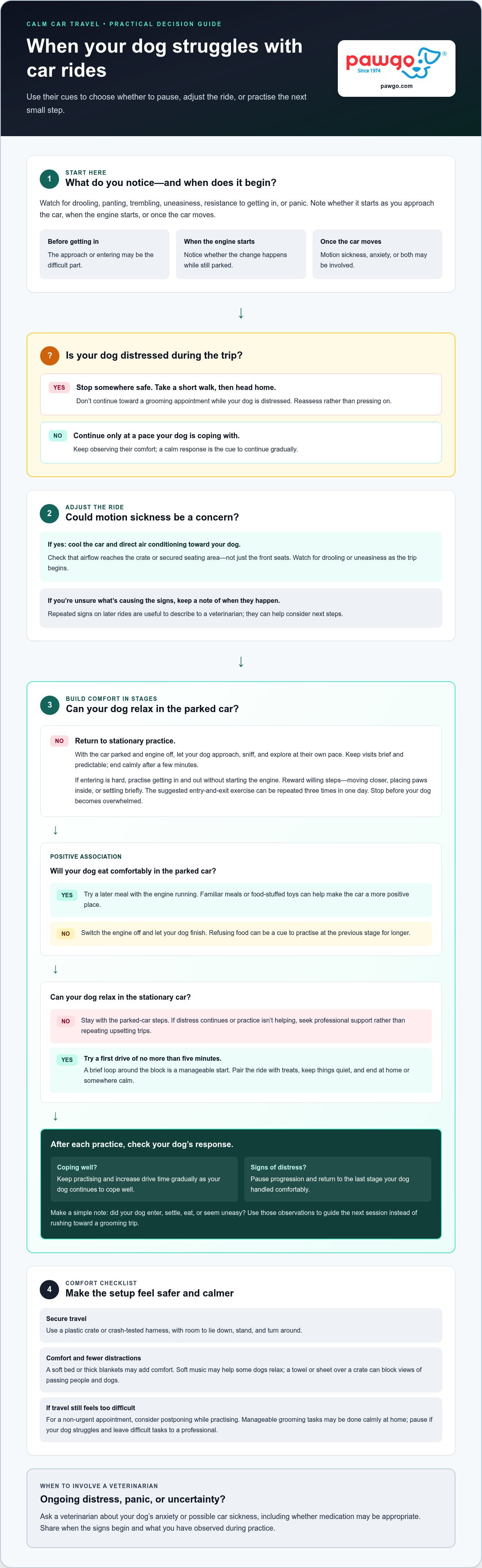
A dog that drools, pants, or seems uneasy may be experiencing nausea, anxiety, or both. Notice when the signs begin: as you approach the car, when the engine starts, or once the vehicle moves. The timing can help identify which part of the trip feels difficult. For example, a dog who reacts before getting in may need a different approach from one who becomes distressed in motion.
If drooling or anxiety starts during a trip, stop somewhere safe, take a short walk, and head home. Don’t continue toward a grooming appointment while your dog is distressed. If the same signs return on later rides, describe when they happen to a veterinarian. These observations can help distinguish possible motion sickness from fear and guide your next steps.
Before another trip, review your dog’s travel setup. If you need help choosing appropriate restraint gear for car rides and pit stops, consulting a dog collar vs harness australia guide can provide valuable guidance. In the car, use a plastic crate or crash-tested harness, with enough room for your dog to lie down, stand, and turn around. A soft bed or thick blankets can add comfort. Soft music may help some dogs relax, and a towel or sheet over a crate can block views of passing people and dogs.
If your dog reacts to people or dogs outside, try a visual barrier and soft music during a stationary practice. See whether your dog can settle with fewer distractions. If these changes don’t help, seek professional support rather than repeating upsetting trips. Adjustments may reduce triggers, but they don’t replace gradual practice or veterinary advice about ongoing distress.
Alternatives to a car trip include handling manageable grooming tasks at home or postponing a non-urgent appointment while you practise travel. Grooming for dogs who hate car rides can start at home with familiar brushing and gentle handling. Keep a bath calm and brief, and trim only areas you can manage steadily. Pause if your dog struggles, and leave difficult tasks to a professional.
To find grooming support for an anxious dog, look for an individualized, calm approach. Before booking, explain your dog’s travel triggers and ask how the groomer responds to signs of stress. Ask whether pauses are possible and what to do if your dog arrives distressed. Grooming for dogs who hate car rides may take planning for both the journey and appointment, with your dog’s reactions guiding each decision.
For motion sickness, keep the car cool and direct an air-conditioning vent toward your dog’s area. Check that the airflow reaches their crate or secured seating area, not just the front seats. Watch for drooling or uneasiness as the trip begins. If those signs appear, stop somewhere safe and reassess rather than pressing on.
2. Building up from stationary practice to short drives
Start with the car parked, not with a trip to a grooming appointment. Let your dog approach, sniff, and explore the open car at their own pace. Keep the engine off, then end the session after a few minutes by calmly helping your dog out. Repeat this practice several times a week, keeping each visit brief and predictable.
If your dog hesitates to enter, practise getting in and out without starting the engine. Reward each willing step, such as moving closer, placing paws inside, or settling briefly. Repeat the suggested entry-and-exit exercise three times in one day. Stop before your dog becomes overwhelmed, then return to an easier step next time.
Build a positive association by offering a familiar meal inside the parked car. Once your dog can eat comfortably with the engine off, try a later meal with the engine running. If your dog won’t eat while it runs, switch the engine off and let them finish. Eating is useful feedback: a dog who refuses food may need more practice at the previous stage.
When your dog relaxes in the stationary car, begin with a very short drive. Keep the first ride to no more than five minutes, then return home or stop somewhere calm. A brief loop around the block lets your dog experience movement without a long journey. Pair the ride with treats, and keep the mood quiet so the car doesn’t predict only grooming.
Build your dog’s travel skills before appointment day. Practise the parked-car steps first, then take short, manageable trips that end on a pleasant note. Once your dog is ready for rides, keep practising and increase the drive time gradually as they continue to cope well. If signs of distress appear, pause progression and return to the last stage your dog handled comfortably.
Keep a simple note after each practice: whether your dog entered, settled, ate, or seemed uneasy. For example, a dog who enters but won’t settle may need more time parked before driving. A dog who relaxes during a short loop can gradually try a longer route. These observations help you adjust the next session without rushing toward a full grooming trip.
When your dog is ready for a grooming appointment, a calm grooming visit can be the next step after gradual practice.
Once your dog is comfortable in the car, start with a loop around the block and gradually add distance and time as they continue to cope well. Keep the first drive in this gradual training process to no more than five minutes. This gives your dog a manageable starting point instead of asking them to handle a lengthy journey at once.
Pair short car rides with treats to help your dog look forward to riding. Keep the experience pleasant and low-pressure, and let your dog’s response guide the pace. If an outing seems difficult, make the next practice easier rather than extending it. Gradual increases can help your dog associate the car with positive experiences while keeping each step manageable.
3. Consulting a veterinarian about anxiety or car-sickness medication
A dog that pants, drools, trembles, or panics during travel may need more than gradual practice. A veterinarian can help distinguish possible motion sickness from anxiety and discuss suitable next steps. Describe when the signs begin, such as before the engine starts or after the car moves. These details help make the conversation specific to your dog’s travel pattern.
Ask a veterinarian about medication if your dog shows stress or car sickness during rides. A veterinarian should determine the appropriate motion-sickness medication dosage using your dog’s age and weight. Dramamine and Bonine are over-the-counter medications that may be used for canine motion sickness with veterinary dosage guidance. Don’t choose a product or dose based on another dog’s experience.
Before the appointment, write down your dog’s age, weight, symptoms, and when they appear. Mention whether the main concern is nausea, fear, or both, and explain how travel affects grooming appointments. Ask which signs suggest motion sickness, whether medication may suit your dog, and how to follow the prescribed instructions. Clear notes make it easier to discuss the details that matter.
The main preventable medication risk is giving a dose that doesn’t fit your dog’s age and weight. That’s why veterinary guidance matters before using Dramamine, Bonine, or anxiety medication. Don’t give human medicine or change a dose on your own. A veterinarian can consider your dog’s symptoms and relevant details when advising on medication for car sickness or anxiety.
Medication isn’t the only support for a dog that panics in the car. A professional dog trainer can help address your dog’s responses through structured practice, while a veterinary behaviorist can help with more complex fear or anxiety. If your dog freezes, struggles to enter, or panics once the car starts, seek help promptly rather than allowing repeated distress to become part of every trip.
Use a simple travel log to make your next discussion more useful. Record whether your dog ate, drooled, or became distressed, and note whether the car was parked or moving. For example, nausea that appears only during motion may point to a different concern from fear that begins at the sight of the car. Share these observations with a veterinarian before planning a longer ride.
For a grooming trip, discuss the appointment and travel together rather than focusing only on the destination. A veterinarian can advise on medication questions, while gradual car practice and calm handling address other parts of the experience. If you’re unsure how to manage your dog’s car-riding difficulties, ask for guidance early, before distress makes routine outings harder.
The main preventable risk is giving a dose that isn’t appropriate for your dog’s age and weight. Don’t give human medicine or change a dose without veterinary guidance. A veterinarian can assess whether medication is suitable for your dog’s symptoms.
4. Gradual car desensitization with food-stuffed toys
A food-stuffed toy can give your dog a calm activity beside the car before travel begins. Choose a toy your dog already enjoys, and offer it near the open door while the car stays parked. Let your dog decide whether to approach. If they remain relaxed, place the toy inside and let them explore without starting the engine. End the session after a few minutes, then help your dog leave calmly.
Repeat this parked-car practice several times a week. Keep the sequence predictable: approach, explore, enjoy the toy, then return indoors. If your dog avoids the doorway, move the toy farther away and reward calm interest from that distance. The goal is comfortable, voluntary exploration, not coaxing your dog into a space they are trying to avoid.
If your dog is reluctant to enter, practise stepping in and coming back out without driving. Repeat the supported entry-and-exit exercise three times in one day. Keep each attempt brief, and let your dog leave without being pulled or held inside. A dog that willingly returns to the car is ready to continue at that level; hesitation is a reason to make the next session easier.
Once your dog explores comfortably, sit together inside the parked car with the engine off. Offer a meal or food-stuffed toy, then end the session by helping your dog out after a few minutes. This links the car with a familiar, rewarding activity and a clear ending. Repeat the same calm routine before introducing a new sound or sensation.
When your dog can settle and eat with the engine off, try the next step with the engine running. Keep the car stationary and observe your dog’s response. If they won’t eat, turn the engine off and let them finish their meal. Return to engine-off practice before trying again, rather than extending the session or adding a drive.
Keep the toy and food familiar, and use your dog’s willingness to engage as a guide. For example, a dog that sniffs the toy but backs away may need more time exploring the open car. A dog that eats calmly can practise with the engine running before moving on to a short trip. Continue the routine several times a week, changing only one part at a time. Steady progress can make getting in, settling, and hearing the engine feel less unfamiliar before a grooming appointment.
Keep the same order across sessions: calm exploration first, a few minutes inside with the engine off, then meals with the engine running when your dog is ready.
5. Keeping the car cool and providing access to air conditioning
A cool car and nearby air-conditioning vent can make travel more comfortable for a dog prone to motion sickness. Plan the airflow before loading your dog. Check that cool air reaches the crate or resting spot instead of assuming the front of the car feels the same as the back. Aim for a comfortably cool space throughout the ride.
Direct the vent so air reaches your dog’s area without blowing straight into their face. If your dog travels in a crate, check the airflow there. If they ride in another secured space, make sure the vent reaches that spot too. Adjust the vent while the car is parked, then reassess after your dog settles.
Notice your dog’s response as the ride begins. Panting, drooling, or uneasiness may signal discomfort, but airflow alone won’t explain every cause. Consider whether the cabin feels warm, whether air reaches your dog, and when the symptoms start. These observations can help you decide whether to pause the trip and discuss recurring nausea with a veterinarian.
Include cool airflow in gradual car practice, not just preparation on appointment day. During a stationary session, check the vent position and let your dog experience the parked car. If your dog remains comfortable, use the same setup for a short drive. Keeping the arrangement consistent can help you notice whether changes in airflow affect your dog’s comfort.
For a longer outing, check the cabin and vent again before setting off. Air reaching the front seats doesn’t necessarily reach your dog’s spot. If the car warms up or your dog starts showing distress, stop somewhere safe and reassess rather than pressing on. A cool cabin supports comfort, but it doesn’t replace gradual practice or veterinary advice for repeated motion sickness.
Mobile grooming brings a full grooming appointment to your home, and some providers also offer focused, non-grooming service calls. This can remove the need for a separate car trip to a grooming location. Ask what the appointment involves and explain your dog’s travel concerns so the plan can account for their comfort.
Use the same calm approach when planning grooming at your doorstep. Explore mobile grooming options for a convenient alternative to travelling to a salon.
Pawgo: Full Groom
Pawgo brings mobile grooming to your doorstep, so your dog doesn’t need a car ride to a grooming location. If travel anxiety makes appointments difficult, a Full Groom lets you arrange grooming at home. Pawgo’s fully equipped vans provide cage-free, one-on-one grooming, with services including Full Groom and optional scissor finish.
For a smaller need, Pawgo also offers a Service Call, such as flea and tick treatment. Choose the grooming option that fits your dog’s needs, while continuing gradual car practice separately if future trips are necessary.
Contact Pawgo or visit pawgo.com to arrange your dog’s grooming.
Choose the next step that suits your dog
Your dog’s comfort matters more than keeping to a grooming schedule. Let their response guide your next decision: continue gradual travel practice or reduce the journey by choosing grooming at home. For grooming for dogs who hate car rides, a doorstep appointment can make routine care easier while you work on travel separately.
Pawgo offers Full Groom, Bath & Tidy, and Service Call options. Choose the care that fits your dog’s current needs, then share any handling or comfort considerations when arranging the appointment. A calm, thoughtful plan can make grooming more manageable for both of you.
Contact Pawgo for grooming help and choose a convenient next step. With patience and an approach suited to your dog, you can make their care routine feel gentler over time.
Frequently Asked Questions
Why is my dog terrified of the car?
Car fear can stem from anxiety, motion sickness, or an unpleasant experience associated with travel. A dog may also feel unsettled by engine noise, movement, or sights outside the windows. Notice what happens just before your dog reacts: approaching the vehicle, hearing it start, or beginning the ride. That pattern can help you identify what part of the journey feels difficult and plan support accordingly.
Can a veterinarian prescribe medication for dog car anxiety before grooming?
Yes, a veterinarian can assess your dog and advise whether medication may help with travel anxiety or car sickness before an appointment. Share your dog’s age, weight, symptoms, and any medicines they already take. The right approach depends on whether the distress appears related to nausea, fear, or both. Don’t give human medication or use a dose intended for another dog without veterinary guidance.
What are the risks of sedating a dog for grooming or travel?
The main preventable risk is giving medication at a dose that doesn’t fit your dog’s age and weight. Consult a veterinarian before using medication, and don’t give human medicine or change a dose on your own.


