

A medicated bath is a care step, not a diagnosis. If your dog is scratching or has irritated skin, you may be wondering whether medicated shampoo for dogs will help and which directions to follow. These shampoos are made for different purposes, so the right product and routine depend on the specific formula and your dog’s needs.
Used with clear guidance, shampoo can be one part of a dog’s skin-care plan. It can’t identify the cause of a problem or replace veterinary care when that’s needed. This article explains what medicated shampoo may and may not do, how to compare product labels, and what precautions can help you avoid unnecessary irritation. It also covers when to seek veterinary guidance instead of trying another bath.
Pawgo offers medicated shampoo as a grooming add-on during mobile appointments in Phoenix, Seattle, and Los Angeles. Grooming provides a bath, not a diagnosis or treatment plan. Knowing the difference can help you decide when a grooming visit fits your dog’s needs and when a skin concern calls for veterinary attention.
Key Takeaways
- Medicated shampoo for dogs differs from routine cleansing shampoo. Choose based on the specific product’s stated purpose and directions.
- Itching or visible skin changes can have different causes, so don’t assume a shampoo category identifies what your dog needs.
- Compare the label’s purpose, ingredients, and instructions, and use your veterinarian’s guidance to help select an appropriate product.
- Follow the label step by step, and watch for signs that your dog is uncomfortable during or after bathing.
- Pawgo’s medicated shampoo is a grooming add-on. Diagnosis and treatment decisions belong with your dog’s veterinarian.
What Is Medicated Dog Shampoo and What Does It Do?
Medicated dog shampoo is a topical product labelled for a particular skin-care purpose. Routine shampoo is mainly used to clean the coat, so the two categories aren’t interchangeable. Products can differ in intended use, ingredients, and directions. Read the label on the specific bottle instead of relying on the broad word “medicated.”
Medicated dog shampoo is a label-directed topical care product, and its directions matter because each formula is intended for a specific use. Apply it to the coat and skin only as its instructions specify. It doesn’t diagnose the reason for a skin concern, and using it doesn’t guarantee the concern will resolve. Your veterinarian can help determine whether a particular product is appropriate for your dog.
The distinction also helps make product labels easier to interpret. A shampoo may be marketed for a specific care purpose, but its name alone can’t tell you whether it suits your dog. The overview of medicated shampoos for animals describes how these products are designed for specialized uses. For your dog, rely on the actual product label and veterinary guidance rather than assuming all formulas work the same way.
How Is Medicated Shampoo Different From Regular Dog Shampoo?
Routine dog shampoo is intended to wash away everyday dirt and clean the coat. A product labelled for a particular care purpose has a different role, and its directions may differ from those for ordinary cleansing. Neither type suits every dog or situation. Read the label to understand the shampoo’s intended use, how to apply it, and any cautions. Don’t substitute one product for another based only on its general category.
What Can the Word “Medicated” Mean on a Label?
Words such as “antiseptic” or “antifungal” describe a product’s stated purpose. They don’t prove that a dog has a bacterial or fungal condition. Similar signs can have different causes, and a shampoo label can’t identify the cause in an individual animal. Treat those terms as a guide to what the product is formulated and labelled for, not as a diagnosis or a promise of results.
Look beyond the front of the bottle. Read the complete directions and cautions, including which animals the product is intended for. If the label is unclear or your dog already has a skin concern, ask your veterinarian whether that product is appropriate before using it. This is especially helpful when an online description makes broad claims that don’t clearly match the label on the bottle.
Think of shampoo as one possible part of a care plan, not a stand-alone answer. Choosing a product based on a label term alone can lead to a mismatch between its intended use and your dog’s needs. A more useful next step is to note what you’re seeing, then consider it alongside veterinary guidance and the product’s instructions.
Which Skin Concerns May Lead Owners to Ask About Medicated Dog Shampoo?
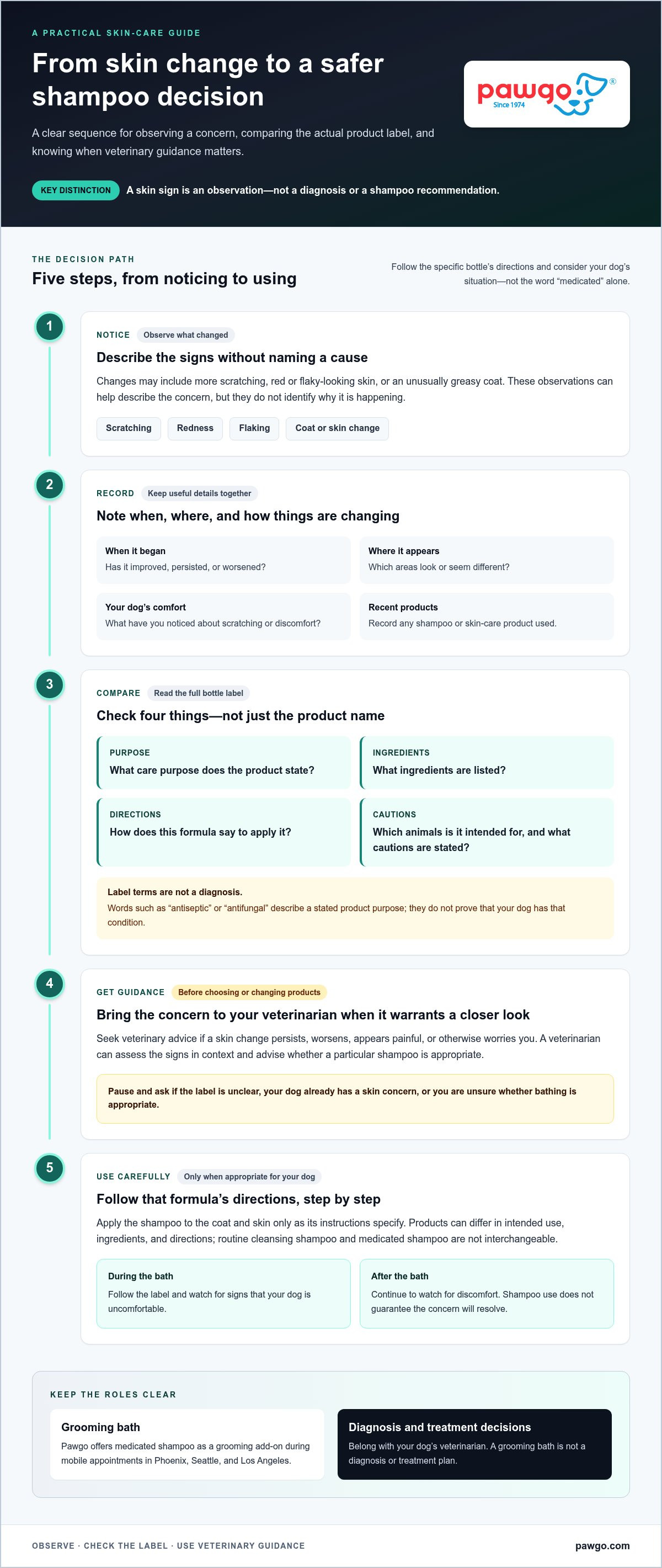
Owners often look into medicated shampoo after noticing a change: their dog is scratching more, the skin looks red or flaky, or the coat seems unusually greasy. These observations are useful to note, but they don’t reveal what’s causing the change. Similar signs can arise for different reasons, and the right next step depends on the dog’s overall situation.
A skin concern tells you what has changed, not why it changed. A shampoo labelled for a particular purpose may sound like a match, but choosing by symptom or product wording alone can miss important context. Consider how long the change has been present, whether it’s spreading or worsening, and whether your dog seems uncomfortable. Those details can help guide a conversation with your veterinarian.
Do Itching, Redness, or Flaking Tell You Which Shampoo to Use?
No. Itching, redness, flaking, and changes in coat or skin appearance are observations, not product recommendations. Note when you first noticed them, where they appear, and whether they’re changing. If you’ve already used a product, record its name and how you used it. These details can help your veterinarian assess the situation, but they don’t replace an examination.
It can be tempting to match a visible sign to a shampoo label. Don’t treat that match as confirmation. A product’s stated purpose doesn’t establish that the same issue is affecting your dog, and an unsuitable product may not address the underlying concern. If you’re uncertain, pause before choosing a medicated shampoo for dogs and seek guidance on whether bathing is appropriate.
When Should a Dog’s Skin Concern Be Discussed With a Veterinarian?
Seek veterinary advice if a skin change persists, worsens, appears painful, or otherwise worries you. A veterinarian can assess the signs in context, consider possible causes, and recommend suitable care, including whether a particular shampoo belongs in the plan. Don’t use a generic symptom list to decide how serious a concern is. Ask a veterinary professional for advice tailored to your dog.
Before that conversation, gather clear, practical observations. You might note:
- When the change began and whether it has improved or worsened.
- Which areas of the body look or seem different.
- What you’ve noticed about your dog’s scratching or comfort.
- Any shampoo or other skin-care product used recently.
These notes can make it easier to describe what you’re seeing without trying to name a cause yourself. Follow your veterinarian’s guidance on next steps, especially if the signs are changing or causing your dog discomfort.
If your veterinarian recommends bathing as part of your dog’s care, Pawgo offers medicated shampoo as a grooming add-on during mobile appointments. Explore Pawgo mobile grooming for a convenient grooming visit at home. Diagnosis and treatment decisions remain with your dog’s veterinarian.
How Can You Choose and Compare Medicated Shampoos for Dogs?
Compare the intended use and instructions on the exact product, not just the words on the front of the bottle. Two shampoos described with similar terms may have different ingredients, directions, and precautions. A side-by-side check can help you spot those differences and discuss a suitable option with your veterinarian.
| Label purpose | Ingredients | Directions | Veterinary recommendation |
|---|---|---|---|
| What care purpose does the product state? | Which ingredients are listed, and what details does the label provide? | What application, rinsing, and repeat-use instructions are printed? | Has your veterinarian recommended this exact product for your dog? |
Use the table to compare labels, not to diagnose a skin problem or rank formulas. If a detail isn’t clear, don’t fill the gap with assumptions based on another shampoo’s directions. The exact product and its label matter more than broad category wording.
Which Label Details Matter Before Use?
Read the full label before bathing. Check that the product is intended for dogs, then review its stated purpose, complete directions, precautions, and storage instructions. Follow that product’s instructions rather than copying an online routine, since use details can vary by formula. If your veterinarian recommended a shampoo, compare its name and label with that recommendation to make sure you’re considering the same product.
For a clear comparison, note the product name and any label details you want to discuss. Separate information printed on the package from claims on retailer pages or social posts. If the ingredient list or a product claim raises questions, ask your veterinarian how it relates to your dog’s situation. An ingredient’s presence doesn’t make a shampoo suitable for every dog.
Should You Choose a Shampoo Based on Reviews or Symptoms?
Reviews can describe one owner’s experience, but they can’t establish whether the same shampoo is appropriate for another dog. A product title that mentions a familiar symptom isn’t enough to select it, either. Similar signs may have different explanations, and a title is no substitute for the complete label or a veterinary recommendation.
Keep product information and personal accounts separate. Use the package or manufacturer’s information to verify ingredients and directions; treat reviews as anecdotes, not proof of suitability or expected results. If you’re considering medicated shampoo for dogs because of a skin concern, ask your veterinarian about the specific product before using it. That gives you a clearer basis for comparing options without assuming one formula is right for every dog.
How Do You Use Medicated Shampoo for Dogs Carefully?
A careful bath starts before the shampoo touches your dog’s coat. Products can have different directions and precautions, so there isn’t one routine that works for every formula. Keep the product label available, follow any veterinary instructions for that specific shampoo, and don’t fill in missing details with advice meant for another product.
The product label and your veterinarian’s directions take precedence over generic advice. Use this label-first sequence:
- Read the full directions. Check that the product is intended for dogs, then review its application instructions, precautions, and guidance about rinsing or repeat use.
- Prepare before bathing. Gather what the label calls for and set up a calm space. Keep the directions nearby so you can refer to them as needed.
- Apply as instructed. Follow the product’s own guidance, including where and how to apply it. Don’t borrow a contact time, dilution method, or schedule from another shampoo or an online routine.
- Observe your dog. Pay attention to your dog’s comfort during the bath and afterward. If your dog seems distressed or the skin concern worsens, stop and follow the product’s safety directions.
Why Must You Follow the Exact Product Directions?
Directions are specific to a formula. A routine written for one shampoo may not apply to another, even if both use similar terms to describe their purpose. Follow the label’s precautions and any instructions your veterinarian gave for that product. Don’t assume a familiar-looking bottle should be used the same way as one you’ve tried before.
There’s no universal contact time or bathing schedule for medicated shampoo for dogs. Check the label for the product’s instructions on application and repeat use. If directions are missing, unclear, or seem different from your veterinarian’s guidance, pause and ask your veterinarian how to proceed rather than guessing.
What Should You Do if Your Dog Reacts Poorly During Use?
If your dog appears uncomfortable or you notice a concerning change during use, stop and follow the product’s stated safety directions. Don’t add another shampoo or try a home remedy to counter the reaction. If the reaction concerns you or your dog’s skin signs worsen, seek veterinary advice and have the product label available to discuss.
A calm, consistent approach helps you notice how your dog responds without treating the bath as a diagnosis or guaranteed solution. If a veterinarian has advised that a grooming bath is appropriate, Pawgo offers medicated shampoo as a grooming add-on during mobile appointments. Book a Pawgo grooming appointment that can include the add-on. Diagnosis and treatment decisions remain with your dog’s veterinarian.
How Can Medicated Shampoo Fit Into Pawgo Mobile Grooming?
Pawgo offers medicated shampoo as a grooming add-on. It can be part of a personal-care visit, alongside grooming delivered at your doorstep in a mobile van with a cage-free environment. The appointment brings grooming to your home without turning it into veterinary care.
The distinction is simple: grooming provides a bath and coat care, while medical decisions about a skin concern stay with your dog’s veterinarian. If you’re considering medicated shampoo for dogs because of a change in your pet’s skin, get veterinary guidance about the concern and appropriate care. A grooming add-on doesn’t diagnose the cause or promise a clinical result.
What Role Can a Grooming Appointment Play?
A grooming visit can provide routine personal care and include Pawgo’s medicated-shampoo add-on. It’s a bathing service, not a substitute for medical assessment. If your veterinarian has discussed a particular skin-care plan, keep that guidance in mind when arranging the visit and share relevant information about your dog’s needs.
Mobile grooming brings the appointment to your home. Pawgo’s cage-free vans provide a dedicated grooming environment at the doorstep, so your dog can have grooming care without travelling to a salon. For owners in Phoenix, Seattle, and Los Angeles, it’s a home-based way to arrange grooming while keeping the purpose of the visit clear: grooming and personal care.
What Is the Difference Between Grooming and Veterinary Care?
Grooming isn’t a substitute for veterinary assessment or treatment. A groomer can provide the requested grooming service, but questions about itching, redness, or other skin symptoms belong with your dog’s veterinarian. Your veterinarian can assess the concern and advise whether a shampoo or other care is appropriate.
Keep service types distinct, too. Pawgo’s medicated shampoo is a grooming add-on. The separate short service call for flea and tick treatment is a different service, not the same thing as the shampoo add-on. If you’re unsure whether your dog’s skin concern needs medical attention, let your veterinarian guide that decision rather than treating a bath as the solution.
When you have a grooming plan that fits your dog’s needs, Pawgo offers mobile grooming appointments in Phoenix, Seattle, and Los Angeles. Explore Pawgo grooming appointments and arrange grooming at home.
Choose a Calm, Informed Next Step
When your dog’s skin needs attention, choose a next step that fits the concern, not simply a product title that sounds familiar. Keep your veterinarian involved in decisions about skin symptoms and care. If grooming is also on your mind, share any relevant guidance so the appointment can be planned around your dog’s needs.
Medicated shampoo for dogs may be included in a grooming visit when appropriate, but it isn’t a substitute for veterinary assessment. Take time to understand the product and your dog’s needs before deciding what comes next.
When you’re ready to arrange grooming, Pawgo’s online booking makes it easy to explore an appointment. Explore Pawgo mobile grooming appointments and book a convenient grooming visit in Phoenix, Seattle, or Los Angeles.
Frequently Asked Questions
Is medicated shampoo safe for all dogs?
No. A shampoo that suits one dog may not be appropriate for another, especially if a dog has a known sensitivity or other individual needs. Check the product’s species information and precautions, and ask your veterinarian before use if you’re unsure. Keep the package available so you can share the exact product name and ingredients when seeking advice.
Can I use human medicated shampoo on my dog?
Don’t assume a human product is suitable for your dog. Its ingredients, concentration, and directions may not be intended for canine use. Choose a product labelled for dogs and follow its instructions. If you’re considering shampoo because of a skin problem, describe the concern to your veterinarian and ask what approach is appropriate rather than adapting a product made for people.
How often should I bathe my dog with medicated shampoo?
There’s no single bathing schedule that works for every dog or formula. Follow the exact product directions and any plan your veterinarian gives you. If you’re tempted to bathe more often because a concern hasn’t improved, don’t change the routine on your own. Note what you’ve done and ask your veterinarian what to do next, particularly if the skin looks worse.
What happens if I leave medicated shampoo on my dog too long?
The effect depends on the shampoo and its instructions, so there isn’t one contact time that applies to every product. Follow the label carefully. If you’ve left it on longer than directed, consult the product’s safety information and watch your dog. Seek veterinary advice if you notice a concerning reaction or the skin appears worse, and share the product name and what happened.
Does medicated shampoo cure a dog’s skin problem?
No shampoo should be treated as a guaranteed cure. Skin concerns can have different causes, and a topical product may be only one part of care if a veterinarian recommends it. Use it only as directed, and don’t keep repeating or switching products if the concern continues. A veterinary assessment can help determine what care is suitable for your dog.
Can a groomer use medicated shampoo on my dog?
A grooming appointment can include medicated shampoo as an add-on, but grooming doesn’t diagnose or treat a medical condition. For a skin concern, follow your veterinarian’s guidance about the product and whether a grooming bath fits the plan. Pawgo’s mobile grooming appointments bring grooming to customers’ doorsteps in Phoenix, Seattle, and Los Angeles, in vans that provide a cage-free environment.
How much does medicated shampoo for dogs cost?
The price of a retail shampoo depends on the product, size, and seller. A grooming add-on is part of a service appointment, not the same as buying a bottle, so consider those as separate options. Pawgo offers online appointment booking in Phoenix, Seattle, and Los Angeles, where you can review appointment details. Choose a shampoo based on its label and your veterinarian’s guidance, not price alone.


