

Treating your dog is only part of flea control. Fleas can also be in bedding and other places your dog rests, so flea treatment for dogs at home works best when you consider your pet and their surroundings together. If you’ve noticed scratching or tiny dark specks in your dog’s coat, it’s understandable to wonder whether fleas are the cause and which steps are safe.
A calm, practical approach can help you act without guesswork. This guide covers common signs of flea activity, how to make treatment decisions, and ways to manage your home by washing bedding and vacuuming. It also explains why caring for your dog and cleaning their environment go hand in hand when you’re trying to reduce repeat exposure.
Some flea treatments need veterinary guidance, especially when your dog is young, has health concerns, or may be sensitive to a product. Pawgo offers a 15-minute mobile service call for flea and tick treatment. This grooming-related service does not replace veterinary diagnosis or care. Here are sensible next steps, including when to involve your veterinarian.
Key Takeaways
- Repeated scratching, irritated skin, or flea dirt can point to flea activity. Check your dog’s coat carefully before deciding what to do next.
- Flea treatment for dogs at home works best when you consider both your dog and the places they rest, rather than focusing only on visible fleas.
- Combing and cleaning can support your plan, but “natural” remedies aren’t automatically effective or safe for every dog.
- Build a steady routine around cleaning bedding, resting spots, carpets, and shared pet areas, then keep monitoring for signs of fleas.
- Pawgo’s 15-minute mobile service call provides grooming-related support for flea and tick treatment. Diagnosis and veterinary care belong with a veterinarian.
How to tell whether your dog may have fleas at home
A flea infestation means fleas have settled on a pet or in the places they rest, rather than a single insect simply passing through. Checking early can help you spot signs and choose sensible next steps before your dog’s discomfort worsens. Look for repeated scratching or chewing, visible insects, dark specks in the coat, irritated skin, or patches of thinning hair.
These clues are worth checking, but scratching alone doesn’t confirm fleas. Dry skin, allergies, and other irritants can also make a dog itchy. A careful inspection gives you more useful information before choosing flea treatment for dogs at home or seeking veterinary guidance.
This video discusses a natural flea spray, but don’t assume a remedy is safe or suitable just because it’s described as natural.
What do fleas and flea dirt look like on a dog?
Adult fleas are small, moving insects that can be hard to spot, especially in a thick or dark coat. Flea dirt looks like tiny dark specks, often compared to ground pepper. A speck by itself isn’t proof, since dirt and other debris can look similar. Consider what you see alongside your dog’s scratching, skin irritation, or hair loss. Fleas develop through several stages, described in this overview of the flea life cycle.
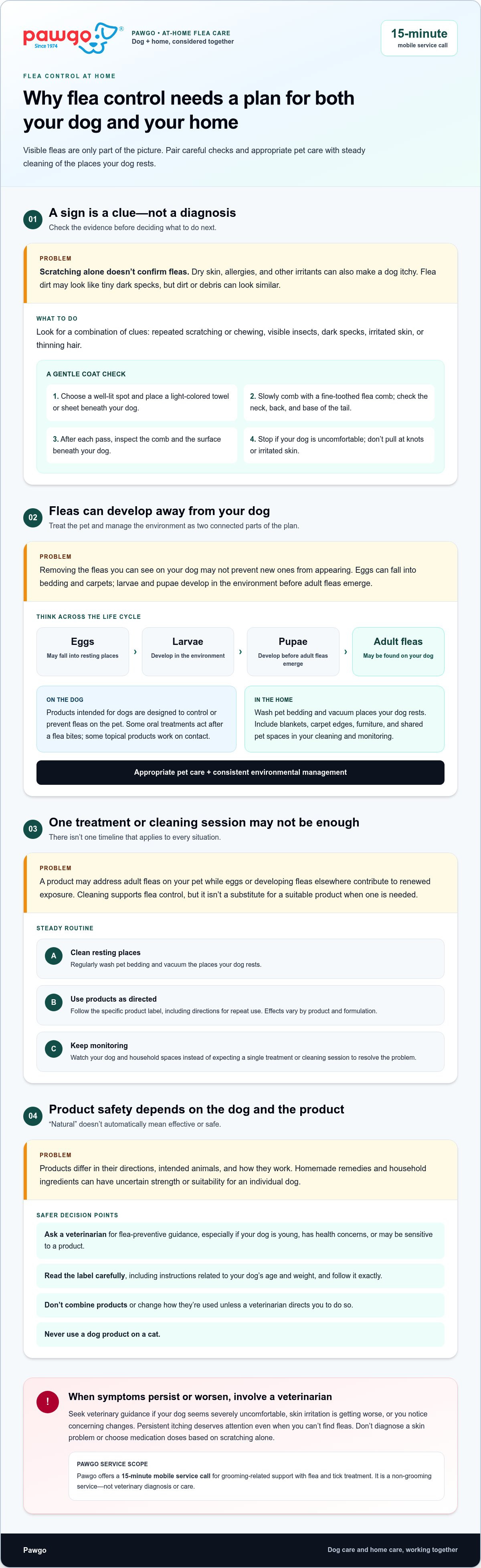
For a gentle check, choose a well-lit spot where your dog can relax. Place a light-colored towel or sheet beneath them, then slowly comb through the coat with a fine-toothed flea comb. Pay attention to the neck, back, and base of the tail. After each pass, check the comb and the surface beneath your dog for insects or dark debris. Stop if your dog becomes uncomfortable, and avoid pulling at knots or irritated skin.
When should flea-like symptoms prompt a veterinary call?
Contact a veterinarian if your dog seems severely uncomfortable, skin irritation is getting worse, or you notice concerning changes in their condition. Persistent itching deserves attention even when you can’t find fleas, since several problems can cause similar signs. A veterinary clinic such as Animal Hospital of Sullivan County can assess what may be behind the symptoms and guide appropriate medical care. Don’t try to diagnose a skin problem or choose medication doses based on scratching alone.
If you find a flea or flea-like specks, note where you saw them and whether your dog has other symptoms. This record can help you describe the situation clearly when seeking guidance. If you find no clear evidence but the itching continues, keep observing rather than assuming fleas are the cause.
How Home Flea Treatment Works Across the Life Cycle
Fleas can be on your dog and in the places your dog rests. Adult fleas may be visible in the coat, but eggs can fall into bedding, carpets, and other resting spots. Larvae and pupae develop in the environment before adult fleas emerge. Removing the fleas you can see on your dog may not stop new ones from appearing.
Household cleaning and a suitable flea-control product have different roles. Washing bedding and vacuuming resting areas can help manage the environment, while products intended for dogs are designed to control or prevent fleas on the pet. Effects vary by product and formulation, so use the label and veterinary advice to guide your choices.
Effective flea control pairs appropriate pet care with consistent environmental management.
Why can fleas return after an at-home treatment?
Fleas develop through several stages, and not every stage is on the dog at the same time. If a product addresses adult fleas on your pet, eggs or developing fleas elsewhere may still contribute to renewed exposure. Blankets, carpet edges, furniture, and shared pet spaces are easy to overlook. Continue cleaning and monitoring rather than expecting one treatment or cleaning session to resolve the problem.
- On the dog: Flea-control products work in different ways. Some oral treatments act after a flea bites, while some topical products work on contact. Follow the specific product label.
- In the home: Regularly wash pet bedding and vacuum places your dog rests. Cleaning supports flea control but isn’t a substitute for a suitable product when one is needed.
- Across time: Keep an eye on your dog and household spaces, and follow product directions for any repeat use. There isn’t one timeline that applies to every situation.
How should owners think about flea products for dogs?
Choose flea preventives with veterinary guidance, especially if your dog has health concerns or you’re unsure which option fits. Products differ in their directions, the animals they’re intended for, and how they work. Read the label carefully, including instructions related to your dog’s age and weight, and follow it exactly.
Don’t combine flea products or change how they’re used unless a veterinarian directs you to do so. Never use a dog product on a cat. Keep grooming and cleaning measures in their proper role: bathing or combing may help with coat care, and household cleaning can support environmental management, but neither automatically provides ongoing flea prevention.
Pawgo offers a 15-minute mobile service call for grooming-related support with flea and tick treatment. It’s a non-grooming service, not veterinary diagnosis or care, so consult your veterinarian for treatment guidance.
Do Natural Home Flea Remedies for Dogs Really Work?
“Natural” describes where an ingredient comes from, not whether it reliably controls fleas or is safe for every dog. Homemade sprays and household ingredients can sound gentle, but their strength, concentration, and effects may be uncertain. Your dog’s age, health, coat, and tendency to lick products from their fur can also affect what’s suitable.
Separate environmental support from treatment for your pet. Vacuuming, washing bedding, and combing can support a flea-control plan, but they don’t necessarily kill or prevent fleas on the dog. Home cleaning supports the environment; veterinarian-guided flea treatment addresses what’s appropriate for the dog.
Which at-home measures can support flea control?
Consistent household care makes the spaces your dog uses easier to manage. Wash pet bedding according to its care instructions, and vacuum rugs, carpeted areas, and favorite resting spots regularly. Empty the vacuum contents safely afterward. These steps help remove debris and support a wider plan, but one cleaning session shouldn’t be treated as a complete solution.
A flea comb can help you inspect your dog’s coat and remove some visible fleas. Work gently over a light surface, checking the comb as you go. Combing is useful for observation and coat care, but it doesn’t provide lasting prevention. Bathing can clean the coat and may wash away some visible debris, yet a bath alone isn’t a reliable stand-alone flea treatment.
These practical steps can be part of flea treatment for dogs at home, alongside an appropriate flea product when a veterinarian recommends one. Keep their roles distinct: cleaning addresses the surroundings, while a product intended for dogs is used according to its label to control or prevent fleas on the pet.
Which home remedies should dog owners approach cautiously?
Be careful with essential oils, citrus mixtures, powders, and household chemicals. Don’t apply them to your dog as flea treatments unless a veterinarian specifically advises you to use a particular substance in a particular way. “Plant-based” or “chemical-free” claims don’t establish that an ingredient works against fleas or is safe on a dog’s skin.
Ingredients can irritate skin or cause harm if a dog licks, inhales, or absorbs them. Homemade mixtures can also vary in concentration, making their effects difficult to predict. Avoid using products intended for another animal or adapting a household product for your dog. If you’ve already applied an unfamiliar substance and your dog seems unwell or uncomfortable, contact a veterinarian for guidance.
Before trying a remedy, consider what you need it to do. If the goal is to clean the home, use routine household cleaning measures. If you want to kill or prevent fleas on your dog, ask your veterinarian which product and instructions are suitable. This keeps supportive care useful without mistaking it for a proven treatment.
How to manage fleas on your dog and around your home
A steady routine helps you address your dog’s needs and the spaces they use. Work through these steps, and continue following product directions and veterinary guidance. Flea treatment for dogs at home isn’t a one-time cleaning task; the right plan depends on your pet and may need ongoing attention.
- Inspect your dog. Check the coat and skin for fleas, dark specks, irritation, or hair loss. Note what you see and whether your dog is scratching more than usual. If signs are severe or worsening, contact a veterinarian before trying a new treatment.
- Get treatment guidance. Ask your veterinarian which flea-control option suits your dog’s age, weight, and health. Follow its label carefully, and don’t combine products or use one intended for another species. If you have other pets, get species-appropriate guidance for each animal rather than treating every pet the same way.
- Clean the spaces your dog uses. Start with bedding and favorite resting spots, then move on to carpets, floors, upholstery, and shared pet areas. Wash bedding according to its care instructions. Vacuum floors and upholstery, including edges and accessible areas under furniture, then dispose of collected debris appropriately.
- Monitor and repeat the routine. Keep checking your dog and the areas they use. Continue household cleaning as part of the plan rather than assuming one deep clean will address every flea life stage. Follow the product label for any repeat use, and ask your veterinarian if signs continue or return.
What should you clean first when you find fleas?
Begin where your dog spends the most time: their bed, blankets, and regular resting places. Then vacuum nearby carpet, rugs, and upholstered furniture. If your dog shares spaces with other pets, include those spots too. Repeating these steps keeps the environment in view while your dog’s care plan continues. Check fabric care labels before washing, and empty or dispose of vacuum contents carefully.
How can you reduce the chance of fleas returning?
Discuss a consistent prevention plan with your dog’s veterinarian, and include every pet and commonly used area in the household routine. A product suitable for one animal may not be appropriate for another species or a different dog. Local weather and seasonal patterns can influence parasite exposure, but conditions vary by place and over time. Whether you’re in Phoenix, Seattle, or Los Angeles, avoid assuming that a particular season or yard treatment will prevent fleas. Ask your veterinarian what makes sense for your dog and location.
For grooming-related support, Pawgo offers a 15-minute mobile, non-grooming service call for flea and tick treatment. It does not replace veterinary diagnosis or care. Arrange a mobile flea and tick service call as part of your practical care routine.
Where Pawgo's at-home flea and tick service call fits
Flea care can involve different kinds of support. Your veterinarian guides diagnosis, treatment choices, and ongoing prevention. A mobile grooming service offers a separate, practical option for hands-on service at your doorstep. Keeping those roles clear helps you choose the right next step for your dog without expecting one kind of care to do everything.
Pawgo offers a 15-minute non-grooming service call for flea and tick treatment. Its mobile vans bring services to customers in Phoenix, Seattle, and Los Angeles. Local flea conditions can vary, so the service is a convenient way to get grooming-related support, not a claim about which parasites are active in a particular city or season.
What can a mobile flea and tick service call add?
The call provides grooming-related support at home for a flea or tick care need. It is not veterinary diagnosis or veterinary care. Your veterinarian can advise on products, methods, suitability for your dog, and ongoing prevention. Keep treatment questions with your veterinarian, and use Pawgo’s service call for flea and tick treatment support at your doorstep.
Before arranging a service, be clear about your dog’s needs. If you’ve noticed fleas or signs of irritation, include what you observed in your planning. For questions about symptoms or which flea treatment for dogs at home is appropriate, a veterinarian is the right source of medical guidance. Pawgo’s service call is not a diagnosis or treatment plan.
When should home care come before a grooming service?
Contact your veterinarian first if your dog is very uncomfortable, skin irritation is worsening, or you’re concerned about a change in their health. Persistent itching can have causes other than fleas, and a grooming service call can’t assess illness or skin problems. A veterinarian can advise whether your dog needs an examination and help guide treatment decisions.
If your dog seems well and you’re seeking grooming-service convenience, Pawgo’s service call can fit alongside your veterinarian’s advice and your home routine. It doesn’t replace cleaning shared spaces, caring for other household pets appropriately, or using prevention as directed by your veterinarian.
Whether you’re in Phoenix, Seattle, or Los Angeles, local conditions and your dog’s needs may differ. Choose veterinary guidance for health and prevention decisions, and consider mobile grooming support for convenience. You can explore Pawgo's mobile service options and book online when you’re ready to arrange a service call.
Make your next step feel manageable
Keep care decisions organized by keeping your veterinarian’s guidance and the product label together, and noting any instructions you need to follow. If someone else in your household helps care for your dog, share that information to prevent confusion and make the routine easier to maintain.
There’s no need to solve every concern at once. For flea treatment for dogs at home, let your veterinarian guide health and prevention decisions, and choose practical support that fits your dog and household. If your next step is grooming convenience, explore Pawgo's mobile grooming and service options.
Steady, informed care can make flea concerns feel less overwhelming. You’re taking a thoughtful step toward keeping your dog comfortable.
Frequently Asked Questions
Can I treat fleas on my dog at home?
Yes, you can take useful first steps at home, but treatment choices should suit your individual dog. For example, use a flea comb to check the coat and clean the places your dog sleeps. Before applying a flea product, read its label and ask your veterinarian if it’s appropriate, especially if your dog has a health condition or takes medication. If signs continue after you start a plan, seek veterinary guidance.
What is the safest way to get rid of fleas on a dog?
The safest approach is to ask your veterinarian which option fits your dog, then follow the product directions exactly. Age, health, and other medications can affect suitability, so avoid choosing based only on a friend’s experience or an online recommendation. Don’t combine flea treatments unless your veterinarian directs you to, and never use a product made for another species. Keep the packaging so you can refer to its instructions if questions come up.
Do home remedies like vinegar or essential oils kill fleas on dogs?
Household remedies aren’t a dependable substitute for veterinarian-recommended flea control. Vinegar, essential oils, citrus mixtures, and powders may irritate or harm a dog if used incorrectly, and popular claims don’t establish that a remedy is effective. Don’t apply a homemade mixture to your dog’s coat unless your veterinarian specifically advises it. Use combing and cleaning as supportive measures, and ask for guidance before trying an unfamiliar substance.
How do I know if my dog has fleas or just dry skin?
You may not be able to tell from itching alone, because fleas and other sources of skin irritation can look alike. Check the coat gently with a flea comb and look for additional clues, such as moving insects or dark debris caught in the fur. Note where irritation appears and whether it changes. If your dog keeps scratching, the skin worsens, or the cause remains uncertain, ask your veterinarian to assess the symptoms.
How often should I vacuum if my dog has fleas?
Vacuum frequently while you’re managing flea exposure, prioritizing your dog’s favorite resting spots, nearby flooring, and upholstery. There isn’t one schedule that suits every home, so make cleaning a repeated part of your plan rather than treating it as a one-time task. Empty the vacuum or dispose of collected debris safely after each cleaning, and wash bedding according to its care instructions. Continue monitoring for signs of renewed activity.
Should I treat every pet in my home for fleas?
Other pets may share exposure, but don’t assume they all need the same treatment. A product suitable for a dog may be inappropriate for a cat or another animal, and one dog’s treatment may not suit a different dog. Ask a veterinarian about each pet individually, including species and health considerations. Include shared resting spaces in your household cleaning routine, too, so pet care and environmental steps work together.
When should I call a veterinarian about fleas on my dog?
Call your veterinarian if itching is severe or persistent, skin irritation is worsening, hair loss appears, or you notice another concerning change. Seek guidance before selecting or combining products if your dog is young, unwell, or taking medication. A grooming service can offer grooming-related support, but it can’t diagnose skin problems or replace veterinary care. Your veterinarian can help determine whether flea control is appropriate or whether the symptoms need another assessment.


