

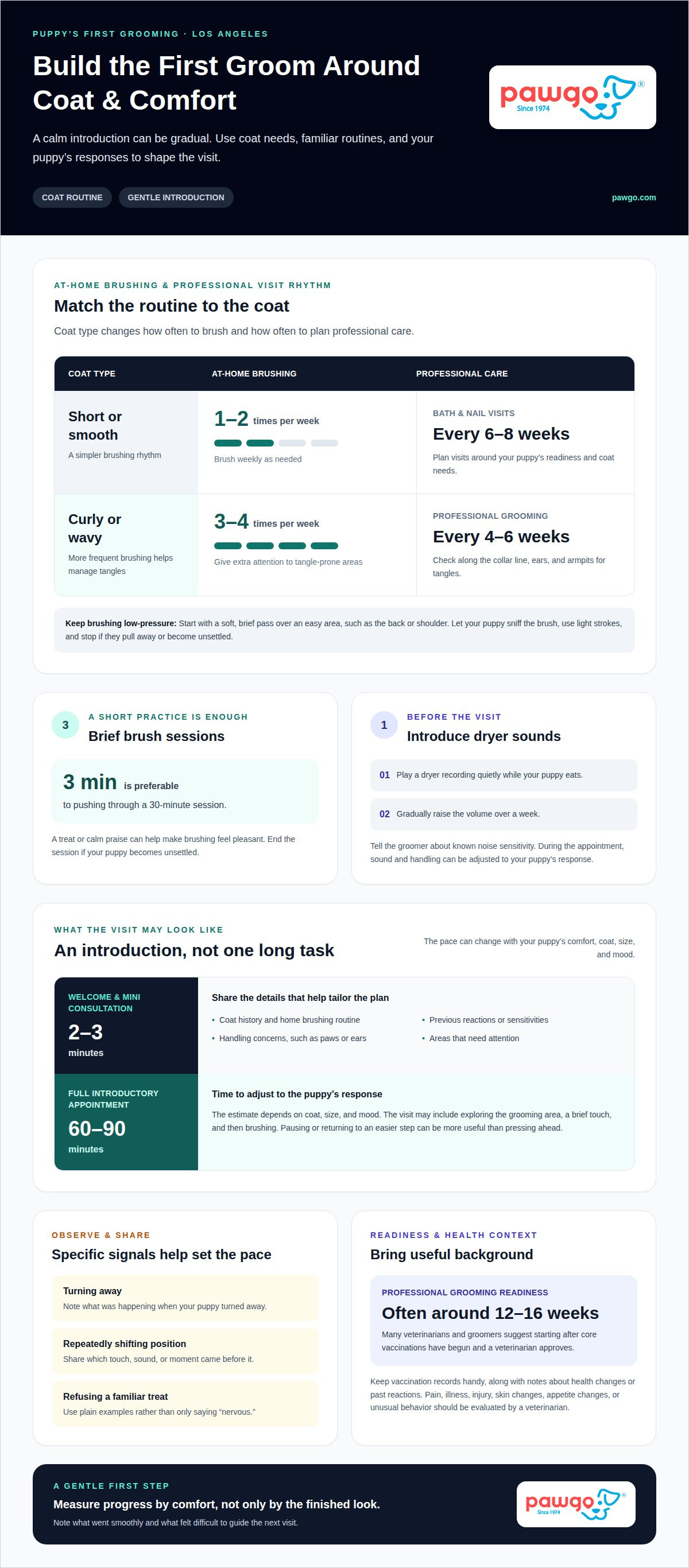
For a gentle puppy’s first grooming in Los Angeles, expect a welcome and mini consultation that takes 2-3 minutes, followed by an introductory grooming appointment that usually takes 60-90 minutes, depending on your puppy’s coat, size, and mood. Whether you stay nearby is a practical decision shaped by how your puppy settles and what helps them feel secure. If the setting is new, you can ask whether a shorter introduction is appropriate.
It’s natural to want your puppy to feel safe, especially if they’re nervous around new people, sounds, or handling. A calm first visit doesn’t have to cover every grooming step. The pace can respect your puppy’s comfort while addressing their coat needs.
This guide explains what an introductory groom can include, how to prepare your puppy for brushing and dryer sounds, and what gentle support can look like during an appointment. You’ll also learn how coat type and your puppy’s responses can help shape a manageable first step.
Key Takeaways
- Share your puppy’s coat history, brushing routine, sensitivities, and handling concerns so the grooming approach can be tailored.
- Build comfort at home with brief handling practice and gentle, positive exposure to grooming sounds.
- Adapt brushing to coat type: short or smooth coats need a different routine from curly or wavy coats.
- A shorter introduction can be a thoughtful first step when a puppy is uneasy in a new setting.
- Plan the first professional grooming around your puppy’s readiness, coat needs, and veterinary guidance.
Gentle brushing, blow-drying, and coat styling
A puppy’s first grooming should introduce handling gradually, with the pace guided by comfort and coat needs. Before the appointment, share your puppy’s coat history, home brushing routine, previous reactions, and areas needing attention. Mention preferences such as avoiding paw handling or being gentle around the ears. These details help the groomer decide where to begin and when to pause.
For vaccination readiness, many veterinarians and groomers suggest starting professional grooming after core vaccinations have begun and a veterinarian approves, often around 12-16 weeks of age. Keep vaccination records handy, along with notes about health changes or past reactions, so the grooming team has useful context.
Brushing can begin with a soft, brief pass over an easy area, such as the back or shoulder. Let your puppy sniff the brush, then use light strokes and stop if they pull away or become unsettled. At home, keep brushing sessions short: 3 minutes is preferable to pushing through 30 minutes. A treat or calm praise can help pair the brush with a pleasant routine.
Coat type shapes the home-care rhythm. Short or smooth coats benefit from brushing 1-2 times per week. Curly- or wavy-coated puppies need more frequent brushing, around 3-4 times per week, especially along the collar line, ears, and armpits, where tangles can form. Professional grooming visits for curly or wavy coats are recommended every 4-6 weeks. For short or smooth coats, bath and nail visits are recommended every 6-8 weeks.
Blow-dryer sounds can be unfamiliar, so introduce them before the visit. Play a dryer recording quietly while your puppy eats, then gradually raise the volume over a week. During grooming, a gentle introduction means watching your puppy’s response and adjusting the sound and handling rather than rushing through the styling. Share any known noise sensitivity in advance.
A simple check at home can help you describe what needs attention. Look for changes in the skin or coat, debris around the paws, and signs of fleas or ticks. Tell the groomer what you notice. Pain, illness, injury, skin changes, appetite changes, or unusual behavior should be evaluated by a veterinarian.
Keep other care familiar and low-pressure, too. Introduce tooth brushing with a finger brush and puppy-safe paste a few times a week. A trusted friend can help you practise calm handling at home, such as briefly touching a paw, rewarding your puppy, and ending the session on a comfortable note.
Appointment duration and nervous-puppy support
A first visit usually takes 60-90 minutes, depending on coat, size, and mood. That range describes the full introductory appointment, not continuous handling without a break. The welcome and mini consultation takes 2-3 minutes, giving the family time to share priorities and explain what the puppy has experienced. The remaining time allows the grooming plan to account for the puppy’s response as well as practical coat needs.
Think of the appointment as a series of small introductions, not one long task. Your puppy might first explore the grooming area, then experience a brief touch on the shoulder before brushing begins. Each step gives them a chance to adjust to a new surface, person, sound, or sensation. If your puppy tenses or pulls away, pausing and returning to an easier step can be more useful than pressing ahead.
Your puppy’s mood can change during a visit. They may arrive curious, then become unsure when a brush reaches a sensitive area or a new sound begins. Notice specific signals such as turning away, repeatedly shifting position, or refusing a familiar treat. Share those observations calmly. They give the grooming team more useful information than a general description like “nervous,” because they point to the moment that may need a slower approach.
Before the appointment, write down your puppy’s recent reactions in plain terms. For example, note that they accept shoulder strokes but move away when their paws are touched. Include whether a car ride, unfamiliar people, or dryer sounds have caused concern. These examples help shape the first steps and distinguish a reaction to a new setting from a specific handling sensitivity.
Use the 60-90-minute estimate to plan a calm arrival and an unhurried pickup. Avoid adding another demanding activity immediately before or after the visit; a quiet transition gives the puppy space to settle. Bring any useful grooming notes, and keep your arrival routine familiar. If the puppy needs time to observe before approaching, allow that moment instead of encouraging several greetings at once.
Afterward, assess the experience by what your puppy managed, not only by the finished appearance. A successful introduction might mean accepting gentle brushing on one area, standing comfortably for part of the visit, or recovering calmly after a sound. Record what went smoothly and what felt difficult. Those details can guide the pace of the next appointment and make future grooming more predictable.
Asking about a shorter or slower introduction
In Los Angeles, look for a groomer who discusses your puppy’s comfort, handling needs, and coat before starting. A gentle introduction adapts the first steps to the puppy instead of treating every appointment as the same routine. If the setting is unfamiliar, ask whether a tour or shorter introduction would suit your puppy.
Make your request specific. Instead of saying only, “My puppy is nervous,” explain what you’ve observed: they back away from dryer sounds, resist paw handling, or settle after watching from a distance. Those examples help the grooming team understand which part of the visit may need a slower introduction. Share what usually helps, such as a familiar treat or a quiet pause.
A shorter introduction can focus on becoming familiar with the setting and handling, rather than completing every grooming task. Ask what the first visit could reasonably include, such as meeting the groomer, exploring the space, or briefly touching the coat with a brush. The aim is to find a manageable starting point. Your puppy’s response can guide what comes next.
If you want a slower pace, discuss which steps feel most difficult. If your puppy is comfortable being brushed but uneasy with nail handling, say so before the appointment. Ask how the visit can begin with easier contact and gradually approach more sensitive areas. This gives the conversation a clear focus: what handling is comfortable, what needs care, and what can wait.
Before speaking with the grooming team, prepare a short note with your puppy’s coat needs, handling preferences, and previous reactions. Include one example of a successful interaction and one that caused concern. For instance, your puppy may accept brushing along the back but pull away when someone touches their ears. A concise note keeps the discussion practical.
Agree on a simple signal for pausing, such as letting the groomer know when your puppy shows a particular stress response. You can also ask how the team will communicate if your puppy needs a break or the plan needs to change. Clear expectations make it easier to understand what the introduction will cover and which grooming steps may be better saved for another visit.
Afterward, note what your puppy accepted and what felt difficult. If they managed gentle brushing but remained uncomfortable with another step, share that observation when planning the next visit. A useful first introduction isn’t measured only by how much grooming gets finished. It also gives you and the grooming team concrete information for choosing a pace that suits your puppy.
Calming grooming environment
Your puppy notices more than the brush. New voices, unfamiliar smells, bright lighting, and footsteps can all compete for their attention. Before the visit, describe settings your puppy already knows. For example, mention whether a quiet room helps them settle or whether sudden sounds make them alert. That context helps the grooming team understand what to introduce gently and what to keep simple.
Pay attention to the arrival, too. A puppy who has just travelled through busy Los Angeles traffic may need a moment before meeting someone new. Keep your greeting calm, give them time to observe, and avoid inviting several people to approach at once. A familiar cue, such as asking your puppy to sit beside you, can make the transition more predictable.
The grooming area should let your puppy encounter equipment without immediate pressure. The groomer can show them a brush before it touches the coat, and introduce a grooming table or surface gradually. If your puppy tries to move away, notice the response and allow space rather than pulling them closer. These small choices can make unfamiliar objects easier to explore at your puppy’s pace.
Ask how the environment is arranged for a first visit. Pawgo’s grooming is cage-free and one-on-one, so your puppy isn’t placed in a grooming cage as part of the experience. You can also ask what happens if your puppy needs a pause. A clear explanation of where they can settle and how handling resumes gives you a practical picture of the visit.
Sound deserves its own consideration. Clippers, running water, and dryers each create a different experience, so note which noises your puppy has encountered before. If a sound makes them freeze or retreat, tell the grooming team which sound it is and how your puppy responds. This is more useful than saying only that they dislike loud noises.
Comfort also depends on the people in the space. Ask how the groomer will guide your puppy through handling and how introductions work when other people are nearby. A puppy wary of reaching hands may do better with a slower approach from the side. Share that preference before the first touch, especially around the face, paws, or collar.
After the visit, note one environmental detail that helped and one that challenged your puppy. Perhaps a quiet arrival worked well, while footsteps near the grooming area drew their attention. These observations give the next appointment a useful starting point. A calmer experience comes from practical adjustments to the surroundings, sound, and handling, not from asking a puppy to ignore every unfamiliar thing.
Choosing a first step that fits the puppy
Choose the first appointment around your puppy’s readiness, coat needs, and response to unfamiliar settings. Planning a gentle puppy’s first grooming in Los Angeles starts with a manageable goal, not a requirement to complete every grooming step.
Mobile Groomer or Salon
For a puppy uneasy in busy, unfamiliar spaces, mobile grooming brings the appointment to your doorstep. Pawgo’s mobile grooming is available in Los Angeles, Phoenix, and Seattle, with one-on-one, cage-free appointments at home or the office. Consider your puppy’s comfort with travel and new settings when choosing the right environment.
Before choosing, describe the situations your puppy finds difficult. A long car ride, unfamiliar dogs nearby, or several new voices may affect which setting feels easier. Consider whether a calm arrival at home or a separate grooming space would give your puppy more room to adjust. Explore mobile grooming options if a doorstep visit suits your puppy’s needs.
Preparing for the First Grooming Session
Prepare your puppy with short, positive handling practice at home. Practice touching the ears, paws, and collar for 1-2 minutes a day, and pause if your puppy pulls away. Share your puppy’s coat history, preferences, and handling concerns before the appointment.
Bring vaccination records and follow your veterinarian’s guidance on readiness. Many veterinarians and groomers suggest beginning professional grooming after core vaccinations have started and a veterinarian approves. The right timing also depends on your puppy’s coat and the grooming needed.
For curly- or wavy-coated puppies, a first full teddy or puppy cut often comes around 5-6 months of age. That doesn’t mean every puppy needs a full cut then. A gentle puppy’s first grooming in Los Angeles can begin with handling and coat care before styling becomes the priority.
Think about the goal for this visit. If your puppy needs help becoming comfortable with brushing, make that the focus. If the coat needs more attention, explain which areas concern you and what your puppy accepts at home. A clear priority helps the groomer shape the appointment around practical needs.
Before you book, write down your puppy’s comfort cues. Note whether they settle with a familiar treat, need time to approach new people, or dislike having their paws touched. This turns “gentle” into useful guidance. You can then discuss a first step that reflects your puppy’s reactions, rather than choosing a grooming plan based only on appearance.
Pawgo: Full Groom
Pawgo offers Full Groom for families planning a gentle puppy’s first grooming in Los Angeles. The mobile service brings grooming to your doorstep in a fully equipped van, with one-on-one, cage-free grooming for dogs and cats. Share your puppy’s coat needs and handling preferences when arranging the visit so the groomer can understand your priorities. A scissor finish is available as an optional service.
If a gentle puppy’s first grooming in Los Angeles feels like the right next step, book a mobile Full Groom with Pawgo. Visit pawgo.com to learn more or arrange your appointment.
Make the next grooming step feel familiar
Your puppy’s first appointment can become the start of a familiar care routine. Notice how they respond afterward, then use those observations to shape what comes next. A quieter arrival, a preferred handling approach, or a different grooming priority can make future visits feel more predictable.
Planning a gentle first grooming for your puppy in Los Angeles? Pawgo offers Full Groom and Bath & Tidy, while a Service Call is another option for a separate grooming need. Choose the next step that fits your puppy’s coat and the care you’re seeking, then share your preferences when arranging it.
Contact Pawgo about your puppy’s first groom. With a thoughtful pace and clear communication, you can help grooming become a more familiar part of your puppy’s care.
Frequently Asked Questions
Do I stay with my puppy?
Ask how the groomer handles the handoff and whether you can remain nearby during the introduction. Your puppy’s response can help guide that decision: some settle after a calm goodbye, while others need time to observe the new setting. Share what has worked during separations at home. Before the appointment, agree on how you’ll receive updates and what the groomer will do if your puppy seems unsettled.
What happens at the first appointment?
The visit begins with a welcome and a brief conversation about your puppy’s needs. You can tell the groomer which areas to prioritise, such as a bath, brushing, or a tidy around the face. Your puppy is then introduced to the grooming steps included in the appointment. Think of a successful first visit as a chance to build familiarity, not simply achieve a finished haircut.
What if my puppy gets nervous?
If your puppy seems nervous, the grooming team can pause, ease up on the current step, or return to a more familiar form of handling. Tell them what you notice, such as your puppy turning away when a tool starts or becoming tense when a paw is touched. Those details help distinguish a sound concern from a handling concern and guide the next step.
What is “puppy grooming” and when should I start?
Puppy grooming introduces coat care and gentle handling, rather than requiring a complete haircut at the first visit. Many veterinarians and groomers suggest scheduling professional grooming after core vaccinations have begun and a veterinarian approves, often around 12-16 weeks of age. At home, let your puppy get familiar with a brush and gentle touches before the appointment. Keep early practice calm and brief.
When will my puppy need a full haircut?
Curly- or wavy-coated puppies often get their first full teddy or puppy cut around 5-6 months of age. Coat condition and your puppy’s comfort also matter, so the first visit can focus on handling and coat care rather than a full style. Share the look you have in mind and any areas that tangle, so the grooming plan accounts for practical coat needs.
When should a puppy have its first grooming appointment?
Many veterinarians and groomers suggest a first professional grooming session after core vaccinations have begun and a veterinarian approves, often around 12-16 weeks. The right starting point also depends on the puppy’s coat and comfort with handling. A puppy with a coat that needs regular care may benefit from an introduction before tangles become difficult to manage. Follow your veterinarian’s guidance about readiness.
What does a gentle puppy first groom include?
A gentle first groom can include brushing, bathing, drying, nail care, or an introductory trim, depending on your puppy’s coat and comfort. For example, the visit might focus on brushing and getting familiar with the dryer rather than completing a full haircut. Pawgo’s Full Groom includes a bath and brush, breed-specific trim or haircut, blow-dry, nail clipping, ear cleaning, and anal gland expression.
How long does a puppy's first grooming appointment take?
A puppy’s introductory grooming appointment usually takes 60-90 minutes, depending on coat, size, and mood. The welcome and mini consultation takes 2-3 minutes, then the remaining appointment allows time for the planned grooming and the puppy’s responses. A longer coat or a puppy who needs a slower introduction can affect the pace. Keep your schedule flexible around arrival and pickup.


