

Mobile pet teeth brushing can make routine oral care easier to fit into your schedule by adding brushing to a grooming appointment at your doorstep. It does not replace a veterinary dental visit, but it can be a practical maintenance step for pets who are comfortable with gentle mouth handling.
At Pawgo, teeth brushing is available as an add-on to mobile grooming. Appointments take place in a cage-free van environment, and the doorstep service means you can include brushing alongside grooming without making a separate trip. Brushing is intended to address surface buildup and freshen breath, not to examine or clean beneath the gumline.
This guide explains what routine brushing can and can’t do, how it differs from veterinary dental care, and how to build a calm, realistic oral-care routine. You’ll also learn when to involve your veterinarian, so a convenient grooming add-on supports your pet’s care without being mistaken for medical treatment.
Key Takeaways
- Mobile pet teeth brushing can be a convenient grooming add-on for routine oral care, but it isn’t a dental diagnosis or complete treatment.
- Home brushing, grooming add-ons, and veterinary dental care serve different purposes and have different limits.
- Help your pet become more comfortable with gentle mouth handling through calm, gradual practice at home.
- Ask your veterinarian which products and oral-care methods are suitable for your pet, and when a professional dental assessment is needed.
- Pawgo brings grooming to your doorstep in a cage-free van environment, with teeth brushing available as an additional service.
What mobile pet teeth brushing is and its purpose
Mobile pet teeth brushing is a routine grooming add-on: a groomer brushes a pet’s teeth during a grooming appointment that takes place at the customer’s doorstep. It can be convenient to include oral care alongside a bath or other grooming service, without arranging a separate trip. The aim is modest and practical: brushing addresses everyday buildup on visible tooth surfaces.
It isn’t a dental exam, diagnosis, or complete treatment for dental problems. Grooming brushing doesn’t assess areas beneath the gums or replace care from a veterinarian. It can be one part of a routine, but it shouldn’t delay veterinary advice if you notice a change or have a concern about your pet’s mouth.
The video below shows a cosmetic teeth-cleaning appointment. Cosmetic cleaning is different from routine brushing, so use it as a visual example of a related service, not as a guide to what happens during a grooming add-on.
Routine brushing supports day-to-day care; veterinary dental treatment evaluates and addresses dental health concerns. A pet may need veterinary attention even if the visible teeth look clean. If you notice a change in your pet’s mouth or are unsure what care is appropriate, your veterinarian can guide next steps.
What happens when teeth brushing is part of mobile grooming?
Teeth brushing is an optional grooming add-on. With Pawgo, the appointment takes place at your doorstep in a cage-free van environment. Adding brushing can make it easier to schedule alongside other grooming care, but it remains routine maintenance, not a veterinary procedure. Pets respond differently to grooming, including handling around the mouth.
Why regular oral care matters in a pet’s routine
Oral care is one part of looking after a pet, alongside grooming and regular veterinary guidance. Ask your veterinarian which home-brushing methods and products are suitable for your pet. A steady, comfortable approach is more practical than forcing a session when your pet is uneasy. For broader context, dog health and dental care are connected parts of overall wellbeing.
Home brushing and a grooming add-on have different roles. Home practice is part of an owner-led routine, while a mobile grooming visit offers a convenient opportunity to include brushing with other grooming care. Neither can diagnose dental disease. Keeping that distinction clear helps you use brushing as routine care while leaving health concerns to your veterinarian.
How mobile pet teeth brushing differs from home brushing and veterinary cleaning
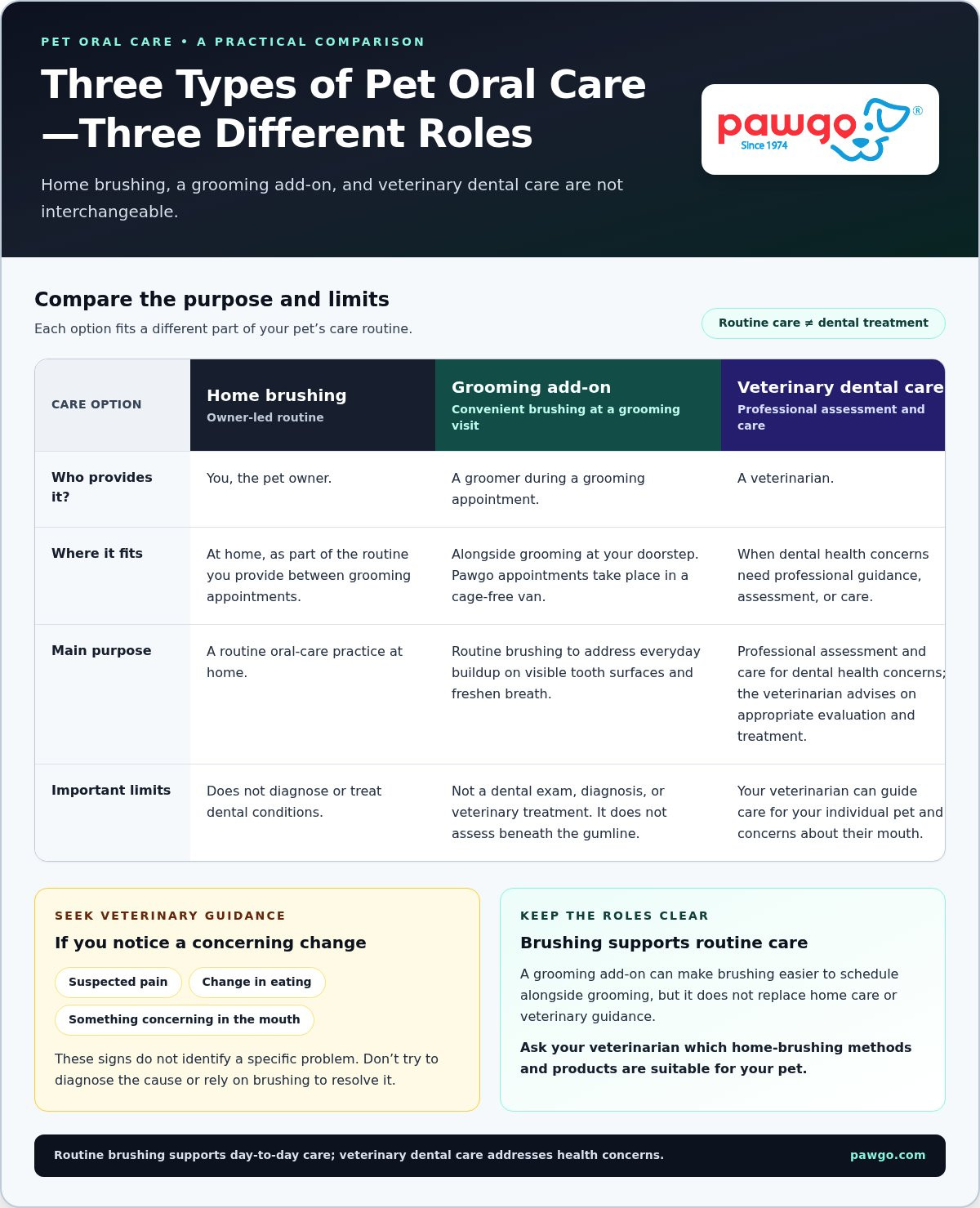
These three forms of oral care serve different purposes and aren’t interchangeable. Home brushing is led by you, a grooming add-on fits into a scheduled grooming visit, and veterinary dental care addresses health concerns through professional assessment and treatment. This overview is educational, not a substitute for an individual veterinary assessment.
| Type of care | Who provides it | Purpose and limits |
|---|---|---|
| Home brushing | Pet owner | A routine care practice at home. It doesn’t diagnose or treat dental conditions. |
| Grooming teeth-brushing add-on | Groomer during a grooming appointment | A convenient brushing service intended to address everyday buildup on visible teeth. It isn’t a dental exam or veterinary treatment. |
| Veterinary dental care | Veterinarian | Professional assessment and care for dental health concerns. The veterinarian advises on appropriate evaluation and treatment. |
Brushing during grooming is a routine-care service, not veterinary dental treatment. It may suit a maintenance routine, while concerns about your pet’s mouth belong with a veterinarian.
Home brushing and mobile grooming brushing serve different routines
Home brushing is owner-led and can be part of the care you provide between grooming appointments. A mobile grooming add-on offers another opportunity to include brushing when a grooming visit comes to your doorstep. It can make brushing easier to schedule, but doesn’t replace home care or veterinary guidance. Ask your veterinarian about suitable methods and products for your pet. The Veterinary Oral Health Council recommendations can also help you learn about reviewed oral-care products.
When a veterinarian should guide dental concerns
Get veterinary guidance if you suspect your pet is in pain, notice a change in eating, or see something concerning in the mouth. These signs don’t identify a specific problem on their own, so don’t try to diagnose the cause or rely on brushing to resolve it. The American Veterinary Medical Association’s pet dental care guidance offers further context, while your veterinarian can assess your individual pet.
Mobile pet teeth brushing is best viewed as a convenient grooming add-on within a broader routine. Pawgo offers teeth brushing alongside grooming in a cage-free van environment. You can explore Pawgo mobile grooming as a way to combine the services, while keeping veterinary care separate for dental concerns.
Considerations for adding teeth brushing to grooming
Before adding brushing to a grooming visit, consider how your pet handles routine grooming and gentle attention near the mouth. Mobile pet teeth brushing is optional, and your pet’s response may vary from one appointment to another. Being comfortable with grooming doesn’t necessarily mean your pet will welcome mouth handling. Use what you know about your pet and share helpful context when booking.
Use this checklist to decide whether the add-on feels like a reasonable fit:
- Consider grooming comfort. Is your pet generally comfortable with routine grooming, or do parts of the visit already feel difficult?
- Think about mouth handling. Does your pet tolerate gentle touch around the muzzle, or do they pull away or seem uneasy?
- Share relevant preferences. Tell the grooming team about sensitivities or handling preferences when booking, so they have useful context.
- Keep health concerns separate. If you’ve noticed a change in eating, signs of discomfort, or another concern about your pet’s mouth, seek veterinary guidance rather than relying on a grooming add-on.
- Let comfort lead. Brushing isn’t a must-have for every visit. It’s reasonable to skip it if your pet seems uncomfortable.
Help your pet become familiar with mouth handling
At home, keep practice brief and calm. Let your pet get used to your hand near their face before trying gentle contact around the muzzle. Don’t hold your pet in place or force contact. If they turn away, tense up, or show distress, pause. Some pets may remain uneasy with mouth handling, which is a cue to respect their limits rather than push for progress.
These low-pressure introductions can help you learn what your pet is comfortable with, but they don’t guarantee your pet will welcome brushing during grooming. If distress continues, or you’re unsure whether a reaction is related to an oral concern, speak with your veterinarian for individual guidance.
Choose the right moment to make brushing part of grooming
Consider how your pet handles their usual grooming routine before adding another element. If grooming itself is challenging, keeping the visit focused on familiar care may be gentler. If your pet is generally comfortable, brushing may be a convenient extra to consider. Either way, your pet’s comfort matters more than completing every optional service.
When booking, share practical details such as areas your pet is sensitive about or how they prefer to be approached. This gives the grooming team useful context without assuming how your pet will respond. Leave decisions about dental products, oral-care methods, and concerning symptoms to your pet’s veterinary team. A grooming add-on can complement a broader routine, but it shouldn’t be used to assess or address a health problem.
How to build a realistic teeth-brushing routine between grooming visits
A routine should fit your pet, not the other way around. A grooming add-on can be one convenient part of oral care, while your veterinarian can guide any home-brushing plan. Keep expectations modest: one brushing session isn’t a lasting solution, and a grooming visit doesn’t replace home care or veterinary attention when concerns arise.
A gentle, step-by-step approach to routine brushing
Use these four steps as a flexible starting point. Move at your pet’s pace, and don’t force contact or continue if they seem uncomfortable.
- Discuss your pet’s needs. Ask your veterinarian which oral-care methods suit your pet and what products to use. This is especially helpful if your pet has an existing concern or you’re unsure how to begin.
- Introduce handling gradually. Start with brief, calm opportunities for your pet to become familiar with gentle attention around the mouth. Keep the experience positive and stop before your pet becomes unsettled.
- Keep practice comfortable. Follow your veterinarian’s guidance on a toothbrush, pet toothpaste, and an appropriate approach. Avoid turning practice into a struggle. If your pet resists or appears distressed, pause rather than pushing through.
- Reassess comfort. Notice how your pet responds over time. If discomfort persists, or you have a concern about their mouth, stop home practice and ask your veterinarian for advice.
Keep expectations practical between appointments
Home brushing and mobile pet teeth brushing during a grooming visit can complement each other, but neither guarantees a particular result. The grooming add-on provides a convenient way to include brushing with a doorstep appointment; owner-led care remains a separate part of the routine. Your pet may be comfortable in one setting and less receptive in another, so let their responses guide what feels manageable.
Pay attention to changes rather than treating brushing as a way to assess dental health. If eating habits change, your pet seems uncomfortable, or you notice something concerning, share it with your veterinary team. They can advise whether your pet needs an individual assessment and how oral care should fit their needs.
A calm routine can be simple: get veterinary guidance, introduce handling gently, keep practice comfortable, and reassess rather than forcing a fixed plan. If adding brushing to a grooming visit would make the routine easier to manage, book a Pawgo grooming appointment with teeth brushing as an additional service.
Add mobile pet teeth brushing to a Pawgo grooming appointment
Pawgo offers teeth brushing as an additional service alongside mobile grooming. It’s a practical way to include routine brushing with a grooming appointment, rather than booking it as a standalone dental procedure. A grooming add-on doesn’t assess dental health or take the place of veterinary care.
What makes the mobile appointment convenient
Pawgo brings a fully equipped grooming van to your doorstep, so your pet’s appointment takes place close to home. The van provides a cage-free grooming environment, which may suit some pets, though each pet responds to grooming in their own way. Consider your pet’s comfort and share relevant handling preferences when arranging the visit.
Because teeth brushing is an add-on to grooming, it can fit into a visit you’re already planning. It’s a convenient opportunity to include brushing as part of broader routine care. It isn’t a dental cleaning or a substitute for a veterinary assessment, and it doesn’t replace home care recommended for your pet. If you have concerns about your pet’s mouth, seek guidance from your veterinary team rather than relying on grooming.
Book a Pawgo grooming appointment
Pawgo serves customers in Phoenix, Seattle, and Los Angeles. If you’re in one of these cities, you can book a mobile grooming appointment online and add teeth brushing to the visit. Keep expectations centered on routine care: your pet may be comfortable with the appointment, but responses can differ. Sharing relevant sensitivities or preferences can help the grooming team understand your pet’s needs.
Think of mobile pet teeth brushing as one manageable addition to a wider oral-care routine. Home care and veterinary advice remain important, and a groomer’s brushing isn’t intended to diagnose or treat a dental concern. If your pet seems uncomfortable, has a change in eating, or shows another sign that concerns you, consult your veterinarian.
For a doorstep grooming visit with teeth brushing as an add-on, Explore Pawgo mobile grooming and book an appointment.
Make oral care fit your pet’s routine
Choose one manageable habit and let your pet’s comfort set the pace. Keep home practice gentle, and use your veterinarian as your guide for suitable products, methods, or concerns. Mobile pet teeth brushing can make brushing easier to schedule alongside grooming, but it isn’t a substitute for veterinary assessment or treatment.
You don’t need to introduce every part of oral care at once. A routine that respects your pet’s signals is more practical than forcing a plan that doesn’t suit them. If grooming is already part of your pet’s routine, consider whether adding brushing feels comfortable. Pawgo offers teeth brushing with doorstep mobile grooming in a cage-free van environment. For questions about your pet’s oral health, your veterinarian is the right person to advise you.
When you’re ready to plan a grooming appointment, Explore Pawgo mobile grooming and book an appointment. A small, realistic step can make routine care easier to maintain while keeping your pet’s comfort at the center.
Frequently Asked Questions
Is mobile pet teeth brushing the same as a veterinary dental cleaning?
No. Mobile pet teeth brushing during grooming is a routine-care add-on, while veterinary dental care includes assessment and treatment by a veterinary professional. The two serve different purposes, so a brushing appointment shouldn’t be used to evaluate a health concern. If your pet seems to have mouth pain, you notice a visible change, or you have questions about their dental health, speak with your veterinarian for individual guidance.
Can I brush my pet’s teeth at home between grooming appointments?
Yes. Home brushing can be part of ongoing care if your pet is comfortable and your veterinarian agrees it’s suitable. Ask which products to use, then introduce handling gently and keep practice calm. If your pet pulls away or becomes distressed, pause rather than forcing the session. A grooming add-on can fit alongside home care, but it doesn’t take the place of owner-led brushing or veterinary advice.
How often should a pet’s teeth be brushed?
There isn’t one schedule that suits every pet, so ask your veterinarian what’s appropriate for your pet’s needs and tolerance. They can also help you set a realistic home-care plan. Keep that routine separate from the timing of grooming appointments, which may not match your pet’s oral-care needs. Your veterinarian can advise when your pet should be assessed based on their individual health.
What should I do if my pet resists teeth brushing?
Don’t force mouth handling. Try brief, calm introductions when your pet is settled, and stop if they become uncomfortable. Some pets may not accept brushing, even with gradual familiarity. If resistance continues or seems connected to discomfort, contact your veterinarian instead of treating it only as a behavior issue. Your veterinarian can help determine whether there’s an oral concern and discuss an appropriate next step.
Does mobile pet teeth brushing replace a dental visit to the veterinarian?
No. Teeth brushing offered as a grooming add-on isn’t a veterinary diagnosis, examination, or treatment. It can be included in a grooming routine, but it can’t answer questions about your pet’s dental health. If you’re deciding whether your pet needs an assessment or want care recommendations tailored to them, speak with your veterinarian. Keeping grooming and veterinary care in their proper roles helps you make an informed choice.
Can teeth brushing be added to a mobile grooming appointment in Phoenix, Seattle, or Los Angeles?
Yes. Pawgo offers teeth brushing as an additional service alongside mobile grooming in Phoenix, Seattle, and Los Angeles. Use Pawgo’s online booking page to arrange a grooming appointment. The brushing add-on is a grooming service, not a standalone veterinary dental procedure.
What if I notice bad breath or changes in how my pet eats?
Share these changes with your veterinarian rather than treating them as routine grooming concerns. Bad breath or a change in eating doesn’t identify a cause on its own, and brushing isn’t a way to diagnose it. Note what you’ve observed, such as when the change began or which foods your pet avoids, and describe it to your veterinary team. They can assess your pet and recommend appropriate next steps.


