

The most recognizable breed haircut isn’t always the most comfortable or practical choice for your dog. A breed specific dog haircut should start with coat type, texture, and your dog’s needs, not just a reference photo.
It’s easy to feel unsure when names like “puppy cut” and “teddy bear cut” are used across different breeds. Breed traditions can offer useful inspiration, but a show-style standard may not suit everyday life. Even dogs of the same breed can have different coats, shedding patterns, and grooming needs.
This guide explains how coat type, breed, comfort, and daily upkeep shape a realistic haircut choice. You’ll learn which popular cut names describe general styles rather than fixed breed standards, what to consider before shortening a coat, and how to describe the length and finish you want. Pawgo’s mobile grooming brings the haircut conversation to your home, with options such as a Full Groom and scissor finish tailored to your dog.
Key Takeaways
- Choose a breed specific dog haircut by weighing your dog’s coat, condition, lifestyle, and comfort together.
- Understand how clipping, scissoring, and outline tidying can shape different coat types and finished looks.
- Look beyond a haircut’s name or familiar silhouette to consider daily upkeep and your dog’s comfort.
- Prepare clear grooming instructions using recent photos from several angles and notes on the details you like.
- Explore how a personalized Full Groom or scissor finish can support your dog’s haircut goals through Pawgo’s doorstep mobile grooming.
What “breed-specific dog haircut” really means for your dog
A breed-specific dog haircut is a breed-inspired trim adapted to an individual dog’s coat, condition, lifestyle, and comfort. The breed may suggest a familiar outline, but it doesn’t determine an exact length or finish. A groomer considers how the coat grows and behaves, along with the amount of upkeep that works for your household.
Grooming is more than shaping a look. It can support cleanliness and coat care, as described in this overview of the hygienic care of a dog. The right haircut should be practical for the dog as well as pleasing to the person caring for them.
Breed standard, pet trim, and haircut inspiration are not the same
A show presentation follows conventions associated with a breed’s recognized appearance. An everyday pet trim can borrow that silhouette while adapting its length and details for home life. Reference photos help communicate what you like, such as a rounded face or shorter legs, but they are guides, not guaranteed templates. Coat length, density, and texture can make the same style look different on two dogs.
Why the same breed can need different grooming choices
Dogs within one breed can vary in coat condition, growth patterns, and comfort with brushing or clipping. Age and activity matter, too. A dog who spends time outdoors may be easier to keep clean with a practical length, while an older dog or one less comfortable with extended grooming may do better with a simpler finish. Choose a length that suits your dog and the care you can maintain between appointments.
You don’t have to give up on a recognizable look. Treat the style as a starting point, then adjust its details to suit the dog in front of you. A familiar breed outline may need a softer shape, less length, or simpler upkeep to feel comfortable in everyday life. There isn’t one universal haircut for every dog of a breed.
How coat type shapes a breed-specific dog haircut
Coat structure is a practical starting point when choosing a breed specific dog haircut. It helps determine whether clipping, scissoring, or simple outline tidying is likely to suit the dog’s coat and the finish you want. Professional grooming guidance also emphasizes choosing tools and techniques for different coat types, as outlined in this grooming for different coat types training unit.
Curly and continuously growing coats
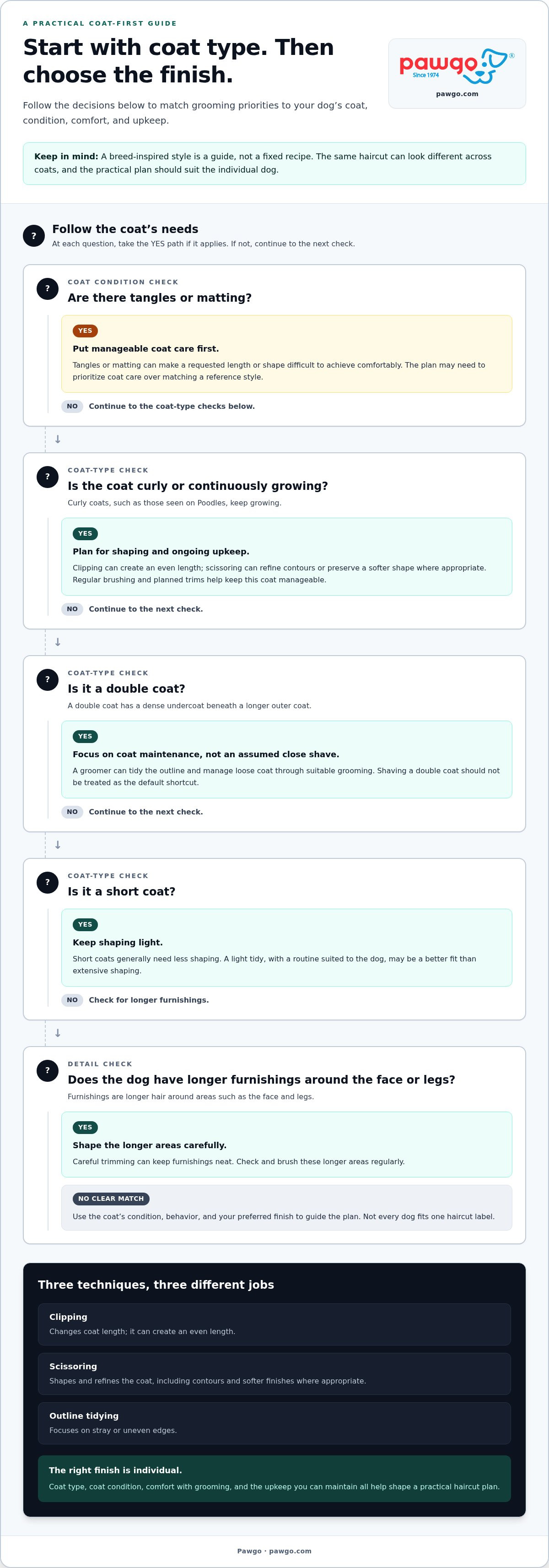
Curly coats, such as those seen on Poodles, keep growing and can become difficult to manage without regular brushing and planned trims. Clipping can create an even length, while scissoring can refine contours or preserve a softer shape where appropriate. No single finish suits every dog. Coat condition, comfort with grooming, and the owner’s upkeep routine all matter.
Double coats, short coats, and furnishings
Double coats have a dense undercoat beneath a longer outer coat. They differ from single coats that grow continuously, so shaving a double coat shouldn’t be treated as the default shortcut. A groomer can focus instead on maintaining a tidy outline and managing loose coat through suitable grooming. Short coats generally need less shaping, while furnishings, the longer hair around areas such as the face and legs, may need careful trimming to stay neat.
Coat condition also affects what’s practical. Tangles or matting can make a requested length or shape difficult to achieve comfortably, so the plan may need to prioritize manageable coat care over a reference style. This is a grooming consideration based on the coat’s condition, not a diagnosis of a skin concern.
| Coat type or trait | Common grooming focus | Upkeep to consider |
|---|---|---|
| Curly or continuously growing | Planned clipping or scissor shaping | Regular brushing and trims |
| Double coat | Neat outline and coat maintenance | Manage loose coat without assuming a close shave |
| Short coat | Light tidying rather than extensive shaping | Keep the routine simple and suited to the dog |
| Furnishings | Careful shaping around the face or legs | Check and brush longer areas regularly |
Clipping changes length, scissoring shapes and refines it, and outline tidying focuses on stray or uneven edges. A Full Groom or scissor finish can be tailored to your dog’s coat and the look you’re aiming for. Explore Pawgo’s mobile grooming as a convenient way to discuss your dog’s coat goals at home.
Breed haircut names versus real-life comfort: what matters most?
A breed label can point you toward a familiar look, but it can’t tell you exactly how your dog’s coat will respond or what will feel comfortable. Treat a breed specific dog haircut as inspiration, not a fixed recipe. The goal is to balance the silhouette you like with your dog’s coat condition, tolerance for grooming, and the upkeep you can manage.
A recognizable outline can help you describe your preference. But a style that needs frequent brushing or careful upkeep may not fit every household. A simpler trim can be easier to maintain, while a familiar shape may need adjustments to suit your dog. Consider the trade-offs:
- Keeping the recognizable look: Gives you a clear style reference, but the result may differ if your dog’s coat has a different texture, density, or length than the example.
- Choosing a simpler finish: Can make daily care more manageable, though it may soften or change the breed-inspired outline you had in mind.
- Adapting the plan: Makes room for your dog’s comfort and coat condition, even if the final trim isn’t an exact match for a photo.
When a popular breed look may need adjusting
Dogs of the same breed can have different coat density, texture, and growth patterns. Previous grooming matters, too. A photo may show a coat that’s longer, fuller, or in different condition from your dog’s. Severe matting or sensitive areas can limit what’s practical, so a shorter or simpler finish may be more comfortable than trying to recreate every detail. Flexibility is part of choosing a thoughtful style.
Can a double-coated dog get a shorter trim?
Routine shaving isn’t automatically the right choice for every double-coated dog. A cosmetic preference for a shorter look is different from a situation where matting or an individual coat concern changes the grooming plan. Discuss the desired length and the coat’s condition before settling on a style. If you notice persistent skin or coat concerns, seek guidance from a veterinarian.
Use a breed haircut name to start the conversation, then explain what matters most: the areas you’d like kept longer, your preferred length, and how much brushing you can manage. A groomer can help adapt the look to your dog rather than forcing a one-size-fits-all result.
How to request a breed-specific dog haircut clearly
A haircut name can start the conversation, but clear details help turn inspiration into a practical grooming request. Before your appointment, consider the look you want, your dog’s coat and comfort, and how much care you can maintain at home. Recent photos can help, especially when you explain which details matter most.
Clear preferences and honest coat context help your groomer shape a request around the dog, not just the picture.
Build a useful haircut reference
Choose recent photos that show your dog’s full outline, face, legs, and tail. Images from several angles make it easier to describe the shape you like. Point out specific details, such as a rounded face or a tidier outline, rather than relying on a style name alone. Mention your dog’s coat history and any areas that need gentle handling.
Set realistic expectations for maintenance
Think about your home brushing routine before choosing a longer or carefully shaped finish. Your dog’s activity, schedule, and tolerance for coat care all influence what’s manageable. A trim that’s easy to maintain can be a better fit than a look that needs more upkeep than you can comfortably provide.
Use this short checklist to organize your request:
- Share your reference: Bring recent images from several angles and identify the features you want to keep.
- Describe the length: Say whether you prefer a shorter, even finish or more length in particular areas.
- Explain the shape: Note your preference for the face, legs, tail, and overall outline.
- Add coat context: Share relevant grooming history, including matting or areas where your dog is sensitive to handling.
- Set practical limits: Be honest about brushing at home, outdoor activity, and the amount of upkeep that suits your routine.
It’s fine to say, “I like the rounded face in this photo, but I’d prefer a shorter, easier-care finish on the body.” That gives the groomer a clear direction while leaving room to adapt the style to your dog’s coat and comfort. If the request needs adjusting, agreeing on the details makes it easier to discuss a realistic alternative.
Pawgo’s mobile grooming brings the haircut conversation to your home, where you can share reference photos and coat goals. Book a Pawgo grooming appointment for a personalized grooming experience in Phoenix, Seattle, or Los Angeles.
A personalized haircut with Pawgo mobile grooming
A breed specific dog haircut is a starting point for a conversation, not a promise of an identical copy of a reference photo. Share what you like about the look, then describe your dog’s coat and comfort needs. Pawgo’s mobile groomers come to your home, making it convenient to discuss those preferences at your doorstep.
Photos can make your goals more specific. Instead of simply naming a style, point out the details you’d like to keep, such as the shape around the face, more length on the legs, or a tidy outline. Pawgo offers a Full Groom and scissor finish, which can be part of a grooming plan shaped around your dog’s coat and preferred finish.
What to share before a mobile grooming appointment
Before the visit, gather a few clear notes to guide the grooming conversation. Include:
- Your dog’s breed or mix and what you know about their coat type.
- Recent grooming history, including the current length and any areas that need extra care.
- Reference photos from different angles, with the details you like identified.
- Your preferred length and shape, plus any areas you’d like kept longer or tidier.
- Comfort preferences, such as spots where your dog is sensitive to handling.
Sharing these details gives the groomer useful context. It also helps distinguish your main priorities from features in a photo that may not suit your dog’s coat or everyday routine.
Choosing a convenient Pawgo grooming visit
Pawgo brings professional grooming to your doorstep in a fully equipped, cage-free mobile van. The cage-free setting describes the grooming environment, while each dog’s experience is individual. Use the appointment conversation to share what helps your dog feel more at ease and what you’d like from the finished haircut.
Online booking is available for Pawgo’s service locations in Phoenix, Seattle, and Los Angeles. To plan a grooming visit, book a mobile dog grooming appointment online and bring your haircut preferences and reference photos to the conversation.
Choose a cut that works for your dog
The best breed specific dog haircut balances the look you like with your dog’s coat, comfort, and everyday care. Breed styles can inspire your request, but coat condition and grooming routine help determine what’s practical. Clear preferences and recent photos also make it easier to explain the finish you have in mind.
Pawgo brings professional grooming to your doorstep in Phoenix, Seattle, and Los Angeles. Its mobile vans provide a cage-free grooming environment, and options include a Full Groom and scissor finish. Share your dog’s coat goals and reference photos as part of a personalized grooming conversation.
Ready to plan a convenient visit? Book a mobile grooming visit with Pawgo online. With a clear idea of what matters to you and your dog, you can move toward a haircut that feels like a better fit for both of you.
Frequently Asked Questions
What is a breed-specific dog haircut?
A breed-specific dog haircut is a breed-inspired style adapted to an individual dog’s coat and needs. Breed conventions can suggest a familiar outline, but coat texture, condition, comfort, and home-care routine help determine the practical finish. A breed specific dog haircut for a pet doesn’t have to copy a show presentation exactly. Treat the breed look as a starting point, then tailor the length and shaping to your dog.
Does every dog of the same breed get the same haircut?
No. Dogs of the same breed can have different coat textures, growth patterns, and grooming histories. One may tolerate brushing well, while another may need a simpler finish that’s easier to maintain. Age, activity, coat condition, and comfort during grooming can also affect the plan. A breed name helps guide the conversation, but it doesn’t determine one ideal haircut for every dog.
Can a double-coated dog get a haircut?
Yes, a double-coated dog can receive grooming and appropriate trimming, but routine shaving isn’t automatically the right choice. The outer coat and dense undercoat have a different structure from a continuously growing coat. Share your preferred look and any coat concerns so the grooming plan can be considered carefully. If skin or coat concerns persist, consult a veterinarian for guidance.
How do I explain the haircut I want for my dog?
Bring recent photos from several angles and describe the details you like, such as the face shape, leg length, or overall outline. State your preferred length, areas to keep longer or tidier, and how much brushing you can manage at home. Also share your dog’s coat type, grooming history, and any handling sensitivities. Specific preferences make it easier to discuss a realistic finish.
How often does a breed-specific dog haircut need maintenance?
Maintenance depends on coat growth, length, texture, and the finish you choose. A longer or shaped style may need more frequent brushing and planned trims to stay manageable, while a shorter, simpler finish may take less home upkeep. Your dog’s coat condition and tolerance for brushing matter, too. Discuss a routine that suits your dog and household rather than relying on a fixed schedule for the breed.
Is a breed-standard haircut the best choice for a family pet?
Not always. A breed-standard presentation follows conventions for a recognizable look, while a pet trim can be adjusted for comfort, daily activity, and the care you can provide between appointments. You can keep details inspired by the standard without matching every feature. For a family pet, a practical length and manageable routine may be a better fit than a show-style finish.
Can a groomer follow a photo of my dog’s haircut?
A photo is a useful reference, but the finished haircut may need to be adapted to your dog’s coat and condition. Choose clear, recent images that show the overall outline, face, legs, and tail, then point out the features you want to keep. Pawgo’s mobile grooming brings the conversation to your doorstep in Phoenix, Seattle, and Los Angeles, in a cage-free van environment.


